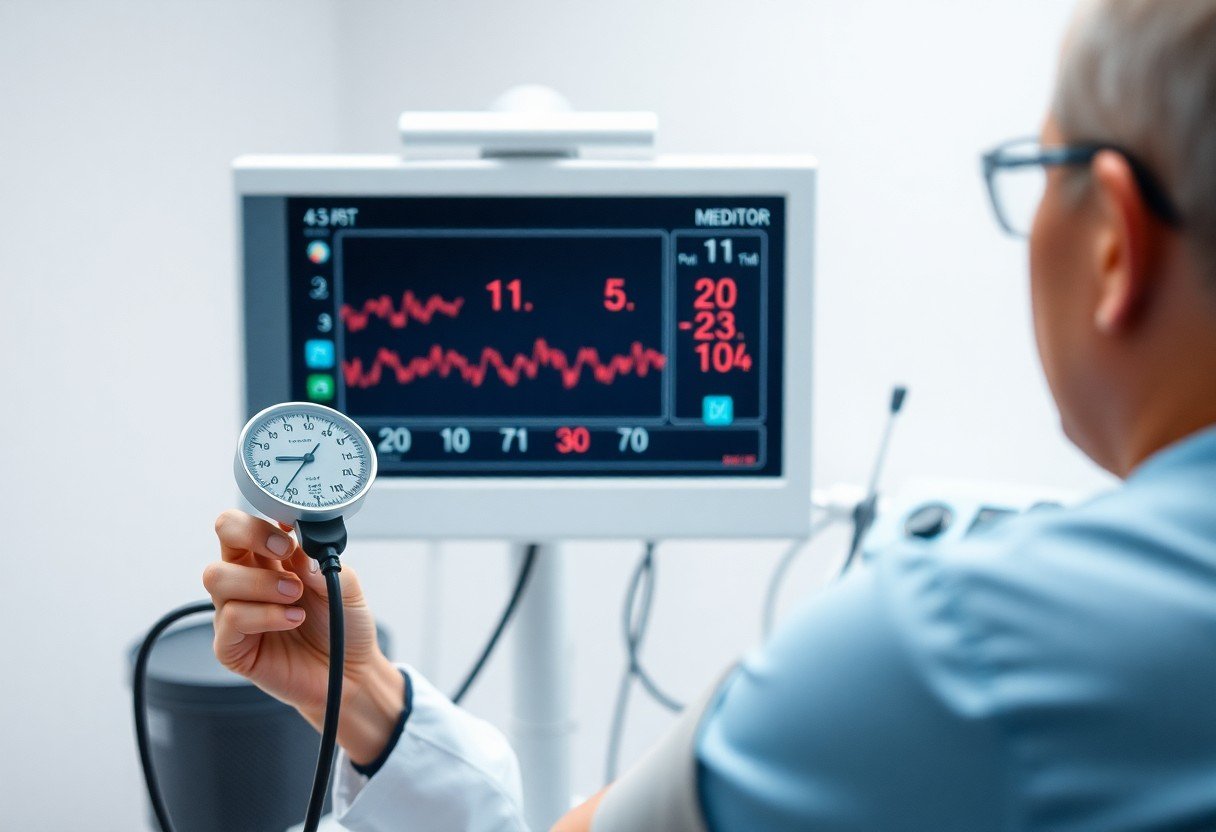
This morning you sat in your doctor’s office and watched that blood pressure cuff inflate around your arm… but have you ever wondered if those numbers flashing on the screen are actually accurate? Here’s something that might surprise you: up to 30% of blood pressure readings taken in clinical settings can be inaccurate due to simple mistakes that both patients and healthcare providers make every single day.
Whether you’re monitoring your BP at home or getting checked during a routine visit, understanding what affects measurement accuracy could literally save your life – because incorrect readings can lead to misdiagnosis, unnecessary medication, or missed warning signs of hypertension. So let’s explore what you really need to know about getting reliable blood pressure measurements.
Key Takeaways:
- About 50% of home blood pressure readings are inaccurate due to improper cuff placement and positioning errors. Getting the right measurements isn’t rocket science, but you’d be surprised how many people mess up the basics. Your arm needs to be at heart level – not resting on your lap, not dangling by your side. And that cuff? It should sit directly on your bare skin, not over your sweater because you’re too lazy to roll up your sleeve. These small details make a massive difference in whether your doctor gets useful information or garbage data.
The timing of your blood pressure check matters way more than most people think. Taking a reading right after you’ve climbed three flights of stairs or chugged your morning coffee will give you numbers that look like you’re about to have a stroke. You need at least 5 minutes of quiet sitting before you even think about strapping on that cuff. And here’s something that catches everyone off guard – you should actually take multiple readings a few minutes apart and average them out. One random reading tells you almost nothing about your actual blood pressure patterns.
Cuff size is probably the most overlooked factor in getting accurate readings, and using the wrong size can throw your numbers off by 10-40 mmHg. Too small and it’ll make your pressure look artificially high… too big and you’ll get falsely low readings. Most standard cuffs work for average-sized arms, but if you’re particularly thin or have larger arms, you absolutely need the right size.- Your doctor’s office should have multiple cuff sizes available, so don’t be shy about asking for one that actually fits you properly.
Your bladder being full can actually increase your blood pressure reading by 10-15 mmHg, which is wild when you think about it. So many things affect your numbers that have nothing to do with your actual cardiovascular health. Talking during the measurement, crossing your legs, having back support or not – all of these seemingly minor things add up. The gold standard is sitting quietly, feet flat on the floor, back supported, and yes… after you’ve used the bathroom.- Automated home monitors are generally reliable, but they need validation and regular calibration checks against manual readings. Just because your device was accurate when you bought it doesn’t mean it stays that way forever. Bring your home monitor to your doctor’s appointments once or twice a year and compare the readings side by side. Also, wrist monitors are convenient but they’re notoriously less accurate than upper arm cuffs – convenience isn’t worth much if the numbers you’re tracking are consistently off by 10+ points.
Table of Contents
Understanding Blood Pressure Measurement
Blood pressure readings can vary wildly depending on the device you’re using and how you’re using it. Your arm position, the time of day, even whether you’ve had coffee in the last hour – all of these factors play into what numbers show up on that screen. Most people don’t realize that home blood pressure monitors can differ by 5-10 mmHg from clinical readings, and that’s actually considered acceptable variance in many cases.
Getting accurate measurements isn’t rocket science, but it does require understanding the equipment you’re working with. Different monitors use different technologies, and each comes with its own set of advantages and potential pitfalls. You might think all blood pressure cuffs are created equal… they’re not. The quality of your device and your measurement technique can mean the difference between catching hypertension early or missing it entirely until you’re dealing with serious complications.
Types of Blood Pressure Monitors
Walk into any pharmacy and you’ll see dozens of options staring back at you. Manual sphygmomanometers – those old-school devices with the bulb you squeeze – are still considered the gold standard for accuracy, but they require training to use properly. Healthcare professionals prefer them because there’s less room for device error, though human error is definitely still a factor. Automatic digital monitors have taken over the home monitoring market because they’re simple to use and give you results in seconds.
The technology behind these devices varies significantly, and so does their reliability. Here’s what you need to know about your options:
- Aneroid monitors use a mechanical gauge and require manual inflation with a squeeze bulb
- Oscillometric devices detect blood flow vibrations automatically and calculate both systolic and diastolic pressure
- Upper arm monitors generally provide more accurate readings than wrist or finger models
- Wrist monitors are portable but highly sensitive to positioning errors
- Smartphone-connected devices can track trends over time but aren’t necessarily more accurate
| Monitor Type | Accuracy Rating |
| Manual Aneroid | Highest (when used correctly by trained individuals) |
| Automatic Upper Arm | High (±3 mmHg for validated models) |
| Wrist Monitor | Moderate (±5-7 mmHg variance common) |
| Finger Monitor | Low (not recommended for clinical decisions) |
| Smartphone Apps | Variable (many lack proper validation) |
Any device you choose should have validation from organizations like the Association for the Advancement of Medical Instrumentation (AAMI) or carry the British Hypertension Society seal of approval.
Factors Affecting Accuracy
Temperature changes in your environment can throw off readings by several points. Your blood vessels constrict when you’re cold and dilate when you’re warm, which directly impacts the pressure measurements. Studies show that room temperatures below 65°F can increase readings by up to 8 mmHg compared to measurements taken at comfortable room temperature. That’s not a small difference when your doctor is deciding whether to prescribe medication.
Cuff size matters more than most people realize – probably more than any other single factor under your control. Using a cuff that’s too small can give you falsely high readings, sometimes by 10-40 mmHg. Too large, and your readings might be artificially low. The bladder inside the cuff should encircle 80
Step-by-Step Guide to Measuring Blood Pressure
You’ve probably seen those automated blood pressure machines at pharmacies and thought they were good enough, right? Well, studies show that up to 46% of those public machines give inaccurate readings due to poor maintenance and improper cuff sizes. That’s why knowing how to take your own measurements correctly at home can literally be the difference between catching hypertension early or missing it entirely.
The process isn’t complicated, but there’s definitely a right way and a wrong way to do it. And honestly, most people are doing it wrong without even realizing it.
| Before Measurement | During Measurement |
| Empty your bladder completely | Keep your arm at heart level |
| Avoid caffeine for 30 minutes | Sit with feet flat on floor |
| No smoking for 30 minutes | Don’t talk or move |
| Rest quietly for 5 minutes | Take 2-3 readings, 1 minute apart |
| Remove tight clothing from arm | Record all readings with time |
Preparing for Measurement
That morning cup of coffee you just drank? It’s going to mess with your reading. Caffeine can raise your blood pressure by 10 mmHg or more for up to 30 minutes after consumption, which is why you need to skip it before measuring. Same goes for that cigarette break or even your pre-workout energy drink. Your body needs time to return to its baseline state, and rushing this step is one of the biggest mistakes people make.
Here’s something most people don’t know – a full bladder can increase your systolic reading by 10-15 mmHg. So before you even think about rolling up your sleeve, make a bathroom trip. Then find a quiet spot where you can sit comfortably for at least five minutes without distractions. No scrolling through your phone, no watching TV, no having a conversation with your spouse about dinner plans. Your body needs genuine rest because even minor stress or activity will skew your numbers higher than they actually are.
Correct Measurement Techniques
Position matters more than you’d think. You need to sit in a chair with your back supported and both feet flat on the ground – not crossed, not tucked under you, not dangling. Crossing your legs can raise your systolic pressure by 2-8 mmHg, which might seem small but could be the difference between a normal reading and a borderline high one. Your arm should rest on a flat surface with the cuff positioned at heart level. If your arm is hanging down by your side, you’ll get a falsely high reading. If it’s propped up too high, you’ll get a falsely low one.
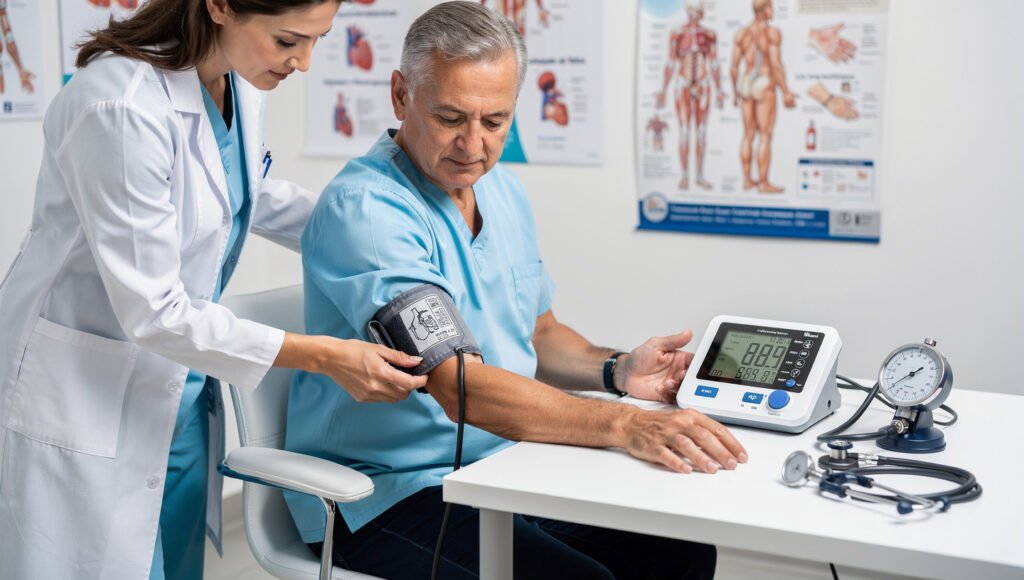
The cuff placement itself is pretty specific too. It should sit directly on your bare skin about one inch above your elbow crease, snug but not tight – you should be able to slip two fingers under it comfortably. And this is important… don’t measure over clothing, even thin sleeves. Rolling up a tight sleeve creates a tourniquet effect that can add 5-50 mmHg to your reading, making you think you’re in hypertensive crisis when you’re actually fine.
Once everything’s set up correctly, press start and stay completely still. Don’t talk, don’t check your phone, don’t even think about adjusting your position. Talking during measurement can increase readings by 10-15 mmHg, and moving around throws off the sensor’s ability to detect the subtle pressure changes in your artery. After the first reading, wait a full minute before taking another one – your blood vessels need time to
Tips for Ensuring Accurate Readings
You’d be surprised how many people sabotage their own blood pressure readings without even realizing it. Just last week, a cardiologist shared on social media that nearly 40% of patients come to appointments having done at least one thing that completely throws off their measurements. That’s almost half of all readings potentially unreliable.
Your body position matters way more than most people think. Keep your feet flat on the floor – no crossing your legs, no dangling them off the exam table. Your arm needs to be at heart level, supported on a flat surface. If your arm is hanging down by your side, you could see readings that are 10 mmHg higher than reality. And talking during the measurement? That can spike your numbers by 10-15 points too. Stay quiet, breathe normally, and try to relax your muscles. Empty your bladder before measuring because a full bladder can add 10-15 mmHg to your systolic reading. After you’ve positioned yourself correctly and followed these guidelines, wait at least 5 minutes before taking that first reading.
Timing and Consistency
Morning measurements tell a completely different story than evening ones, and your doctor needs to know which you’re reporting. Take readings at the same time each day – ideally in the morning before you’ve had coffee or medications, and again in the evening before dinner. Your blood pressure naturally fluctuates throughout the day in what’s called a circadian rhythm, typically dipping during sleep and rising sharply in the early morning hours. This “morning surge” can be 20-30 mmHg higher than your midday readings.
Consistency isn’t just about the clock though. You need to use the same arm every time because readings can differ by up to 10 mmHg between arms. Most doctors recommend measuring on your left arm, but what really matters is picking one and sticking with it. Wait 30 minutes after exercising, eating, or smoking before you measure. Caffeine can elevate readings for up to 3 hours, and even decaf coffee has enough to affect some people. After you’ve established your routine and timing, keep a log with dates and times so you can spot patterns your doctor might miss.
Environmental Considerations
Temperature affects your readings more than you’d expect. Cold rooms cause your blood vessels to constrict, which can artificially inflate your numbers by 5-10 mmHg or more. That’s why taking a reading right after coming in from winter weather gives you falsely high results. Measure in a quiet, comfortable room where the temperature sits between 68-72°F. Background noise and distractions trigger stress responses that bump up your pressure too.
The chair you’re sitting in actually plays a role. Soft couches or chairs without back support force your muscles to work harder to keep you upright, and that physical effort raises your blood pressure. You want a straight-backed chair where you can sit with your back fully supported and both feet planted firmly on the ground. Avoid measuring in bright, harsh lighting or in spaces where you feel rushed or uncomfortable. After you’ve found your ideal measurement spot, try to use that same location every time for the most consistent results.
Even the time of year can influence your readings in ways that catch people off guard. Studies show that blood pressure tends to be higher during winter months – not just because of temperature, but because of reduced physical activity, dietary changes during holidays, and less sunlight affecting vitamin D levels. Seasonal variations can account for differences of 5-8 mmHg in systolic pressure between summer and winter measurements. This doesn’t mean your medication needs adjusting every season, but it does mean you should track these patterns and discuss them with your doctor. Some people also find that altitude affects their readings, especially if they travel frequently between sea level and mountain locations where the air pressure differs significantly.
Pros and Cons of Different Measurement Methods
Many people think all blood pressure measurement methods are pretty much the same, just different tools doing the same job. That’s actually not true at all – each method comes with its own set of advantages and drawbacks that can seriously impact your readings and overall monitoring experience.
Understanding these differences helps you make better decisions about which monitoring approach works best for your lifestyle and health needs. The method you choose can affect not just the accuracy of your readings, but also how consistently you’ll actually use the device, which matters way more than most people realize.
| Measurement Method | Key Advantages and Disadvantages |
| Home Monitoring | Pros: Convenient, captures readings in natural environment, helps detect white coat hypertension, typically more affordable long-term Cons: Requires user training, potential for technique errors, no immediate professional interpretation |
| Clinical Monitoring | Pros: Professional technique, calibrated equipment, immediate medical interpretation, establishes baseline measurements Cons: White coat effect can elevate readings by 10-20 mmHg, less frequent measurements, time and travel required |
| Digital Monitors | Pros: Easy to use, automatic inflation, digital display, some store multiple readings, minimal training needed Cons: Battery dependent, can be less accurate if not validated, more expensive upfront, sensitive to movement |
| Manual Sphygmomanometers | Pros: No batteries required, often more accurate when used correctly, preferred by medical professionals, durable Cons: Requires stethoscope and training, difficult for self-monitoring, hearing impairment affects use |
| Upper Arm Monitors | Pros: Most accurate placement, follows clinical standards, validated by major health organizations, consistent results Cons: Less portable, requires proper cuff positioning, can be uncomfortable for larger arms |
| Wrist Monitors | Pros: Highly portable, easier for people with large upper arms, convenient for travel, compact storage Cons: Can be 5-10 mmHg less accurate, requires precise heart-level positioning, affected by wrist anatomy |
| Ambulatory 24-Hour Monitoring | Pros: Captures sleep patterns, identifies masked hypertension, provides comprehensive data, tracks daily variations Cons: Expensive, can disrupt sleep, typically requires prescription, uncomfortable for extended wear |
| Smartphone-Connected Devices | Pros: Automatic data logging, easy trend tracking, shareable with doctors, reminder features, cloud backup Cons: Requires compatible smartphone, privacy concerns, dependent on app quality, potential connectivity issues |
Home Monitoring vs. Clinical Monitoring
You’ve probably heard your doctor’s office readings are the gold standard, right? Well, that’s becoming less true as home monitoring technology improves. Clinical measurements give you that professional touch – trained staff, regularly calibrated equipment, and immediate medical interpretation of your results. But here’s what they don’t tell you: your blood pressure in a doctor’s office can be artificially elevated by 10-20 mmHg just because you’re nervous or stressed about being there. This “white coat hypertension” affects roughly 15-30% of patients and can lead to unnecessary medication or treatment adjustments.
Home monitoring flips the script entirely. You’re measuring in your natural environment, usually relaxed, sitting in your favorite chair without the
Common Mistakes to Avoid
User Error
You’d be surprised how many people sabotage their own readings without even realizing it. Talking during measurement can raise your systolic pressure by 10-15 mmHg – that’s enough to push you from normal into the hypertensive range on paper when your actual pressure is perfectly fine. The same goes for crossing your legs, which constricts blood flow and artificially inflates readings by about 2-8 mmHg. And here’s something that catches almost everyone: taking a measurement right after you’ve rushed around getting ready for a doctor’s appointment. Your body needs at least 5 minutes of rest to settle down, but most people sit down and immediately strap on the cuff.
Arm position matters way more than you think. For every inch your arm is below heart level, your reading can increase by 2 mmHg. So if you’re slouched on the couch with your arm dangling at your side while checking your pressure, you’re getting a false high reading. The opposite happens when your arm is too high – you’ll get falsely low numbers that might make you think everything’s fine when it isn’t. Your bladder status affects things too… a full bladder can add 10-15 mmHg to your systolic reading because the pressure in your abdomen affects nearby blood vessels. It sounds ridiculous, but it’s real.
Equipment Malfunctions
Even the best monitors can go haywire, and you might not notice until you’ve been getting inaccurate readings for months. Cuff bladders develop leaks over time, especially if you’ve been folding them the same way repeatedly or storing them in hot environments like your car. When air slowly escapes during inflation, the monitor either can’t get an accurate reading or compensates by over-inflating, which gives you falsely elevated numbers. Battery-powered monitors are notorious for this – as batteries weaken, the pump struggles to inflate properly, leading to error messages or readings that seem to jump around randomly from one measurement to the next.
Calibration drift is the silent killer of accuracy. Most home monitors should be checked against a manual sphygmomanometer every 6-12 months, but fewer than 15% of users ever do this. Your monitor could be reading 20 mmHg too high or too low, and you’d have no idea unless you compared it side-by-side with a properly calibrated device. Digital sensors degrade over time, particularly in monitors that get heavy daily use. The little pressure transducers inside can become less sensitive or develop offset errors that compound with each use.
Tube connections loosen, valves stick, and LCD displays can even malfunction in ways that show incorrect numbers while the internal measurement was actually correct. If your monitor is more than 3-5 years old and hasn’t been professionally validated, you’re basically flying blind. Manufacturers don’t exactly advertise this, but the accuracy specifications they list are only guaranteed for a limited time under ideal conditions – not after years of being tossed in drawers and subjected to temperature fluctuations.
Maintaining Your Equipment
Calibration and Maintenance
Think of your blood pressure monitor like your car – you wouldn’t skip oil changes for years and expect it to run perfectly, right? Yet most people buy a monitor, use it daily, and never once consider that it might need professional calibration. Home monitors should be checked for accuracy at least once every two years, though many healthcare providers recommend annual checks if you’re using your device frequently. You can usually get this done at your doctor’s office by bringing your monitor along to an appointment and comparing its readings against their clinical equipment. Some pharmacies and medical supply stores also offer calibration services, typically charging between $10-30 for the check.
Beyond professional calibration, your daily maintenance routine matters more than you’d think. The cuff is the most vulnerable component – it takes a beating with constant inflation and deflation cycles. Clean it monthly with a slightly damp cloth (never submerge it in water), and check for any signs of cracking, stiffness, or air leaks. Store your monitor in a cool, dry place away from direct sunlight, because heat and humidity can damage the internal sensors over time. And here’s something most people miss: the tubes connecting your cuff to the monitor can develop tiny cracks that cause slow air leaks, leading to inaccurate readings. Every few months, inspect these tubes carefully and listen for any hissing sounds during inflation.
When to Replace Monitors
Your monitor doesn’t last forever, even with perfect maintenance. Most manufacturers recommend replacing home blood pressure monitors every 3-5 years, regardless of how well they seem to be working. Technology improves, sensors degrade, and those tiny electronic components lose precision over time. But you shouldn’t wait for an arbitrary timeline if your monitor starts showing warning signs. If you’re getting wildly inconsistent readings (we’re talking differences of more than 10 mmHg between back-to-back measurements), that’s your cue to replace it. Same goes if the cuff won’t inflate properly, deflates too quickly, or if you see error messages popping up frequently.
Price isn’t always the best indicator of when to upgrade, though dropping a monitor or getting it wet usually means immediate replacement – internal damage isn’t always visible but can throw off accuracy completely. Some newer models come with built-in accuracy indicators that alert you when calibration is needed or when the device is no longer reliable. If your monitor fails a calibration check at your doctor’s office and the cost to repair it approaches 50% or more of a new device’s price, just buy a new one. You’ll get updated technology and peace of mind knowing your readings are trustworthy.
Battery-operated monitors deserve special attention because weak batteries can cause inaccurate readings long before the low battery light comes on. Replace batteries at the first sign of slower inflation or if readings seem off, and consider switching to rechargeable batteries if you’re measuring multiple times daily – you’ll save money and reduce the risk of accuracy issues from dying batteries.
Final Words
Upon reflecting on everything we’ve covered about blood pressure measurement accuracy, what’s the one thing you should take away from all this? It’s that the numbers on that monitor mean absolutely nothing if you’re not measuring them correctly. And honestly, most people aren’t – not because they’re careless, but because nobody ever taught them the right way to do it.
Your blood pressure readings are only as good as your technique. Period. You can have the fanciest, most expensive monitor on the market, but if you’re sitting there with your legs crossed, talking on the phone, with the cuff wrapped around your sweater sleeve… well, you might as well be making up numbers. The good news? Now you know better. You understand why that morning reading matters more than the evening one, why your arm position isn’t just a suggestion, and why those three minutes of quiet sitting before you measure aren’t wasted time. So the next time you check your blood pressure – whether at home or in your doctor’s office – you’ll know exactly what to do. And more importantly, you’ll know when something’s off, when to question a reading, and when to speak up. Because at the end of the day, these measurements aren’t just numbers on a screen. They’re data points that help you and your healthcare team make decisions about your health. Make sure they’re accurate ones.
FAQ
Q: Why does my blood pressure reading change so much between measurements?
The thing is, your body responds to everything. Had coffee 30 minutes ago? Your reading might be higher. Just walked up the stairs? Definitely higher. Even talking while the cuff inflates can throw off your numbers by 10-15 points… which is actually pretty significant when you think about it.
A: With more people buying home blood pressure monitors since the pandemic (sales jumped like crazy), this has become the number one question I hear. Your blood pressure actually fluctuates throughout the day – that’s completely normal and not a sign something’s wrong with your monitor or your health.
So here’s what matters – take your readings at the same time each day, preferably in the morning before breakfast and any medications. Sit quietly for at least 5 minutes before you even put the cuff on. And yeah, that means no scrolling through your phone or watching TV during those 5 minutes either.
Your arm position matters way more than most people realize. The cuff should be at heart level – if your arm’s hanging down by your side or propped up too high, you’ll get wonky readings every single time.
Q: Does cuff size really make that big of a difference in accuracy?
A: Oh man, this is huge and almost nobody talks about it enough. Using the wrong cuff size is probably the biggest source of inaccurate readings outside of a clinical setting.
If your cuff’s too small, it can make your blood pressure reading look 10-40 points higher than it actually is. Too large? You might get falsely low readings. And we’re not talking about small differences here – these errors can literally be the difference between a normal reading and a hypertension diagnosis.
Here’s how to check: the inflatable part of the cuff (the bladder inside) should cover about 80% of your upper arm’s circumference. Most standard cuffs work for arm circumferences between 9-13 inches, but plenty of people fall outside that range.
If you’ve got larger arms, you need to specifically buy a large adult cuff. They make them! But they don’t always come standard with home monitors, which is honestly pretty frustrating. Measure your arm about halfway between your elbow and shoulder – that’s where the cuff sits – and then check the manufacturer’s sizing guide before you buy.
Q: Should I trust my wrist blood pressure monitor or get an upper arm one?
A: I get why wrist monitors are tempting – they’re compact, easy to travel with, and way less awkward to use when you’re wearing long sleeves. But here’s the deal… upper arm monitors are generally more accurate for most people.
Wrist monitors are super sensitive to position. Your wrist needs to be exactly at heart level during the measurement, and even being a few inches off can skew your results significantly. Plus, the arteries in your wrist are smaller and closer to the surface, which can lead to more variable readings.
That said, wrist monitors aren’t useless. They can be a good option if you have a very large upper arm where getting the right cuff size is difficult, or if you have certain arm injuries that make upper arm cuffs painful. Some people with lymphedema after surgery also do better with wrist monitors.
But if you’re going the wrist route, you’ve got to be religious about positioning. The monitor should come with instructions showing you exactly how to hold your arm – and you need to follow them precisely every single time. No shortcuts.
Q: How do I know if my home blood pressure monitor is giving me accurate readings?
A: This is something you should actually check pretty regularly, not just when you first buy the device. Even good monitors can drift out of calibration over time.
The easiest way? Bring your home monitor to your next doctor’s appointment. Take a reading with your device, then have the nurse or doctor take one with their equipment right after – like within a minute or two. The readings should be within 5 points of each other. If there’s a bigger gap than that, something’s off.
You should do this calibration check at least once a year, maybe twice if you’re using your monitor daily. And definitely check it if you’ve dropped the monitor or it’s gotten banged around during travel.