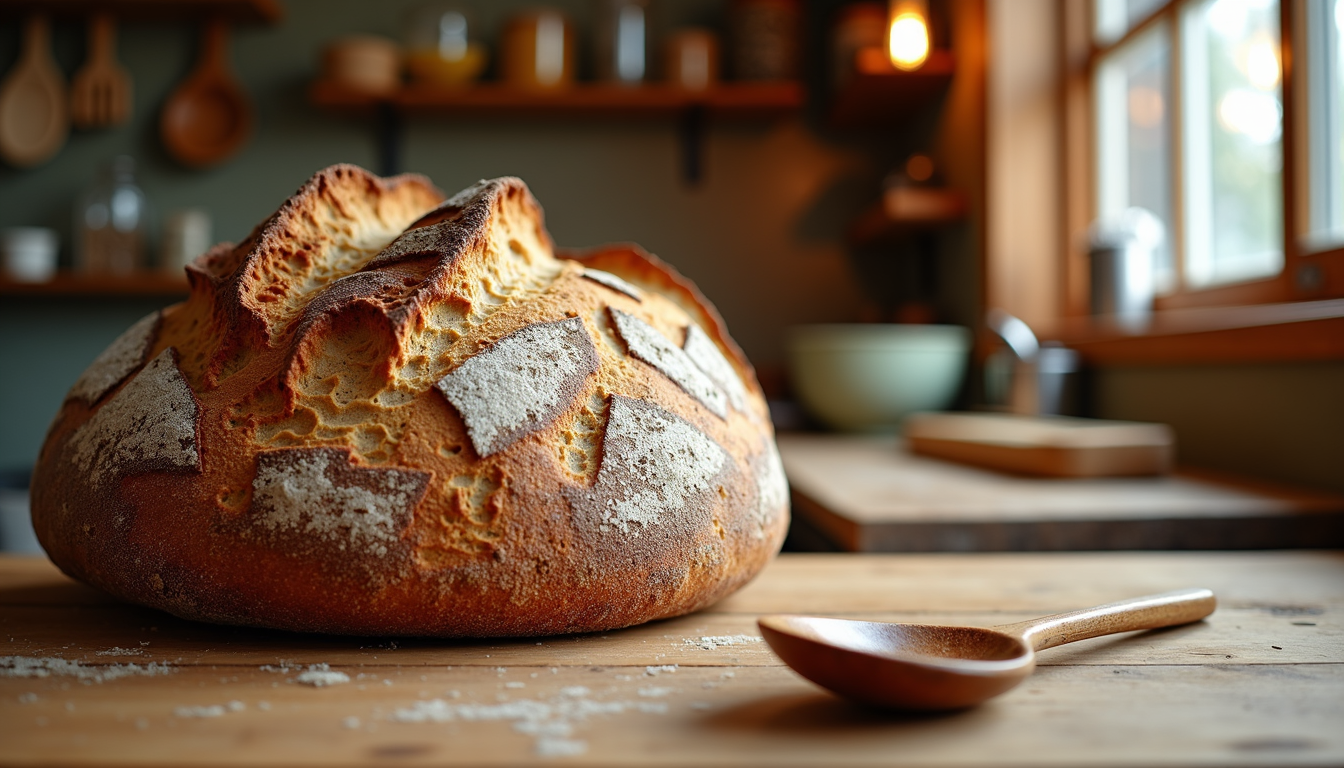
You’ve probably been told that bread is just bad for your gut, especially if you deal with bloating or IBS… but what if the real problem isn’t the bread itself, but how it’s made? Most people think they need to give up wheat entirely when they experience digestive issues, but research shows that traditional 24-hour sourdough fermentation can reduce the problematic compounds in bread by up to 90%. The difference comes down to something called FODMAPs – fermentable carbohydrates that feed gut bacteria and cause gas. Long fermentation with live starter cultures breaks down these FODMAPs before the bread ever reaches your stomach, which is why real sourdough can be tolerated by many people who can’t handle regular bread. But here’s the catch: most store-bought “sourdough” is fermented for only an hour or two and won’t give you these benefits.
Key Takeaways:
- It’s probably not the gluten that’s messing with your gut. If you’ve been blaming gluten for your bloating and discomfort, you might be pointing fingers at the wrong culprit. The real troublemakers are often fructans – those fermentable carbohydrates (FODMAPs) that hang out in wheat and rye. These poorly absorbed sugars get rapidly fermented by your gut bacteria, creating gas and drawing water into your intestines… which is basically a recipe for feeling terrible. And here’s the kicker – during that long 24-hour sourdough fermentation process, the lactic acid bacteria actually break down 70-90% of these fructans. So the bread that comes out the other end is fundamentally different on a molecular level than what went in.
- Most “sourdough” you buy isn’t actually real sourdough. This matters because you could be avoiding bread thinking it doesn’t work for you, when really you’ve just been eating the wrong kind. Those supermarket loaves with “sourdough” on the label? They’re often fermented for maybe 1-2 hours tops, pumped full of commercial yeast and additives, and sometimes just artificially acidified to taste tangy. They haven’t gone through the slow bacterial fermentation that actually reduces FODMAPs. So yeah, they’ll still trigger your IBS symptoms just like regular bread would. Real sourdough should be dense, chewy, properly sour, and made with just starter culture – no yeast packets, no dough conditioners, none of that stuff.
- The fermentation time is what makes all the difference. You need those 8-24 hours for the magic to happen. During this extended fermentation, the wild yeasts and lactic acid bacteria in the starter culture are actively working to break down those problematic fructans. It’s not just about flavor development or texture – it’s literally changing the chemical composition of the bread. Studies from places like Monash University (the folks who developed the low FODMAP diet) back this up with solid evidence. Even rye bread, which naturally contains tons of fructans, becomes tolerable for many IBS sufferers when it’s properly fermented using traditional sourdough methods.
- You might not need to eliminate bread forever after all. For so many people with IBS, bread becomes this forbidden food that they mourn losing. But the research suggests that’s not necessarily the reality you have to live with. Traditional sourdough can actually restore dietary flexibility – it’s almost like a bridge back to enjoying bread again without the misery. Now, this doesn’t mean everyone with IBS can suddenly eat unlimited sourdough… individual tolerance varies, and some people do have genuine gluten issues. But for the majority who are actually reacting to FODMAPs rather than gluten itself, properly fermented sourdough opens up possibilities that seemed closed off.
- Knowing what questions to ask your baker is now important. Because there’s such a huge difference between real and fake sourdough, you’ve got to become a bit of an investigator. When you’re at a bakery, don’t be shy about asking how long they ferment their dough. Ask if they use a starter culture only, or if they add commercial yeast to speed things up. Check ingredient lists for things that shouldn’t be there – sugar, emulsifiers, dough conditioners are all red flags. The bread should be made simply: flour, water, salt, and time. That’s it. And honestly? A real sourdough baker will be happy to talk about their process because they’re proud of it.
Why Does Bread Make Us Bloat?
Most people think it’s the gluten that’s causing all that uncomfortable bloating and gas after eating bread. But here’s what’s actually happening in your gut – and it’s not what you’ve been told. The real culprit behind your bread-related bloating is likely a group of fermentable carbohydrates called FODMAPs, not the gluten protein itself. This distinction matters because it completely changes how you should approach bread in your diet.
When you eat conventional bread, these FODMAPs travel through your digestive system largely intact until they reach your colon. There, your gut bacteria go to town on them, fermenting these carbohydrates rapidly and producing gas as a byproduct. At the same time, they’re drawing water into your bowel… which is why you get that uncomfortable combination of bloating, distension, and sometimes urgent bathroom trips. It’s not that your body is “rejecting” bread – it’s that modern bread-making methods leave these problematic carbohydrates completely intact.
Understanding Bloating and IBS
If you’ve got IBS, you already know the drill. Bloating, abdominal pain, gas, diarrhea, constipation – sometimes all in the same week. Many people with IBS report that bread consistently worsens their symptoms, which has led doctors and nutritionists to recommend cutting out wheat and gluten entirely. And yeah, that advice often works… but it’s also unnecessarily restrictive for most people.
The problem is that this recommendation oversimplifies what’s actually going on. IBS is a functional gastrointestinal disorder, meaning your gut is structurally fine but not functioning properly. Your digestive system becomes hypersensitive to certain triggers, and for decades everyone assumed gluten was the main villain. But research from institutions like Monash University has shown something fascinating: when you remove FODMAPs but keep gluten in the diet, most IBS patients don’t experience symptoms. That means the gluten itself wasn’t the problem at all – it was those fermentable carbohydrates hiding in the wheat.
The Role of FODMAPs
FODMAPs stands for Fermentable Oligosaccharides, Disaccharides, Monosaccharides, and Polyols – basically a collection of short-chain carbohydrates that your small intestine struggles to absorb. In wheat and rye, the main troublemaker is fructans. These compounds pass through your small intestine largely undigested, and when they hit your colon, your gut bacteria ferment them rapidly. This fermentation process produces gas and draws water into your bowel, which directly causes that bloating, pain, and altered bowel habits you experience after eating bread.
What’s really interesting is how often fructans get mistaken for gluten. Because they’re both found in wheat, people naturally assume it’s the gluten causing problems when they feel terrible after eating bread. This has led to countless people incorrectly self-diagnosing as gluten-sensitive when they’re actually just reacting to FODMAPs. Studies consistently show that reducing FODMAP intake improves IBS symptoms in a majority of patients – we’re talking about real, measurable relief. And this is where sourdough fermentation becomes absolutely game-changing.
During traditional long fermentation – we’re talking 8 to 24 hours, not the rushed 1-2 hour process most bakeries use – something remarkable happens. The lactic acid bacteria in genuine sourdough starter produce enzymes that actually break down those fructans before you ever take a bite. FODMAP levels can be reduced by 70-90% depending on the grain and fermentation time. That’s not a small difference – that’s transformative. Research from Finland even showed that traditional rye sourdough, despite rye being naturally high in fructans, can be tolerated by IBS patients when fermented properly. The fermentation does the digestive work your gut can’t handle on its own.
What’s the Deal with Sourdough?
Most people think sourdough is just bread with a tangy taste, maybe something trendy that hipster bakeries charge extra for. But that’s missing the entire point of what makes real sourdough fundamentally different from the bread you’re buying at the grocery store. Traditional sourdough isn’t about flavor – it’s about biology, time, and a fermentation process that literally transforms the structure of wheat and rye.
When you’re dealing with genuine sourdough, you’re working with a living ecosystem. The starter culture contains both wild yeasts and lactic acid bacteria working together over many hours, sometimes up to 24 hours or more. During this extended fermentation, these microorganisms don’t just make the dough rise… they’re actively breaking down compounds in the flour that your gut might struggle with. And here’s what matters for your bloating: this process can reduce FODMAP levels by 70-90%, depending on how long the fermentation goes and what grain you’re using. That’s not a small difference – that’s the difference between spending your afternoon doubled over with gas or actually enjoying your sandwich.
The Magic of Fermentation
The bacteria in sourdough starter produce enzymes that specifically target fructans – those fermentable carbohydrates that wreak havoc in your digestive system. Think of it like pre-digestion happening outside your body. The lactic acid bacteria are imperatively doing the work your small intestine can’t handle, breaking down these complex sugars into simpler forms before the bread ever reaches your mouth. This is why someone with IBS might react terribly to regular bread but feel completely fine after eating properly fermented sourdough made from the exact same flour.
The acidity that develops during fermentation also changes how your body processes the bread. As the pH drops and the environment becomes more acidic, it doesn’t just preserve the bread naturally – it actually improves your ability to digest the carbohydrates when you eat it. Research from Finland has shown that even rye, which is naturally packed with fructans, becomes tolerable for IBS patients when it’s fermented the traditional way. So it’s not about avoiding certain grains… it’s about giving those grains enough time to transform.
How Sourdough Differs from Regular Bread
Commercial bread is made with baker’s yeast and fermented for maybe 1-2 hours, just long enough to get some rise and bake it. That’s nowhere near enough time for the bacteria to break down FODMAPs. The entire industrial baking process is optimized for speed and shelf life, not digestibility. They add dough conditioners, emulsifiers, sugar, and preservatives to make production faster and keep the bread soft for weeks. What they don’t do is give the dough the 8-24 hours it needs for real fermentation to happen.
Real sourdough uses only flour, water, salt, and starter culture. That’s it. No commercial yeast, no additives, no shortcuts. The dough sits and ferments slowly at room temperature while the wild yeasts and bacteria do their work. You can actually see the difference – traditional sourdough is denser, chewier, with that characteristic tang from the lactic acid. It goes stale faster because there are no preservatives. And yeah, it costs more and takes longer to make, but that time investment is exactly what makes it digestible for people who otherwise can’t handle bread.
How Sourdough Differs from Regular Bread
But here’s where it gets tricky – most “sourdough” you see in supermarkets isn’t actually sourdough at all. Bakeries have figured out they can slap the word “sourdough” on the label, add a bit of vinegar or citric acid for tang, use regular yeast for a quick rise, and sell it at a premium price. Your body doesn’t care what the label says though. If that bread was only fermented for an hour or two, it still has all the FODMAPs that’ll leave you bloated and miserable. The only way to know if you’re getting real sourdough is to ask the baker directly about fermentation
My Take on 24-Hour Fermentation
After years of experimenting with sourdough, I’ve become convinced that the 24-hour fermentation window is where the real magic happens for digestive comfort. Sure, you can make decent bread with 8-12 hours of fermentation, and yeah, it’ll have some FODMAP reduction… but when you push that timeline out to a full day, something fundamentally different occurs in the dough. The lactic acid bacteria get enough time to really do their job – not just scratching the surface of those fructans, but breaking them down systematically.
What strikes me most is how this isn’t some trendy health hack or marketing gimmick. Traditional bakers in places like Finland and parts of Germany have been doing this for centuries without even knowing about FODMAPs or IBS. They just knew their bread didn’t cause the same gut issues as quickly-made loaves. And now science is catching up, showing us exactly why their methods worked. When you give your dough 24 hours, you’re imperatively outsourcing part of the digestion process to beneficial bacteria – they’re pre-digesting those problematic carbohydrates before the bread ever reaches your gut.
What Happens During Those Long Hours?
So what’s actually going on while your dough sits there bubbling away for an entire day? The lactic acid bacteria in your starter are working overtime, producing enzymes that specifically target fructans – those troublesome carbohydrates that cause all the bloating and discomfort. But it’s not instant. During the first few hours, the bacteria are mostly just getting started, multiplying and establishing themselves throughout the dough. The pH starts dropping as they produce lactic acid, and this increasing acidity actually helps activate more enzymes.
Between hours 8 and 24, that’s when FODMAP degradation really accelerates. Studies have shown that while 4-hour fermentation might reduce fructans by maybe 30-40%, extending it to 24 hours can push that reduction up to 70-90% depending on your flour and starter strength. The wild yeasts are also contributing – they’re consuming sugars and producing CO2, but they’re doing it slowly, which gives the bacteria time to keep working on those complex carbohydrates. It’s like… the difference between speed-reading a book and actually absorbing every chapter. Your dough needs that time to transform from a high-FODMAP problem into something your gut can actually handle without throwing a fit.
The Science Behind Reduced FODMAPs
The research coming out of Monash University and various European institutions has really nailed down why long fermentation works so well for FODMAP reduction. Lactic acid bacteria produce specific enzymes called fructanases that literally cleave apart those long fructan chains into smaller, more digestible sugars. Fructans are basically chains of fructose molecules linked together – your small intestine can’t break these bonds efficiently, which is why they travel to your colon intact and get rapidly fermented by bacteria there, causing all that gas and bloating.
But when sourdough bacteria get to them first during fermentation, they break those chains down into individual fructose units and shorter oligosaccharides that your body can actually absorb in the small intestine. The Finnish rye sourdough studies are particularly fascinating because rye is naturally super high in fructans – way higher than wheat. Yet when fermented traditionally for 16-24 hours, IBS patients who couldn’t touch regular rye bread could eat the sourdough version without symptoms. That’s not a small difference… that’s the difference between “I can never eat this” and “I can include this in my regular diet.”
What really gets me is the pH factor that doesn’t get talked about enough. As fermentation continues and lactic acid accumulates, the dough becomes increasingly acidic – usually dropping from around pH 6 down to pH 3.5-4. This acidic environment doesn’t just preserve the bread and give it that tangy flavor… it actually enhances the activity of those FODMAP-degrading enzymes. So you’ve got this beautiful synergy happening: Can Everyone With IBS Eat Sourdough?
Here’s where things get a bit more complicated, because IBS isn’t a one-size-fits-all condition. While research from Monash University shows that properly fermented sourdough helps a majority of IBS patients, your individual response depends on several factors – including the severity of your symptoms, your specific triggers, and yes, the quality of the sourdough you’re eating. Some people with IBS can reintroduce long-fermented sourdough without any issues at all, while others might need to start with smaller portions or stick to specific grains. The key thing to understand is that sourdough isn’t automatically safe for everyone with IBS, but it’s worth testing carefully rather than assuming all bread is off-limits forever.
What makes this even trickier is that your tolerance can change over time. You might find that during a flare-up, even the best sourdough bothers you, but during calmer periods, you can enjoy it without problems. This is why the low FODMAP diet developed by Monash isn’t meant to be permanent – it’s designed as an elimination and reintroduction process to help you figure out your personal tolerance levels. And honestly, that’s the real goal here… not to eliminate bread entirely, but to find the right type and amount that works for your body. If you’re curious about the broader health benefits beyond IBS, check out Is Sourdough Really Better for You? Let’s Break It Down for a deeper probe what makes sourdough different from regular bread.
Not All Sourdough Is Created Equal
This is probably the most frustrating part for anyone trying to manage IBS through diet. You could pick up two loaves labeled “sourdough” from different bakeries, and one might leave you bloated and miserable while the other causes zero problems. The difference? Fermentation time is everything. That artisan bakery charging $8 for a loaf might be using a genuine 18-24 hour fermentation that breaks down 70-90% of the FODMAPs, while the supermarket “sourdough” sitting next to it was rushed through production in under 2 hours with commercial yeast and a bit of vinegar for tang. Both are legally allowed to call themselves sourdough, but only one will actually help your gut.
The Finnish research on rye sourdough really drives this point home – rye is naturally packed with fructans, way more than wheat, yet IBS patients tolerated traditional rye sourdough just fine when it was fermented properly. But here’s the catch: most commercial “sourdough” products don’t undergo the long fermentation needed to reduce FODMAPs significantly. They’re made with baker’s yeast, dough conditioners, and artificial acidifiers to speed up production. These shortcuts might create something that tastes vaguely sour, but they don’t provide the digestive benefits that make real sourdough tolerable for sensitive guts. So if you’ve tried “sourdough” before and it didn’t help, there’s a good chance you weren’t eating the real thing.
Finding the Right Sourdough for You
Your best bet is to start asking questions before you buy. When you’re at a bakery, don’t be shy about asking how long their sourdough ferments – if they can’t tell you or if the answer is anything less than 8 hours, keep looking. Real sourdough bakers are usually proud of their long fermentation times and happy to talk about their process. You want bread made with just flour, water, salt, and starter culture… nothing else. If the ingredient list includes yeast, sugar, emulsifiers, or anything you can’t pronounce, that’s a red flag. The bread itself should feel dense and substantial in your hand, not light and fluffy like sandwich bread, and it should have that distinctive tangy flavor that comes from genuine fermentation.
Testing your tolerance should be done carefully,
Is Store-Bought Sourdough Actually Worth It?
Most supermarket “sourdough” won’t do a thing for your bloating. That’s the hard truth nobody wants to hear when you’re standing in the bread aisle holding a $7 loaf with “artisan sourdough” plastered across the label. The vast majority of commercial sourdough bread is fermented for just 1-2 hours – nowhere near the 8-24 hours needed to actually break down those fructans that are causing your digestive issues. These quick-rise loaves rely on commercial baker’s yeast and artificial acidifiers to mimic that tangy sourdough flavor, but they’re doing absolutely nothing to reduce FODMAP content.
You might as well be eating regular bread. And that’s exactly what you’re paying premium prices for – regular bread with a marketing glow-up. The enzymes produced by lactic acid bacteria during proper fermentation need time to work their magic on those carbohydrates, and two hours just doesn’t cut it. So if you’ve been buying grocery store sourdough thinking it’ll help your IBS symptoms, you’re probably wondering why you’re still bloated after every sandwich.
The Truth About Commercial Options
Here’s what’s actually happening in most commercial bakeries. They’re using something called a “sourdough flavor system” – basically a powder or liquid additive that gives bread that characteristic tang without any real fermentation. These products often contain baker’s yeast, sugar, emulsifiers, and dough conditioners listed right there in the ingredients, which is your first red flag that this isn’t traditional sourdough. The whole point of real sourdough is that it only needs flour, water, salt, and a live starter culture. Anything beyond that? You’re looking at a shortcut.
Even bakeries that do use actual starter cultures are often rushing the process to meet production demands. They’ll ferment for 3-4 hours max, add commercial yeast to speed things up, and call it a day. The bread tastes vaguely sour, sure… but it hasn’t undergone the metabolic transformation that reduces FODMAPs by 70-90%. That’s why so many people report zero difference in their symptoms when switching from regular bread to store-bought sourdough – because biochemically, they’re nearly identical.
What to Look for When Buying Sourdough
The ingredient list should be shockingly simple. Flour, water, salt – that’s it. If you see “yeast” listed anywhere (and I mean anywhere, even at the end), put it back on the shelf. Real sourdough gets all its rising power from wild yeasts in the starter culture, not added commercial yeast. You want to see “sourdough starter” or “sourdough culture” as an ingredient, and nothing else that sounds like it came from a chemistry lab. No ascorbic acid, no mono- and diglycerides, no “enzymes” (which are often added to mimic what natural fermentation would do).
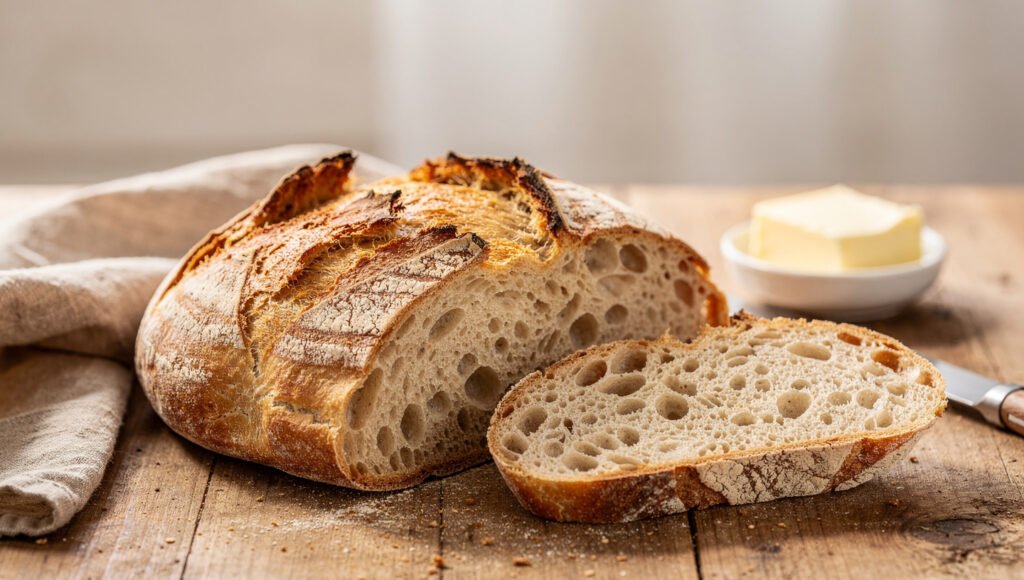
But ingredients alone won’t tell you the whole story – you need to ask about fermentation time. Any decent bakery should be able to tell you exactly how long their dough ferments, and if they can’t answer or seem dodgy about it, that’s your answer right there. You’re looking for a minimum of 12 hours, ideally 18-24 hours for maximum FODMAP reduction. The bread itself should feel dense and heavy in your hand, not light and fluffy like sandwich bread. When you slice it open, you’ll see an irregular crumb structure with holes of different sizes – that’s the signature of slow, wild fermentation.
Smell and taste matter too. Authentic sourdough has a distinct tangy, almost yogurt-like aroma that comes from lactic acid production during fermentation. The flavor should be complex – sour, yes, but also slightly sweet and deeply wheaty. If it just tastes like bread with a hint of vinegar, someone probably took shortcuts. And here’s something most people don’t know: properly fermented sourdough actually stays fresh longer because the acidity acts as a natural preserv
Why You Should Give Sourdough a Shot
Benefits Beyond Bloating
Studies from Monash University show that up to 75% of IBS patients experience symptom improvement when they switch from regular bread to properly fermented sourdough. But here’s what gets me excited – the benefits don’t stop at just reducing gas and bloating. That long fermentation process actually increases the bioavailability of minerals like iron, zinc, and magnesium because the lactic acid bacteria break down phytic acid, which normally binds these nutrients and makes them harder for your body to absorb. You’re basically getting more nutritional bang for your buck with every slice.
And there’s more… the same bacteria that demolish those troublesome fructans also produce beneficial compounds like short-chain fatty acids that can actually support your gut lining. So while regular bread might be triggering inflammation and discomfort in your digestive tract, real sourdough is doing the opposite. It’s working with your body instead of against it. Plus, the lower glycemic index means your blood sugar won’t spike and crash the way it does with conventional bread – which explains why you don’t get that weird afternoon slump after a sourdough sandwich.
Making Peace with Bread Again
Finnish research on rye sourdough revealed something pretty remarkable: IBS patients who couldn’t tolerate regular rye bread experienced little to no symptoms when eating traditionally fermented rye sourdough. Think about what that means for a second. People who’d been avoiding bread for years, who’d resigned themselves to a life of lettuce wraps and rice cakes, suddenly had the option to enjoy real bread again. That’s not just about nutrition – it’s about quality of life, social eating, and not feeling like you’re missing out every time someone passes around the bread basket.
The psychological relief that comes with reintroducing bread can’t be overstated either. When you’ve spent months or years believing your body is broken or that you’re “allergic” to something as fundamental as wheat, finding out it was just a fermentation issue changes everything. You’re not damaged… you just needed better bread. And honestly, once you taste real sourdough – that tangy, complex flavor with the chewy texture – going back to the spongy supermarket stuff feels like a downgrade anyway.
What makes this whole thing even better is that you don’t have to choose between your digestive comfort and enjoying one of humanity’s oldest foods. Traditional sourdough crucially acts like a pre-digestion process, doing some of the heavy lifting before the bread even reaches your gut. The bacteria and wild yeasts spend 12, 18, sometimes 24 hours breaking down the exact compounds that would otherwise ferment rapidly in your intestines and cause all that misery. It’s like having billions of tiny helpers preparing your food in exactly the way your body needs it.
To Wrap Up
Ultimately, your bloating after eating bread isn’t some mysterious curse or a sign that you need to give up carbs forever. It’s a fermentation problem – or more accurately, a lack of proper fermentation. When you switch from factory-made bread to real 24-hour sourdough, you’re necessaryly outsourcing the digestive work to bacteria and time instead of forcing your gut to handle all those FODMAPs on its own. And that makes all the difference between spending your afternoon doubled over in discomfort or actually enjoying your sandwich without consequences.
So before you resign yourself to a lifetime of gluten-free alternatives (which, let’s be honest, often aren’t that great), give authentic long-fermented sourdough a shot. Just make sure it’s the real deal – ask your baker about fermentation time, check the ingredient list, and don’t fall for those supermarket imposters that are basically regular bread with a tangy flavor added. Your gut will tell you pretty quickly if you’ve found the right loaf. Because the truth is, bread isn’t your enemy… rushed, modern bread-making is.
FAQ
Q: I’ve been avoiding bread for years because of bloating – does this mean I can just switch to any sourdough from the store and be fine?
A: My neighbor Sarah tried this exact thing last month and ended up just as bloated as before… turns out she’d grabbed one of those mass-produced “sourdough” loaves that’s basically regular bread with a fancy label. Here’s the deal – most supermarket sourdough isn’t actually fermented long enough to make a difference. You need to find bread that’s been fermented for at least 12-24 hours, and honestly, that’s pretty rare in regular stores.
The bacteria in true sourdough starter need time to break down those fructans (the carbs that cause all that gas and bloating). When commercial bakeries rush the process and only ferment for an hour or two, those fructans are still hanging around in full force. So yeah, you can’t just grab any loaf with “sourdough” on the label and expect magic.
Your best bet? Find a local artisan baker and actually ask them how long they ferment their dough. If they look at you weird or can’t give you a straight answer… that’s probably not the bread you want. Real bakers who do proper fermentation are usually pretty proud of it and happy to talk your ear off about their process.
Q: How do I know if my bloating is from FODMAPs in bread or if I actually have celiac disease?
A: This is super important because the two conditions need totally different approaches. Celiac disease is an autoimmune condition where even tiny amounts of gluten cause serious intestinal damage – like, we’re talking long-term health consequences if you keep eating it. FODMAPs are just poorly absorbed carbs that cause temporary discomfort.
If you have celiac disease, sourdough fermentation won’t help you at all because the gluten protein is still there (fermentation reduces fructans, not gluten). You absolutely need to get tested before you start experimenting with sourdough or eliminating foods. And here’s the catch – you need to be eating gluten regularly for the blood test to work properly, so don’t cut out bread before getting tested or you might get a false negative.
The symptoms can feel similar – bloating, stomach pain, digestive issues. But celiac often comes with other signs like unexplained weight loss, anemia, or skin rashes. If you’ve been avoiding bread and feeling better, that could be either condition… or IBS… or several other things. Bottom line: talk to your doctor and get proper testing done. Self-diagnosing based on how you feel after eating bread isn’t enough when celiac is a possibility.
Q: I found a bakery that does 24-hour fermentation – how much sourdough can I safely eat if I have IBS?
A: Everyone’s tolerance is different, and this is where things get really individual. I started with literally one slice and waited a full day to see how my body reacted… because jumping in with half a loaf would’ve been a disaster if it didn’t work for me.
Most people with IBS who tolerate long-fermented sourdough well can handle 2-3 slices in a sitting without issues. But that’s not a guarantee – some people can eat more, others need to stick with smaller amounts. The Monash University research suggests that proper sourdough significantly reduces FODMAPs, but “low FODMAP” doesn’t mean “zero FODMAP.”
Start small. Like, smaller than you think you need to. Have one slice with your breakfast and see how the rest of your day goes. If you’re fine after 24 hours, try two slices next time. And pay attention to what else you’re eating with it – if you’re piling on high-FODMAP toppings like garlic hummus or honey, you might react even if the bread itself would’ve been fine. Keep a food diary for the first few weeks so you can actually track patterns instead of guessing.
Q: Does the type of flour matter, or is it all about fermentation time?
A: Both matter, but fermentation time is definitely the bigger player here. That said, different flours start with different FODMAP levels, so the type of grain