
Many people blame sugar for everything from brain fog to full-blown depression… and honestly, they’re not entirely wrong. But here’s what might surprise you – the relationship between sugar and your mental health isn’t as simple as “sugar bad, no sugar good.” Recent research involving over 150,000 people reveals something fascinating: both too much AND too little sugar are linked to worse mental health outcomes. Your brain actually needs some glucose to function. Still, when you consistently overdo it with added sugars – especially from sodas and processed foods – you’re messing with your dopamine pathways, cranking up inflammation, and potentially increasing your risk of depression by 20-30%. So before you either demonise every sweet thing or convince yourself that sugar has zero impact on your mood, anxiety, or overall mental well-being, the truth lies somewhere in the middle, and understanding that sweet spot might change how you think about what you eat.
Key Takeaways:
- The relationship between sugar and mental health isn’t black and white – research shows a U-shaped curve where both too much AND too little sugar are linked to worse mental health outcomes. There’s actually a sweet spot in the middle (around 23-160g total sugars daily) where mental wellbeing tends to be best… which means going to extremes in either direction might backfire on you.
- Sugar messes with your brain chemistry in multiple ways at once. It hijacks your dopamine reward system (similar to addictive drugs), triggers inflammation throughout your body, disrupts your gut bacteria, causes insulin resistance in the brain, and creates oxidative stress. And here’s the kicker – these pathways don’t work alone, they pile on top of each other to create a much bigger impact on your mood than you’d expect.
- Where your sugar comes from matters WAY more than the total amount. Fruit? Actually protective of mental health because of the fibre and nutrients it provides. But sugar-sweetened drinks and ultra-processed junk? That’s where the real damage happens. So eating an apple and downing a soda are NOT the same thing, even if they contain similar amounts of sugar.
- The sugar-depression connection works both ways – yes, too much sugar can contribute to depression and anxiety. Still, depression and anxiety also drive people to eat more sugar as a form of self-medication. If you find yourself constantly craving sweets, it might not be a willpower problem… it could be your brain trying to tell you something about your mental health.
- Completely cutting out sugar often makes things worse, not better. Extreme restriction typically triggers a restrict-binge cycle that mirrors addiction patterns and can actually worsen both physical and mental health over time. A balanced, moderate approach without rigid rules tends to produce better long-term outcomes for most people.
Is Sugar Really the Bad Guy?
What’s the Deal with Sugar and Mood?
Picture this: you’re having a rough afternoon at work, stress levels climbing, and you find yourself reaching for that chocolate bar in your desk drawer. Twenty minutes later, you feel amazing… then an hour after that, you’re irritable, foggy, and already thinking about your next sugar fix. Sound familiar? This rollercoaster isn’t just in your head – it’s your brain chemistry doing backflips, and it reveals something pretty fascinating about how sugar actually works in your system.
Your brain runs on glucose, so it makes sense that you’d crave sugar when you’re stressed or tired. But here’s where things get interesting. When you consume sugar, especially the refined kind found in processed foods and drinks, your blood glucose spikes rapidly, triggering a corresponding insulin surge. What goes up must come down, right? That crash you feel isn’t weakness – it’s your blood sugar plummeting below baseline, often leaving you more anxious, irritable, and mentally foggy than before you ate. And because your brain remembers that initial “high,” it starts demanding more sugar to recreate that feeling. This creates a feedback loop that can seriously mess with your mood stability throughout the day, making you feel like you’re constantly chasing that next sweet fix to feel normal.
Digging into the Science Behind Sugar’s Impact
The dopamine connection is where things get really wild. Sugar doesn’t just give you energy – it literally hijacks the same reward pathways in your brain that respond to addictive substances. That 2025 systematic review in Obesity Reviews didn’t just find correlations… it identified actual mechanisms. When you eat sugar regularly, your brain naturally produces less dopamine and reduces the number of D2 receptors available to receive it. Translation? You need more and more sugar to feel the same level of satisfaction, while everyday activities that used to bring you joy start feeling kind of… meh. This is why people who consume high amounts of added sugar often report feeling unmotivated and anhedonic – that’s the technical term for when nothing feels rewarding anymore.
But the dopamine story is just one piece of the puzzle. High sugar intake triggers a cascade of inflammatory markers throughout your body, including cytokines that can cross the blood-brain barrier and directly influence mood regulation. Studies have shown that people with depression often have elevated inflammation markers, and guess what raises those markers? Yep, excessive sugar consumption. Then there’s your gut microbiome – those trillions of bacteria living in your digestive system that are constantly communicating with your brain through the vagus nerve. When you flood your system with sugar, you’re feeding the “bad” bacteria while starving the beneficial ones that produce neurotransmitters like serotonin and GABA. So you’re not just affecting your brain directly… you’re changing the entire ecosystem that supports your mental health from the ground up.
The insulin resistance angle adds another layer to this whole mess. When your cells become resistant to insulin from chronic sugar overconsumption, your brain struggles to efficiently use glucose for energy – even when plenty is available in your bloodstream. This metabolic dysfunction has been linked to cognitive impairment, brain fog, and worsening symptoms of depression and anxiety. And then there’s oxidative stress and those AGEs (advanced glycation end products) that form when excess sugar molecules bind to proteins in your body. These toxic compounds accumulate in neural tissue over time, contributing to inflammation, cellular damage, and accelerated brain ageing. It’s not just about feeling crummy today – it’s about the long-term impact on your brain’s structure and function. Research from the UK Biobank, tracking nearly 170,000 people over a decade, showed this isn’t theoretical… It has a measurable, real-world impact on mental health outcomes.
Too Much or Too Little: What’s the Sweet Spot?
Your brain runs on glucose. That’s not a metaphor or an exaggeration – it’s biochemistry. So when you swing too far in either direction with sugar intake, you’re crucially messing with your brain’s fuel supply. What makes this tricky is that blood sugar instability affects mood long before it shows up as diabetes or metabolic disease. You might be walking around with mood swings, brain fog, or anxiety that’s actually rooted in how your body is handling sugar… and never connect the dots.
The University of Michigan School of Public Health has explored this connection in depth, noting that mood disorders can sometimes be symptoms of unstable blood sugar rather than purely psychological conditions. When your glucose levels are constantly spiking and crashing, your brain experiences this as stress – and your body responds accordingly. Cortisol goes up, inflammation increases, and suddenly you’re dealing with irritability, fatigue, or that overwhelming afternoon slump that feels emotional but might actually be metabolic. The sweet spot isn’t about hitting some magic number every single day. It’s about finding a range where your blood sugar stays relatively stable, and your brain gets consistent fuel without the rollercoaster.
Finding that Goldilocks Zone for Sugar
So what does this middle ground actually look like in practice? Based on the research, you’re aiming for somewhere between 23-160 grams of total sugars daily, with added sugars ideally under 90 grams. But here’s where it gets interesting – that’s a pretty wide range, right? And that’s intentional. Your personal sweet spot depends on factors like your activity level, metabolic health, body size, and even your gut microbiome composition. An athlete burning through glycogen stores needs more sugar than someone with a sedentary desk job. Someone with insulin resistance needs to be more careful than someone with healthy metabolic function.
What matters more than hitting exact numbers is paying attention to how you feel. Are you experiencing energy crashes a couple of hours after meals? Do you get hangry or brain foggy between breakfast and lunch? These are signs your blood sugar might be swinging too wildly. On the flip side, if you’re restricting sugar so severely that you’re constantly thinking about sweets, feeling deprived, or binging when you finally “allow” yourself treats… that’s your body telling you the restriction has gone too far. The Goldilocks zone is where you have steady energy, a stable mood, and food doesn’t occupy constant mental real estate.
How Much Sugar Should You Really Be Eating?
Let’s get practical with some actual guidelines. The World Health Organisation recommends limiting free sugars to less than 10% of your total daily calories, with additional benefits seen when you keep it under 5%. For someone eating 2000 calories a day, that’s roughly 50 grams at the 10% mark, or about 25 grams at 5%. The American Heart Association suggests even stricter limits – no more than 25 grams (6 teaspoons) daily for women and 36 grams (9 teaspoons) for men of added sugars specifically.
But here’s what often gets lost in these recommendations: they’re talking about added or “free” sugars, not the naturally occurring sugars in whole foods like fruit, vegetables, or plain dairy. An apple contains about 19 grams of sugar. Still, it’s packaged with fibre, vitamins, and phytonutrients that completely change how your body processes it compared to 19 grams of sugar from a soda. When you’re counting your intake for mental health purposes, you want to focus primarily on limiting those added sugars – the stuff in processed foods, sweetened beverages, candy, baked goods, and sauces.
Your daily sugar intake should ideally come mostly from whole food sources, with added sugars making up the smaller portion. If you’re currently consuming the typical Western diet (which averages around 77 grams of added sugar daily for Americans
Sugar’s Sneaky Influence on Your Brain
Your brain runs on glucose, so you’d think feeding it sugar would be a good thing, right? Well, it’s not quite that simple. While your brain does need a steady supply of glucose to function, the way you deliver that sugar makes all the difference. When you eat a balanced meal with complex carbs, your brain gets a nice, steady stream of fuel. But when you down a soda or eat a handful of candy? That’s when things get messy.
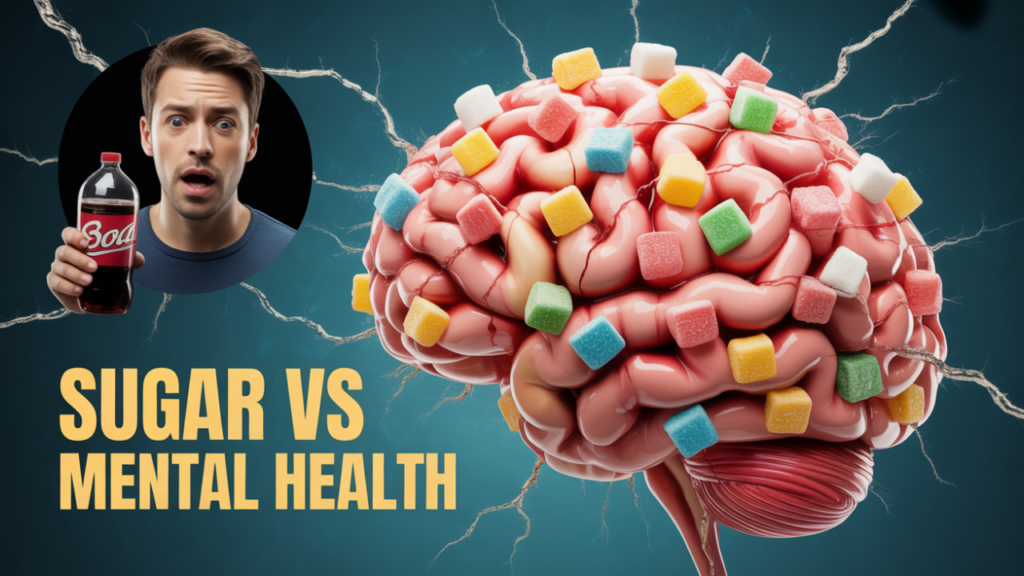
The problem isn’t just about energy supply. Sugar fundamentally changes how your brain operates at a chemical level, affecting everything from your ability to focus to how you experience pleasure and motivation. And here’s what makes it so sneaky – these changes happen gradually, often without you noticing until you’re already caught in patterns that feel impossible to break. You might blame yourself for a lack of willpower or motivation, when really, your brain chemistry has been quietly shifting in response to your sugar intake.
How Sugar Affects Your Mood and Motivation
Think about the last time you felt really accomplished or excited about something you achieved. That feeling? That’s dopamine doing its job. Now here’s where sugar becomes a problem – it hijacks the same reward pathways that are supposed to motivate you toward meaningful goals and experiences. When you eat sugar, especially in large amounts, your brain gets flooded with dopamine. Sounds great, except your brain wasn’t designed for these artificial spikes.
Over time, something really troubling happens. Chronic sugar overconsumption actually reduces the density of your dopamine receptors, particularly the D2 receptors, which play a significant role in motivation and pleasure. What does this mean in real life? You start needing more sugar to get the same mood boost, while simultaneously finding it more challenging to feel motivated or excited about things that used to bring you joy. It’s basically the exact mechanism seen in substance use disorders, which explains why cutting back on sugar can feel genuinely difficult – because it is. Your brain has physically adapted to expect those sugar-driven dopamine hits, and without them, everything else feels a bit… flat.
The Connection Between Sugar and Inflammation
You’ve probably heard about inflammation in relation to joint pain or heart disease, but what does it have to do with your mood? Turns out, a lot. High sugar intake promotes chronic, low-grade inflammation throughout your body, including in your brain. This isn’t the acute inflammation you get from an injury that helps you heal – this is the persistent kind that quietly damages tissue over time. And your brain is particularly vulnerable to inflammatory damage.
Depression and anxiety aren’t just “in your head” in the way people used to think. There’s mounting evidence that inflammation plays a significant role in both conditions. When you consistently consume high amounts of sugar, you’re vitally creating an inflammatory environment in your body that your brain has to operate within. Studies have linked this sugar-driven inflammation to increased rates of depression, with some populations showing a 20-30% higher risk. The inflammatory molecules produced when you eat too much sugar can actually cross the blood-brain barrier and interfere with neurotransmitter function, affecting how you regulate mood and respond to stress.
What makes this particularly concerning is that inflammation and mental health create a vicious cycle. When you’re depressed or anxious, you’re more likely to reach for sugary comfort foods (we’ve all been there). But those foods increase inflammation, which worsens your mood, which makes you crave more sugar… and round and round it goes. Breaking this cycle isn’t about willpower alone – it requires understanding that your sugar intake is literally creating a biological environment that makes it harder for your brain to function optimally. The good news? Reducing added sugars, especially from processed foods and sugary drinks, can help lower inflammation levels relatively quickly, giving your brain a chance to reset and heal.
Not All Sugars Are Created Equal
My colleague recently told me she’d stopped eating fruit because she was “trying to quit sugar.” When I asked why she was still drinking Diet Coke but avoiding bananas, she looked genuinely confused. This kind of thinking has become surprisingly common, and it’s precisely backwards when it comes to protecting your mental health.
The research makes something abundantly clear: the source of sugar matters far more than most people realise. When scientists look at mental health outcomes, they’re not just counting grams of sugar – they’re tracking where those grams come from. And the difference is massive. Sugar from whole foods, especially fruit, consistently shows up in studies as protective or neutral for mental health. But sugar from processed foods and beverages? That’s where the depression and anxiety risks concentrate. It’s not just about the sugar molecule itself… It’s about everything that comes with it (or doesn’t come with it, in the case of processed foods).
Whole Foods vs. Processed Sugars
Think about what happens when you eat an apple versus drinking apple juice, or better yet, a soda. The apple comes packaged with fibre that slows down sugar absorption, preventing those dramatic blood sugar spikes that can trigger mood swings. It also delivers polyphenols and antioxidants that actually reduce inflammation in your brain – the same inflammation that high sugar intake is supposed to cause. Your gut bacteria love the fibre too, and since we know the gut-brain connection plays a huge role in mental health, this matters more than we used to think.
Processed sugars are a completely different story. Sugar-sweetened beverages and ultra-processed foods deliver rapid glucose spikes without the protective compounds found in whole foods. Your body gets hit with a concentrated dose of sugar, your insulin spikes, and within an hour or two, you’re often experiencing that familiar crash – irritability, brain fog, and cravings for more sugar. Studies tracking large populations have found that people who get most of their sugar from these processed sources show significantly higher rates of depression and anxiety compared to those eating similar amounts of total sugar from whole food sources. The UK Biobank data showed this pattern held even after controlling for overall diet quality, exercise, and other lifestyle factors.
Why Fruit Is Actually Good for You
So here’s where things get interesting – and where a lot of low-carb enthusiasts get it wrong. Fruit consumption is consistently associated with better mental health outcomes, not worse ones. The same systematic reviews that found added sugar increases depression risk by 20-30% also found that people eating more whole fruit had lower rates of mood disorders. This isn’t just correlation either… the biological mechanisms make sense when you look at what fruit actually does in your body.
Berries, for instance, are packed with compounds that cross the blood-brain barrier and directly reduce neuroinflammation. Citrus fruits provide vitamin C and flavonoids that support neurotransmitter production. Even higher-sugar fruits like mangoes and grapes deliver polyphenols that improve insulin sensitivity rather than worsening it. The fibre content means your blood sugar rises gradually and steadily, providing your brain with consistent fuel rather than the rollercoaster ride you get from candy or soda.
What really drives this home is looking at populations with high fruit intake. Mediterranean diet studies – where people regularly eat multiple servings of fruit daily – show some of the lowest depression rates in research literature. These aren’t people restricting fruit out of fear… they’re eating it freely and seeing mental health benefits. The protective effects seem to increase up to about 3-5 servings per day, after which the benefits plateau but don’t reverse. So if you’ve been avoiding fruit because you’re worried about sugar and your mood, you’re probably doing yourself more harm than good. Your brain needs the nutrients, your gut needs the fibre, and the natural sugars in whole fruit don’t carry the same risks as the processed stuff.
It’s a Two-Way Street: How Mood Affects Sugar Cravings
We’ve talked about how sugar impacts your brain, but there’s another side to this story that doesn’t get nearly enough attention. Your mental state directly influences how much sugar you crave – and understanding this connection might be the missing piece in why you keep reaching for sweets even when you know they’re not helping.
Think about the last time you had a rough day. Maybe you got into an argument, felt overwhelmed at work, or just woke up feeling off. Where did your mind go? If you’re like most people, it probably wandered straight to the cookie jar or the ice cream in your freezer. And there’s actual science behind why this happens – it’s not just a lack of willpower or some character flaw you need to fix.
Why We Crave Sugar When We’re Down
When you’re feeling low, anxious, or stressed, your brain is necessarily running on empty in terms of feel-good neurochemicals. Depression, in particular, is associated with reduced dopamine activity – that same reward chemical we talked about earlier. So what does your brain do? It sends you hunting for the quickest dopamine fix available, and sugar is one of the fastest routes there. This is why depression and anxiety can drive increased sugar consumption – you’re literally trying to self-medicate with food.
The temporary mood boost you get from eating something sweet isn’t imaginary. Sugar does provide a real, measurable increase in dopamine… It’s just that the effect is short-lived and comes at a price. But in that moment when you’re feeling terrible, your brain doesn’t care about the long-term consequences. It wants relief now. Studies show that people experiencing depressive symptoms consume significantly more added sugars than those without mood disorders, creating a feedback loop that’s hard to break without addressing the underlying emotional state.
The Ups and Downs of Emotional Eating
So you eat the chocolate, feel better for twenty minutes, maybe an hour if you’re lucky… and then what? The blood sugar spike crashes, the dopamine rush fades, and often you end up feeling worse than before. Maybe there’s guilt mixed in now, too. And guess what your brain suggests as a solution? More sugar. This restrict-binge cycle mirrors patterns seen in other addictive behaviours, and it can seriously mess with both your physical and mental health over time.
But here’s where it gets tricky – completely swearing off sugar when you’re already struggling emotionally often backfires spectacularly. When you’re dealing with depression or anxiety, and you add rigid food rules on top of that, you’re setting yourself up for a cycle of deprivation and overindulgence that makes everything worse. Clinical experience shows that balanced approaches work better than extreme restriction, especially when mental health is already compromised.
The real issue isn’t that you occasionally turn to sugar for comfort – it’s when sugar becomes your primary or only tool for managing difficult emotions. If you find yourself constantly using sweets to cope with stress, sadness, or anxiety, that’s worth paying attention to. It might signal an underlying mood issue that needs addressing, rather than just being about the sugar itself. And treating that root cause – whether through therapy, medication, lifestyle changes, or a combination – often naturally reduces those intense cravings without you having to white-knuckle your way through them.
The Danger of Going to Extremes
You’ve probably seen those dramatic “I quit sugar for 30 days” posts all over social media. They’re everywhere – complete with before-and-after photos, glowing testimonials about miraculous energy levels, and promises that cutting out sugar entirely will transform your life. And maybe you’ve even tried it yourself, convinced that going cold turkey was the only way to break free from sugar’s grip on your mood and mental health.
But there’s a problem with this all-or-nothing approach that nobody talks about enough. When you swing to either extreme – whether that’s consuming massive amounts of sugar or cutting it out completely – your mental health can actually suffer more. That U-shaped curve we discussed earlier? It applies to restrictions too. Your brain needs glucose to function, and when you deprive it entirely, you’re not doing yourself any favours. Plus, there’s the psychological toll of labelling an entire category of food as “forbidden” – which, let’s be honest, usually makes you want it even more.
Why Cutting Out Sugar Completely Might Not Work
The restrict-binge cycle is real, and it’s brutal. You start strong, feeling virtuous and in control as you turn down dessert and scrutinise every ingredient label. For a few days or even weeks, you might feel amazing… but then something shifts. Maybe you’re stressed, tired, or just walking past a bakery at the wrong moment. Suddenly, you’re not just having one cookie – you’re eating half the box because your brain is screaming that this is your only chance before you go back to restriction mode tomorrow. This pattern mirrors what clinicians see in addiction treatment, where rigid rules often lead to more intense relapses than flexible, balanced approaches.
And it’s not just psychological. When you cut sugar too drastically, your body responds by ramping up cravings through multiple pathways – hormonal changes, neurotransmitter imbalances, even alterations in how your taste buds perceive sweetness. Some people report that after extreme restriction, they become almost obsessed with sugar in a way they never were before. The UK Biobank data showed that people consuming very low amounts of sugar (under 23 grams total per day) had elevated mental health risks comparable to those eating excessive amounts. Your brain interprets severe restriction as a threat, which can actually worsen anxiety and depression rather than improving them.
How to Find Balance Without the Guilt
So what does balance actually look like in practice? It’s less Instagram-worthy than a dramatic sugar detox, but it’s way more sustainable. Think of sugar as something to be managed intelligently rather than feared or eliminated. You can absolutely enjoy dessert, add honey to your tea, or eat a piece of fruit without derailing your mental health. The key is keeping your added sugars in that sweet spot – under 90 grams per day – while getting most of your sugar from whole food sources like fruit, which come packaged with fibre and nutrients that protect your brain.
This means you stop categorising foods as “good” or “bad” and start thinking about patterns instead, and having ice cream after dinner a few times a week? Totally fine if the rest of your diet is solid. Drinking three sodas a day and snacking on candy between meals? That’s where problems start to emerge. The difference isn’t about perfection – it’s about your overall relationship with sugar and whether you’re using it as your primary tool for emotional regulation. When you remove the guilt and shame from occasional treats, you actually reduce the psychological stress that can trigger binge eating in the first place.
Building this balanced approach takes practice, especially if you’ve been caught in the restrict-binge cycle for a while. Start by noticing when you reach for sugar – are you actually hungry, or are you tired, stressed, or emotionally depleted? If sugar has become your go-to coping mechanism for complex emotions, that’s worth exploring with a healthcare provider because it might signal an underlying mood issue that needs direct treatment. But for everyday sugar consumption? Permit yourself to enjoy it in reasonable amounts without the mental drama. Your brain will thank you for the stability, and you’ll probably find that sugar loses some of its power over you once it’s no longer forbidden fruit.
Conclusion
Now you’ve got the whole picture – and honestly, it’s probably not what you expected when you clicked on this article. Sugar’s impact on your mental health isn’t about good versus evil; it’s about finding that middle ground where your brain gets what it needs without tipping into excess. And here’s something worth sitting with for a moment…
Your relationship with sugar might actually be a window into your mental health, not just a cause of it. If you’re constantly reaching for sweets to feel better, that’s information – your brain might be trying to tell you something deeper is going on. So instead of beating yourself up over that afternoon chocolate bar or swearing off sugar forever (which usually lasts about three days anyway), maybe the honest answer is paying attention to patterns. Are you using sugar as your primary mood management tool? That’s worth exploring with someone who can help—but having some sugar in your life, especially from whole foods? That’s not just okay – it might actually support your mental wellbeing better than total elimination ever could.
FAQ
Q: How much sugar is actually okay for my mental health – like, what’s the real number I should be aiming for?
A: My friend Sarah used to obsess over every gram of sugar, even cutting out fruit because she read somewhere that “sugar is sugar.” She ended up more anxious than ever, constantly thinking about food. Here’s what the research actually shows: there’s a sweet spot (pun intended) between about 23 and 160 grams of total sugar per day where mental health outcomes look best. For added sugars specifically, you want to stay under 90 grams daily. But here’s the thing… this isn’t about hitting exact numbers every single day. Some days you’ll have more, some less. The goal is avoiding the extremes – both gorging on sugary drinks and processed foods AND trying to eliminate every trace of sugar from your life. Both approaches can mess with your mental health. Think of it more like a range you’re generally hanging out in rather than a rigid target you’re hitting with military precision.
Q: Wait, so eating zero sugar isn’t actually better for my brain? That seems backwards…
A: I get it – this feels counterintuitive when we’ve been told for years that sugar is basically poison. But the data from studies following over 150,000 people tells a different story. Both too much AND too little sugar were linked to worse mental health outcomes. Why? Well, your brain runs on glucose. It’s literally its primary fuel source. When you restrict sugar too aggressively, you can trigger a whole cascade of problems – blood sugar crashes that make you irritable and anxious, obsessive thoughts about food, and often a restrict-binge cycle that leaves you feeling out of control. Plus, extreme restriction usually means cutting out nutrient-dense foods like fruit, which actually protect mental health. And there’s the psychological piece too… when you make any food completely off-limits, it tends to take up way more mental real estate than it deserves. That constant vigilance? That’s exhausting and anxiety-provoking in itself.
Q: Does it matter where my sugar comes from, or is sugar just sugar when it comes to my mood?
A: Oh, this matters SO much – probably more than the total amount in many cases. My cousin went through this phase where he’d panic about eating an apple because of the sugar content, but then he’d drink a can of soda without thinking twice. Totally backwards. Sugar from whole foods, especially fruit, comes packaged with fibre, vitamins, minerals, and protective compounds called polyphenols. These completely change how your body processes that sugar and how it affects your brain. The fibre slows absorption, so you don’t get those blood sugar spikes and crashes. The nutrients support neurotransmitter production. Studies consistently show that fruit consumption is associated with BETTER mental health outcomes, not worse. On the flip side, sugar-sweetened beverages and ultra-processed foods with added sugars? That’s where the mental health risks really concentrate. No fibre to slow things down, no protective nutrients, just a rapid spike in blood sugar followed by a crash that can leave you feeling anxious, irritable, or down. So yeah… an orange and a glass of orange juice are NOT the same thing for your brain, even if they contain similar amounts of sugar.
Q: I crave sugar like crazy when I’m stressed or sad – am I just addicted or is something else going on?
A: This is actually one of the most fascinating parts of the research, and it’s not as simple as “you’re just addicted” or “you lack willpower.” The relationship between sugar and mental health runs both ways. Yes, eating too much sugar can worsen depression and anxiety over time… but depression and anxiety can also DRIVE sugar cravings. When you’re feeling low, your brain is literally looking for ways to boost dopamine and serotonin – those feel-good chemicals that are running low. Sugar provides a quick hit of both. So weirdly, reaching for something sweet when you’re stressed is your brain’s way of self-medicating. It’s not a character flaw. The problem is that it’s a short-term fix that can make things worse in the long term, especially if it becomes your primary coping mechanism. If you notice you’re consistently using sugar to manage difficult emotions, that might be worth exploring with a therapist or