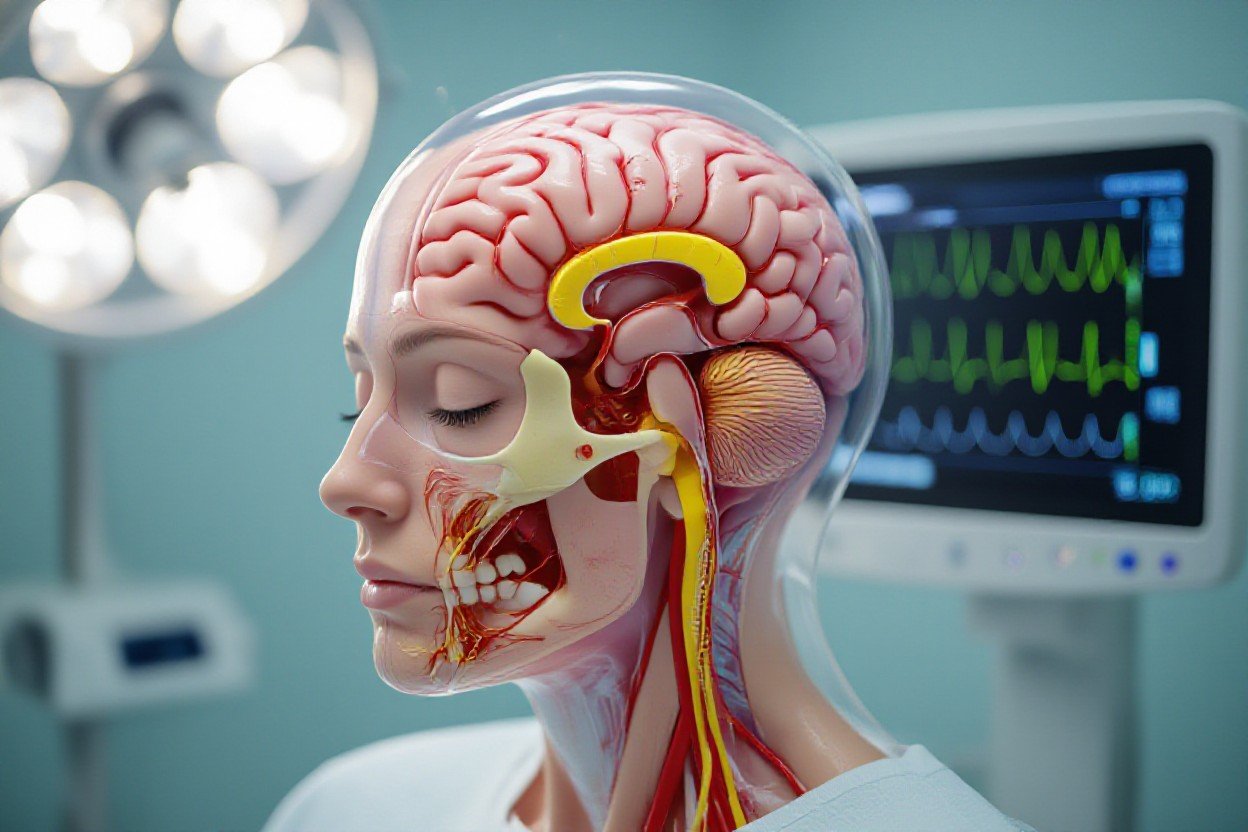
Moving Beyond Migraine Triggers and Myths.
Migraine is more than a headache. It’s a neurological storm affecting 1.2 billion people. Using real-time brain imaging, we’re now looking past the old “avoidance” checklists to understand the genetic blueprints and molecular shifts that actually drive an attack. We aren’t just managing pain; we’re decoding the machinery behind it.
Key Takeaways:
- Scientists are discovering that what we’ve always thought were migraine triggers – like chocolate, cheese, or strong smells – might actually be early symptoms of an attack that’s already started. Your brain could be seeking out certain foods or becoming hypersensitive to scents before the headache even hits, which means you’ve been blaming the wrong culprit this whole time. Brain scans show that patients who think light triggers their migraines already have overactivity in their visual processing centers before the pain starts… the attack was coming anyway.
- Migraine isn’t just a bad headache – it’s a complex neurological disorder with a strong genetic component that affects your entire body. Researchers have identified 123 genetic markers linked to migraine (and suspect there are thousands more), some of which overlap with depression and diabetes. Between 30-60% of migraine cases have a hereditary component, which explains why it tends to run in families and why it’s so incredibly varied in how it shows up from person to person.
- Blood vessels dilating in the brain used to be considered the main cause of migraine, but that theory has been turned on its head. While blood vessels definitely play a role during an attack and can be targeted with medications to relieve pain, they’re probably not what’s actually causing the migraine in the first place. The real culprit seems to be deeper in the brain itself – possibly involving abnormal electrical signals and molecular changes that then affect blood vessels as a secondary effect.

So why has migraine been so misunderstood?
For centuries, your debilitating neurological disorder was dismissed as nothing more than a “feminine whim” – a convenient excuse for women who were supposedly too delicate or hysterical to handle daily life. This sexist stigma has directly translated into chronically underfunded research, with very few universities even bothering to establish proper migraine research centres today. While we now know that three-quarters of migraine patients are indeed female, that’s biology, not hysteria… but the damage from those 18th and 19th century attitudes lingers in how seriously your condition gets taken and how much money gets invested into solving it.
Old myths, sexism and why research got ignored
Starting in the 1700s, doctors branded migraine as a disease that struck only “clever, charming and beautiful women” with special “migraine personalities” – which sounds almost flattering until you realise it meant your pain wasn’t real, just psychological drama. “People thought of it as a disease of hysteria,” says Teshamae Monteith from the University of Miami Health System. Even today, investments into migraine research pale compared with other neurological conditions, despite the fact that it’s the second most prevalent cause of disability worldwide. That’s what happens when centuries of sexism convince the medical establishment that your suffering is all in your head.
It’s not just a headache – the whole-body chaos
What makes studying your condition so frustratingly complex is that migraine disorder presents as a whole series of events happening well before a headache ever starts. About 25% of you get auras – those jagged bright glares or blurred visions. Others experience vertigo, stomach pain, or find themselves yawning excessively. More than half experience extreme fatigue, while some experience specific food cravings or heightened sensitivity to light, sound, and smell. “The entire migraine attack is a very complicated thing,” says Gregory Dussor. “It’s not just pain.”
Your shoulder might feel frozen hours before the headache hits. You might start craving chocolate or notice you can’t stop yawning. Some of you experience nausea so severe you can’t function, while others deal with sensitivity so intense that normal lighting feels like staring into the sun. And because these symptoms vary so wildly from person to person – and even from attack to attack in the same person – scientists have struggled to pin down what’s actually happening in your brain versus what’s just a side effect. This whole-body experience affects you during your most productive years, between your mid-twenties and mid-fifties, increasing the likelihood that you will skip work, lose your job, or retire early. Data from the UK shows that a 44-year-old with migraine costs the government an extra £19,823 ($27,300) each year compared with someone without the condition – that’s £12bn ($17bn) to the public economy annually, proving this is far from just a bad headache you should tough out.
Triggers or just early symptoms – is that chocolate really to blame?
You’ve probably blamed chocolate, cheese, or that glass of red wine for sparking your last attack. But here’s where things get interesting: what if your brain was already launching an attack before you even reached for that chocolate bar? Scientists now believe many so-called triggers are actually early symptoms of a migraine that’s already begun. Your body might be subconsciously craving specific foods during the premonitory phase – that sneaky period before the pain hits. So when you eat chocolate and then get a migraine hours later, you’re connecting dots that don’t actually form a straight line. The attack had likely already started, quietly brewing in your brain.
My take on cravings, smells and what you’re actually feeling
That perfume you wear daily? You only notice it on migraine days because your brain’s already hypersensitive to scents during the early attack phase. Goadsby calls this “causal attribution” – we’re hardwired to find patterns and assign blame, even when we’ve got it backwards. Your heightened smell sensitivity isn’t triggering the migraine; it’s actually one of the first symptoms showing up. The same goes for those weird food cravings. You’re not causing an attack by giving in to them – your neurological system is already shifting gears, and those cravings are just passengers along for the ride.
Light, yawning and weird urges – cause or clue?
When Goadsby scanned the brains of patients who blamed light for their attacks, he found something fascinating: their visual processing centres showed overactivity right before the migraine hit. This wasn’t happening in patients who didn’t associate light with their pain. Translation? If you think bright lights trigger your migraines, your brain’s vision centre is already firing differently before you even encounter that fluorescent office lighting. The excessive yawning some patients experience? That’s not tiredness causing a migraine – it’s an early warning sign that one’s approaching.
About 25% of patients get auras – those jagged bright glares or blurry visions – but even without obvious visual symptoms, something is biologically shifting in your brain well before the headache phase begins. These premonitory symptoms can include fatigue, neck stiffness, mood changes, and yes, those strange food cravings or yawning fits. The problem is we’ve spent decades treating these early signs as separate triggers rather than recognising them as part of the attack itself. This matters because if we can identify when an attack is actually starting – not when we think we’ve triggered it – we might be able to intervene earlier and more effectively.
Genes – what’s actually going on under the hood?
You’d think with all those genetic studies, we’d have this figured out by now. But here’s what makes migraine genetics so maddeningly complex: your DNA isn’t handing you a simple on-off switch for migraine disorder. Instead, you’re inheriting a complicated web of genetic variations that interact with each other and everything else in your life. Those 123 risk SNPs Nyholt found? They’re just the beginning of a much messier story about how your genes shape your brain’s susceptibility to attacks.
My take on the big genetic studies and those 123 “risk snips”
What’s fascinating about Nyholt’s massive genetic screening is that he compared 100,000 migraine patients with 770,000 people who don’t get migraines and still only found 123 genetic markers, with thousands more probably lurking in your DNA. These aren’t “migraine genes” exactly… they’re tiny variations that seem to cluster around depression, diabetes, and brain structure. So when you inherit migraine from your parents, you’re not getting one faulty gene – you’re getting a constellation of genetic quirks that make your brain wired differently.
Why genes aren’t destiny – environment and life history matter
Even though genes account for 30-60% of your migraine risk, that still leaves a huge chunk determined by your life experiences and environment. This is why identical twins don’t always both develop migraine disorder, even though they share the exact same DNA. Your stress levels, sleep patterns, hormone fluctuations, and even your childhood experiences can all flip switches that either activate or suppress those genetic vulnerabilities you inherited.
The interplay between your genes and your environment is where things get really interesting. You might carry all those risk SNPs, but if you never encounter the right combination of environmental triggers – chronic stress, hormonal changes, sleep deprivation – they might stay dormant. Conversely, someone with fewer genetic markers might develop severe chronic migraine because their life circumstances keep activating whatever vulnerabilities they do have. This is why migraine disorder often emerges or worsens during particularly stressful periods of your life, like starting a demanding job or going through major life transitions. Your genes loaded the gun, but your environment and life history are what pull the trigger… and sometimes what you think is pulling that trigger is actually just an early symptom of an attack that’s already begun.
Blood vs brain – what’s the real deal?
That pulsing, throbbing sensation you feel during an attack? For decades, scientists thought it was literally your blood vessels expanding and flooding your brain with too much blood. It made perfect sense – the pain throbs in rhythm with your heartbeat, after all. But when researchers actually measured blood flow during migraine attacks, they hit a wall. The correlation just wasn’t there.
So blood vessels cause migraines – seriously? Not quite
Dussor puts it bluntly: you could give every single person on Earth a drug that dilates blood vessels and not everyone would end up writhing in pain with a migraine. If blood vessel dilation was the culprit, we’d all be in trouble. Yet only those of us with migraine disorder actually experience attacks. So while your veins are definitely doing something weird during an attack – and drugs that constrict them can help ease your pain – they’re probably not the root cause you’ve been looking for.
How vessels still matter – but maybe because of molecules and signals
Blood vessels haven’t been completely cleared of involvement, though. Many of the 123 risk genes Nyholt identified are genes that regulate the veins. And yes, your blood vessels do dilate abnormally during attacks, which is why drugs that constrict them can offer relief. The twist? Scientists now suspect the real troublemakers might be lurking in the walls of those vessels – pain-causing molecules getting released at the wrong time, or signals misfiring in ways we’re only beginning to understand.
What’s fascinating is how this shifts the entire framework of migraine research. Instead of thinking about your blood vessels as simple tubes that expand and contract, researchers are now examining them as complex signalling systems. The molecules released from vein walls during an attack could be triggering pain pathways in your brain, or the signals between vessels and nerve cells might be going haywire. Some scientists are investigating whether the lining of your blood vessels – the endothelium – might be releasing inflammatory substances that sensitise nearby nerves. Others are tracking how certain peptides and proteins interact with vessel walls to create that cascade of pain you know all too well. It’s not about blood flow anymore – it’s about the intricate chemical conversations happening right there in your vascular system, conversations that somehow go terribly wrong when you’re prone to migraine disorder.
New science that’s finally letting us watch a migraine unfold
For decades, scientists had to rely on patients describing what happened during their attacks after the fact. But recent technological breakthroughs are allowing researchers to observe a migraine in real time, capturing the electrical storms and chemical cascades as they sweep through the brain. It’s like finally getting to see the enemy you’ve been fighting blindfolded for years. These advances are revealing that Migraine – Symptoms and causes involve far more complex brain mechanisms than anyone previously imagined, and they’re happening in areas scientists hadn’t even been looking at before.
Seeing electrical activity and brain areas light up in real time
Brain imaging technology has gotten good enough that researchers can now track the waves of electrical activity that ripple across your cortex during an attack. What they’re seeing is fascinating and kind of terrifying. A wave of spreading depression – basically a tsunami of reduced brain activity – crawls across the surface of your brain at about 3-5 millimetres per minute during the aura phase. And it’s not just happening in one spot… multiple brain regions light up in sequence, which explains why your symptoms can shift and evolve throughout an attack. Scientists can literally watch as the visual processing centre goes haywire, then the pain centres activate, then other areas join the party.
Molecules, mixers and the hunt for better targets – honestly exciting
The real game-changer has been identifying the specific molecules floating around in your brain during an attack. Researchers have identified a peptide called CGRP (calcitonin gene-related peptide) that spikes dramatically during migraine attacks and appears to play a central role in the whole cascade. When scientists inject CGRP into migraine patients, it triggers an attack. Block it, and many patients get relief. This discovery has led to an entirely new class of medications that specifically target CGRP, and they’re working for people who never responded to anything else.
But CGRP isn’t working alone in there. Scientists are now mapping out the entire molecular cocktail that’s swirling around during your attacks – glutamate, serotonin, dopamine, and a whole alphabet soup of other neurotransmitters and peptides. Each appears to play a role in different phases of the attack. Some molecules might be responsible for the premonitory symptoms you feel hours before the pain hits, while others drive the actual headache, and still others keep the whole thing going once it starts. What’s genuinely exciting is that each of these molecules represents a potential new drug target. Instead of the old approach of just trying to numb the pain or constrict blood vessels, researchers can now design medications that interrupt specific steps in the migraine cascade… and they’re doing exactly that right now in labs around the world.
Treatments today – what’s useful and what’s still missing?
Your options for managing migraine attacks have expanded dramatically over the past decade, but there’s still a frustrating gap between what works and what you actually need. Traditional painkillers like ibuprofen can help if you catch an attack early enough, while triptans – drugs that constrict blood vessels – have been the go-to prescription for years. The real game-changer has been CGRP inhibitors, a new class of biologics that target the pain-causing molecules released during attacks. These monthly injections can reduce attack frequency by 50% or more for many patients. But here’s the catch… they’re expensive, not everyone responds to them, and they don’t work for everybody who tries them. This leaves millions still searching for relief that actually fits their lives.
From painkillers to new biologics – what actually helps people
The treatment landscape now ranges from over-the-counter options to cutting-edge biologics, but effectiveness varies wildly from person to person. NSAIDs like aspirin work for mild attacks, while triptans remain the most prescribed acute treatment – though they can cause side effects like dizziness and aren’t safe if you have heart problems. The newest players are CGRP monoclonal antibodies and gepants, which specifically block the molecules involved in migraine attacks rather than just masking pain. Some patients also find success with preventive medications like beta-blockers or antidepressants taken daily to reduce attack frequency. This combination of acute and preventive approaches gives you more tools than ever before.
Living with migraine – coping tips and why early treatment matters
The single most important thing you can do during an attack is treat it early – waiting even 30 minutes can mean the difference between relief in an hour versus suffering for days. When you feel that first twinge or notice your premonitory symptoms kicking in, that’s your window to act. Taking medication before the pain fully develops can stop an attack in its tracks, while delaying treatment often means you’ll need higher doses or multiple medications to get the same relief.
- Track your attacks in a diary or app to identify patterns and early warning signs
- Keep medication accessible at all times – in your bag, car, and workplace
- Create a migraine kit with your medication, sunglasses, earplugs, and water
- Establish a dark, quiet space at home where you can retreat when attacks hit
- Communicate with employers and family about your condition so they understand when you need support
- Consider lifestyle modifications like regular sleep schedules and staying hydrated
- Don’t skip meals or let yourself get too hungry, as fasting can trigger attacks
This approach to early intervention isn’t just about reducing pain – it’s about reclaiming control over your life.
Beyond medication, you’ll need strategies for the days when attacks break through anyway. Cold packs on your forehead or neck can provide relief, while some people prefer hot compresses instead; it’s idiosyncratic. Lying down in a completely dark room helps many patients, though others find gentle movement or a cool shower more effective. Caffeine can enhance the effects of painkillers if you catch it early, but too much can backfire and trigger rebound headaches. The psychological toll matters too… living with a condition that can strike without warning takes a serious emotional toll, and many patients benefit from cognitive behavioral therapy or support groups where they can connect with others who truly understand. Some people find that mindfulness techniques or biofeedback help them manage the anxiety that often accompanies chronic migraine.
Conclusion
Following this deep examination of migraine research, you might be realising that your headaches aren’t just random bad luck – they’re part of a complex neurological disorder that scientists are only now beginning to understand. Your migraine attacks stem from a combination of genetic predisposition and brain chemistry gone haywire, not from simple triggers like chocolate or wine (those might actually be early symptoms you’re experiencing). The truth is, migraine is a whole-body condition involving your genes, blood vessels, neurons and neurotransmitters all misfiring together. And while researchers haven’t pinpointed one single cause yet, they’re getting closer every day to understanding why your brain behaves this way… which means better treatments are finally on the horizon.
Is migraine really just caused by dilated blood vessels in my brain?
This one’s kind of tricky because… well, it’s not that simple anymore. For years, doctors thought migraine happened when blood vessels in your head opened up too wide and caused this rush of blood that triggered pain. Made sense, right? Especially with that pulsing, throbbing feeling so many of us get. But here’s where it gets interesting – scientists tried and tried to find a clear link between blood flow changes and when migraine attacks actually start, and they just couldn’t nail it down. Dussor puts it pretty bluntly: you could give everyone on the planet a drug that makes blood vessels dilate and not everyone would get a migraine. So clearly something else is going on. That said, blood vessels aren’t totally off the hook. They definitely do weird things during an attack – they dilate abnormally, and certain medications that shrink them can actually help with the pain. Additionally, many of the genetic markers researchers have identified are genes that regulatveins. So blood vessels are involved, for sure… they’re just probably not the root cause. They might be reacting to something else happening in your brain – maybe unusual pain molecules being released in the vein walls, or other signals we haven’t fully figured out yet. It’s more like they’re part of the story, not the whole book.
Q: If it’s genetic, does that mean I’m stuck with migraine forever because of my DNA?
The genetic piece is real – studies on twins show there’s definitely a hereditary component, and if your parents or grandparents had migraine, you’re statistically more likely to get it too. Genes seem to play a role in about 30-60% of people with migraine, with the rest coming from their life history, environment, and behaviour. But – and this is important – it’s incredibly complex. Nyholt screened 100,000 migraine patients against 770,000 people without migraine and found 123 tiny DNA differences associated with the condition. And he thinks there are probably thousands more. Thousands! It’s not like there’s one “migraine gene” you either have or don’t have. What’s really fascinating is that some of these genetic markers overlap with depression, diabetes, and even the size of different brain structures. So there’s this whole “constellation” of ways these gene clusters can show up as different conditions depending on how they affect your brain. The frustrating part? We haven’t been able to pinpoint specific genes in a way that’s useful for making targeted medications yet. The good news? Genetics isn’t destiny – it’s just one piece of the puzzle. Those other factors (environment, behaviour, life circumstances) account for 40-70% of what’s going on, which means there’s actually a lot
Are my migraine triggers actually causing my attacks, or is something else going on?
This is gonna sound weird, but a lot of what you think triggers your migraine might actually be an early symptom of an attack that’s already started. Mind-blowing, right? Scientists are finding that your brain might already be in the very beginning stages of a migraine attack when you suddenly crave chocolate or cheese or whatever food you’ve been blaming for years. So you eat it, then boom – migraine hits a few hours later, and naturally you think “aha, it was the chocolate!” But the attack had probably already begun before you even wanted that chocolate bar. Same thing with smells. Goadsby did brain scans on patients who swear perfume triggers their migraines, and guess what? Their brains showed overactivity in the vision-processing area right before the attack – they were already biologically primed to be extra sensitive to smells during that premonitory phase. The perfume didn’t cause the migraine… the migraine made them notice the perfume. I totally relate to this because I only really notice my own perfume on days when I’m getting an attack. Every other day? Don’t even think about it. The causal attribution is probably reversed for many of us. Your brain is already doing something weird, and that’s making you sensitive to things you’d normally ignore – light, sound, smells, and certain foods. It’s not that these things are causing the problem… they’re revealing that the problem has already started.