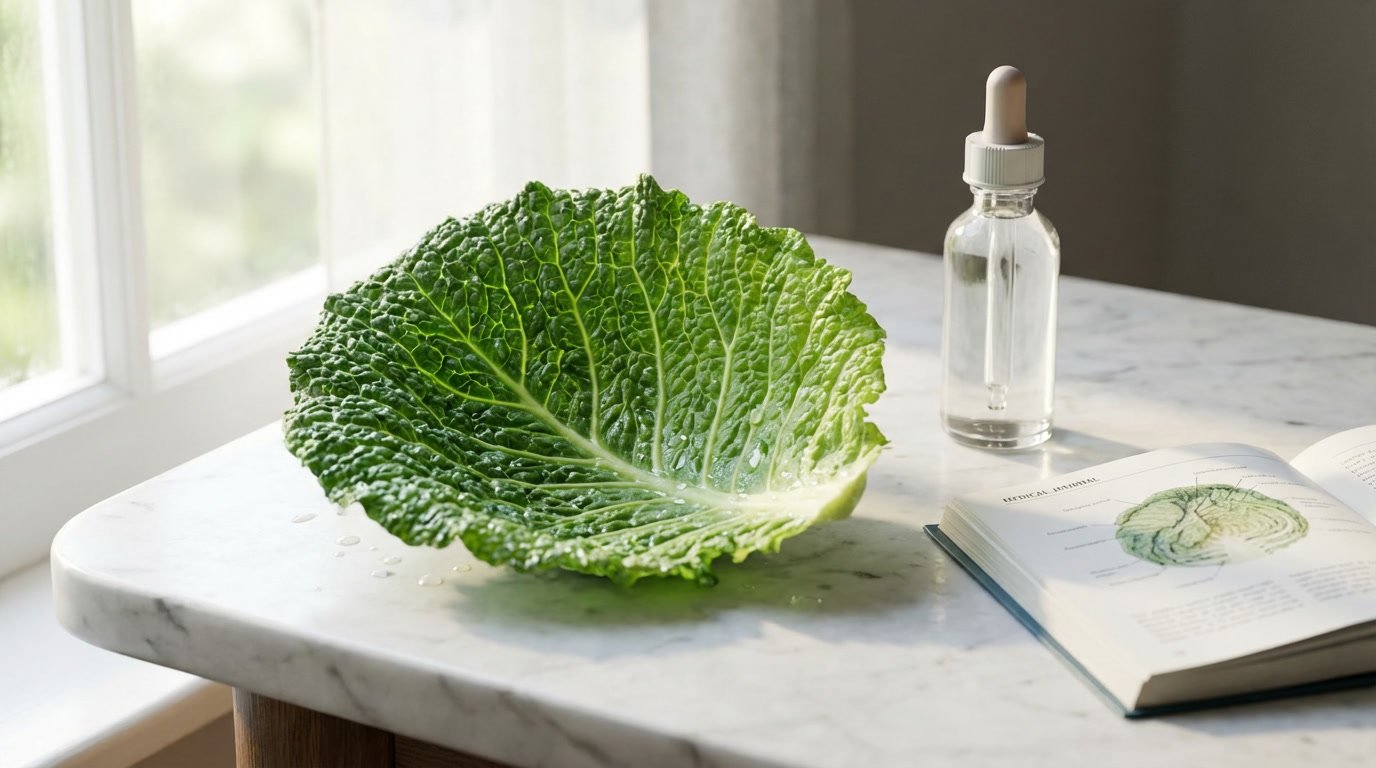
Science catches up to the Cabbage Wrap.
While once dismissed as a folk remedy, clinical trials have confirmed that cabbage leaf wraps are a viable, evidence-based treatment for joint inflammation. It’s not just a cold compress—it’s a targeted delivery of natural anti-inflammatories.
The Method: Bruising the leaves releases active phytochemicals, which are absorbed directly through the skin into the inflamed joint.
The Discovery: Peer-reviewed research now supports using cabbage leaves for Stage II Osteoarthritis.
The Benefit: A low-cost, natural alternative to topical NSAIDs with zero side effects.
Once dismissed as an “old wives’ tale,” clinical trials are proving that traditional healers were centuries ahead of the lab. For those looking to manage joint pain without adding more pills to their regimen, the solution might be in the produce aisle.
Key Takeaways:
- The Molecular Case for Cabbage Wraps (The “TL;DR”)
- The Big News: We’re moving past “old wives’ tales.” A randomized trial showed that cabbage wraps actually held their own against diclofenac gel for knee pain. Yes, the stuff in the pharmacy aisle.
- The “Cool Science” Bit: Researchers found a specific plant microRNA in cabbage (miR172a) that can actually talk to human genes. In a lab, it “dials down” a gene called FAN that’s responsible for driving inflammation.
- The Reality Check: It’s a “cross-kingdom” miracle in a petri dish, but we’re still figuring out if enough of that plant magic actually makes it through your skin and into your joint.
- The Verdict: It’s not a total replacement for your doctor’s advice, but the evidence is strong enough that “just a cold compress” doesn’t cut it anymore. It’s a low-cost, zero-side-effect win for joint health.
Wait, can a vegetable really beat medicine?
Your skepticism is completely justified, but the research might surprise you. A randomized, open-label trial in Thailand with 60 patients demonstrated that daily cabbage leaf wraps significantly improved both pain scores and knee function over 4 weeks. What’s even more striking – cabbage actually outperformed diclofenac gel for moderate-severe knee osteoarthritis.
Breaking down the Thai clinical trial
Researchers tracked patients using two validated measures: the Numerical Rating Scale for pain and the Oxford Knee Score for function. Over the 4-week study period, cabbage wraps produced statistically significant improvements in both metrics. The trial compared three groups – cabbage wraps, cooling pads, and diclofenac gel.
Cabbage vs. diclofenac gel results
Both cabbage and cooling pads were statistically superior to diclofenac gel in treating moderate-severe knee OA. This wasn’t just a marginal difference – the vegetable-based treatment actually beat the pharmaceutical option. Earlier studies had already shown cabbage performing better than usual care and matching topical NSAIDs.
Think about what this means for your treatment options. Previous research had established that cabbage provides NSAID-level benefits in small randomized controlled trials, but this Thai study went further by directly comparing it to a commonly prescribed medication. You’re looking at a treatment that costs pennies, has virtually no side effects, and according to the data, works better than what many doctors prescribe first. The cooling pads also outperformed the diclofenac, which raises interesting questions about whether simple cold therapy mechanisms play a role… but that’s a discussion for later.
What’s the deal with miR172a and FAN?
Scientists finally cracked the code on why cabbage actually works for your achy knees. A 2022 paper in Frontiers in Pharmacology identified cabbage-derived miR172a as a “xenomiR” – basically a plant microRNA that can affect human cells. Synthetic miR172a mimics reduced FAN protein levels in both human and mouse cells, which dampens inflammatory responses in your joints.
Identifying the cabbage-derived microRNA
Researchers labeled this specific molecule as bol-miRNA172a, where “bol” refers to Brassica oleracea (that’s cabbage’s fancy scientific name). The study proved that this plant-derived microRNA can cross into human tissue and actually influence how your cells behave. Testing with synthetic versions confirmed its anti-inflammatory properties weren’t just folklore.
How FAN protein affects your inflammation
FAN stands for Factor Associated with Neutral Sphingomyelinase Activation, and it’s one of those proteins you don’t want hanging around in high amounts. When miR172a reduces FAN levels, your inflammatory pathways get dialed down. Think of FAN as a volume knob for inflammation – less FAN means less pain and swelling in your knees.

Your body uses FAN as part of its inflammatory signaling system, which sounds helpful until that system goes haywire with arthritis. When FAN protein levels spike, they trigger a cascade of events that leads to more swelling, heat, and that familiar throbbing pain in your joints. But here’s where it gets interesting – the miR172a from cabbage leaves appears to target FAN specifically, blocking its production at the cellular level. The 2022 study demonstrated this mechanism in controlled laboratory conditions using both human and mouse cells, showing consistent results across species. So when you’re wrapping those cabbage leaves around your knees, you’re crucially delivering a natural FAN-blocker directly to the affected area… and that’s probably why grandma’s remedy actually has some science backing it up.
The Crazy World of Cross-Kingdom Regulation
Can molecules from plants actually control genes in your body? Bioinformatic analyses and functional assays prove that cabbage miR172a directly targets FAN mRNA – a gene linked to inflammation in mammals. A patent application already exists for using miR172 to decrease inflammation, which tells you researchers are taking this seriously enough to protect the intellectual property.
When Plant MicroRNA Influences Mammalian Genes
Your body’s inflammatory pathways can be silenced by genetic material from a vegetable, and that’s not science fiction. Cabbage miR172a specifically seeks out and binds to FAN mRNA in mammalian cells, blocking the production of proteins that drive joint inflammation. This cross-kingdom gene regulation represents a biological conversation between plant and animal cells that scientists are only beginning to understand.
Lessons from the Mouse Arthritis Model
Laboratory testing with collagen-induced arthritis in mice showed dramatic results. Treatment with miR172 mimics reduced both joint swelling and inflammatory markers by silencing FAN, giving researchers concrete evidence that this mechanism works in living organisms, not just test tubes.
Researchers induced arthritis in mice using collagen injections, creating conditions that mirror human rheumatoid arthritis. When they administered synthetic versions of cabbage miR172a, the mice experienced measurable improvements in joint inflammation and overall disease progression. The miR172 mimics traveled through the bloodstream, entered joint tissues, and successfully bound to FAN mRNA molecules, preventing them from producing inflammatory proteins. Blood tests confirmed lower levels of pro-inflammatory cytokines, while physical examinations showed reduced swelling in affected joints. What makes this particularly compelling is that the treatment targeted a specific molecular pathway rather than broadly suppressing the immune system like conventional arthritis drugs do.
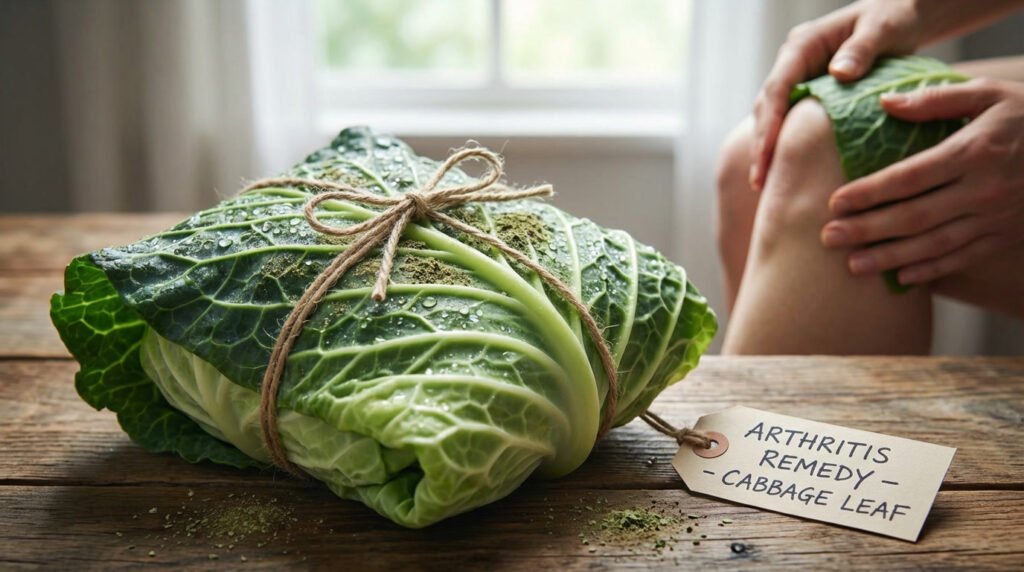
Don’t Get Ahead of Ourselves: What We Don’t Know Yet
Before you start wrapping your knees in cabbage every night, you need to understand the gaps in our current knowledge. We don’t have proof yet that miR172a from crushed leaves can actually penetrate human skin or reach target tissues in therapeutic amounts. The Efficacy of Cabbage Leaf versus Cooling Gel Pad or diclofenac studies were small and open-label, which means we can’t definitively say they work as well as diclofenac across the board.
The Skin Penetration Problem
Your skin is designed to keep things out, not let them in. Scientists haven’t proven that miR172a molecules from crushed cabbage leaves can actually penetrate human skin or accumulate in knee joint tissues at therapeutic levels. That’s a pretty big question mark when we’re talking about the whole mechanism of action here.
Why the Evidence Is Still Inferential
Clinical trials didn’t measure miR172a absorption or FAN levels in patients, so the connection between the poultice and the proposed mechanism remains theoretical. The link exists on paper but hasn’t been tracked in actual human bodies during treatment.
Think about it this way – researchers observed that cabbage wraps reduced pain in some studies, and separately, they discovered miR172a in lab settings. But nobody’s actually measured whether applying cabbage to your knee increases miR172a levels in your joint tissue or decreases FAN protein expression in your body. These clinical trials were small and open-label too, which means participants knew what treatment they were getting. That opens the door for placebo effects and expectation bias to influence results. So while the theory sounds compelling, you’re crucially connecting dots that haven’t been directly traced in human subjects yet.
Summing up
On the whole, you’re looking at a treatment that sits right at the intersection of folk wisdom and modern science. The miR172a-FAN pathway shows real promise in lab settings and animal studies, but here’s the catch – we don’t yet have those big, blinded human trials to prove it’s more than just the cooling sensation or your brain doing its placebo magic. The idea that plant microRNA from cabbage could actually dial down inflammation in your knees is fascinating stuff, but you’ll want to watch for more research before considering it a proven remedy.
FAQ
Q: How do cabbage leaf wraps actually help arthritic knees?
A: People have been wrapping sore joints in crushed cabbage leaves for generations, and recent research is finally catching up to explain why it works. A clinical trial in Thailand found that daily cabbage wraps improved knee pain and function over four weeks – and here’s the kicker, they worked better than diclofenac gel in that study. Scientists now think part of the benefit comes from a tiny molecule called miR172a that’s naturally present in cabbage. When you crush the leaves and apply them to your skin, this plant microRNA might actually “talk” to your human genes, specifically targeting a protein called FAN that’s involved in inflammation. Lab studies have shown this cross-kingdom communication can dial down inflammatory signals in cells and reduce joint swelling in mice. But let’s be honest – we don’t yet have proof that the microRNA penetrates human skin in therapeutic amounts when you just slap a leaf on your knee. Some of the relief probably comes from the cooling effect too. What we do know is that the wraps work about as well as standard topical pain medications in small trials, which is pretty remarkable for a vegetable.
Q: What’s the best way to prepare and use cabbage wraps for knee arthritis?
A: The method is surprisingly simple, though you’ll want to set aside about 20-30 minutes for the treatment. Start with fresh green cabbage from the grocery store – organic is nice but probably not crucial. Peel off the outer leaves and wash them, then use a rolling pin or the back of a heavy spoon to bruise and crush the leaves until they’re soft and slightly moist. You’re trying to break the cell walls so the juices (and potentially those helpful microRNAs) can come out. Wrap the crushed leaves directly around your knee, making sure they cover the painful area completely. Some people secure them with plastic wrap or an elastic bandage to keep everything in place. Leave the wrap on for at least two hours, or even overnight if that’s comfortable. In the Thai study that showed positive results, participants did this daily for four weeks. The leaves will wilt and dry out as they sit on your skin, which is normal. You can do this once or twice a day depending on your pain level. And here’s a tip – keep your cabbage in the fridge so the leaves are nice and cool when you apply them, since the cooling sensation adds its own pain relief on top of whatever the cabbage compounds are doing.
Q: Are there any risks or reasons someone shouldn’t use Cabbage Leaf Wraps for Arthritis?
A: Cabbage wraps are generally very safe – we’re talking about a food you could eat, just applied to skin instead. The clinical trials didn’t report any serious side effects. That said, a few people might experience minor skin irritation or develop a rash from prolonged contact with cabbage juice, especially if you have sensitive skin or known food allergies. Test a small area first if you’re concerned. The treatment can be a bit messy and smelly (cabbage has that distinctive sulfur odor), which isn’t dangerous but might bother you or anyone sharing your bedroom. If you have an open wound, broken skin, or active infection on your knee, skip the cabbage and see your doctor instead. One important caveat: cabbage wraps showed promise in studies, but they shouldn’t replace medical care for severe arthritis. If your pain is getting worse, you’re losing mobility, or over-the-counter approaches aren’t cutting it, you need a proper evaluation. Arthritis can cause permanent joint damage if left untreated, and a vegetable wrap – no matter how interesting the science – isn’t a substitute for disease-modifying medications when those are needed. Think of cabbage as a complementary approach you can try alongside (not instead of) whatever your doctor recommends.