How to Maximise Choline Benefits for Brain Power
Understanding the choline benefits for brain health is becoming essential as new data shows a massive nutritional gap. While many obsess over Vitamin D, this underappreciated compound is working overtime to regulate your memory and mood. Shockingly, only about 11% of adults meet the recommended daily intake, a deficiency that has been linked to neurodegenerative disorders like Alzheimer’s and Parkinson’s. If you are struggling with focus, your choline benefits for brain function might be missing the mark.
Table of Contents
Key Takeaways:
- Picture yourself scrambling eggs for breakfast without realising you’re feeding your brain one of its most necessary nutrients. Choline isn’t technically a vitamin or mineral – it’s an organic compound that your body desperately needs but can’t produce enough of on its own. And here’s the thing… most of us aren’t getting nearly enough of it. Studies show only 11% of American adults hit the recommended daily amount, which is kind of alarming when you consider what this nutrient actually does. It helps produce acetylcholine, a neurotransmitter that basically carries messages between your brain and body. Without adequate choline, you’re looking at potential issues with memory, thinking, and learning – plus it can mess with your liver function and even lead to fatty liver disease. The recommended intake for adults in Europe is 400 mg daily (slightly higher in the US at 425-550mg, depending on gender). An egg contains about 150mg, a chicken breast has 72mg, and a handful of peanuts gives you 24mg. So yeah, you need to be somewhat intentional about getting enough.
- Pregnancy changes everything when it comes to choline needs. Babies are literally born with three times as much choline as their mothers, which tells you just how important this nutrient is during those first 1000 days of development. The research here is pretty compelling. Pregnant women with higher choline intake during the second trimester had children who scored higher on memory tests at age 7. There’s even emerging evidence linking insufficient choline during pregnancy to ADHD and dyslexia in kids. Because of this, pregnant women need more, around 480mg daily, and breastfeeding moms need even more at 520mg. Some scientists believe we’re necessarily treating the aftermath of choline deficiency now… seeing more neurodevelopmental issues in schools that might’ve been prevented with better maternal nutrition. The American Medical Association started recommending choline in prenatal vitamins back in 2017, but many supplements still don’t include adequate amounts.
- Your diet choices dramatically affect your choline intake, and vegans need to pay extra attention here. Choline shows up mostly in animal foods – eggs, beef, fish, chicken, milk – though you can find it in plant sources like peanuts, kidney beans, mushrooms, and cruciferous vegetables like broccoli. One study found that egg-eaters consume almost twice as much choline as non-egg-eaters, leading researchers to conclude that meeting daily targets is “extremely difficult” without eggs or supplements. But it’s not impossible for vegans… You just need to plan carefully. Tofu has 28mg per 100g, peanut butter provides 61-66mg per 100g, and soybeans pack 120mg per 100g. The good news? Choline supplements are widely available and easily absorbed into your bloodstream. So whether you’re plant-based, pregnant, post-menopausal (when you need more due to lower estrogen), or just want to optimise your brain health, you’ve got options.

What’s the Big Deal About Choline Anyway?
Most people can rattle off why they need vitamin C or calcium, but choline? That’s where things get fuzzy. Yet this relatively unknown nutrient is working behind the scenes in ways that might surprise you – and only 11% of American adults are actually getting enough of it.
Your body produces a small amount of choline on its own, but not nearly enough to meet your needs. That makes it a “vital” nutrient, meaning you’ve got to get it from your diet. And here’s where it gets interesting: unlike vitamins that your body can sometimes store for months, choline is constantly being used up. Every single cell in your body contains it, says Xinyin Jiang, professor of health and nutrition sciences at Brooklyn College. It’s not sitting around waiting to be useful – it’s actively keeping your cells functioning right now.
Why This Nutrient’s a Game Changer
Choline isn’t just important for one thing – it’s pulling double, triple, even quadruple duty in your body. It helps transport fat out of your liver, and when you’re deficient, you can develop fatty liver disease. Not great. It also helps your body synthesise phospholipids, which are basically the building blocks of every cell membrane you’ve got. Without enough choline, the genes involved in cell division can’t be expressed properly.
But wait, there’s more. Research has found that higher choline intake is associated with lower levels of anxiety, and another study linked it to a lower risk of depression. Scientists have also discovered it can help lower homocysteine levels – that’s an amino acid that increases your risk of heart disease when it gets too high. And because high homocysteine is also linked to osteoporosis, people with higher choline intakes tend to have better bone density. “Choline can potentially have an effect against bone loss,” says Øyen Jannike, a researcher at the Institute of Marine Research in Norway who’s studied this connection.
Choline’s Secret Sauce for Brain Health
If choline had a resume, brain health would be listed right at the top. It’s primarily a “brain nutrient,” according to Emma Derbyshire, science writer and CEO of Nutritional Insight. Your body needs choline to produce acetylcholine – a neurotransmitter that’s basically your brain’s messaging service, carrying signals from your brain to your body through nerve cells. This chemical plays a major role in brain nerve cells that control your thinking and learning abilities.
The evidence is pretty compelling. In one study of almost 1,400 people aged 36 to 83, researchers found that people with higher choline intake tended to have better memories, and getting enough during midlife may actually protect your brain as you age. That’s probably why choline shows up as an ingredient in nootropics – those supplements people take hoping to boost their cognitive performance. On the flip side? Choline deficiency has been associated with neurodegenerative disorders like Alzheimer’s and Parkinson’s disease.
What really gets researchers excited is how choline affects brain development before we’re even born. Babies are born with three times as much choline as their mothers, which tells you something about how important it is at that stage of life. Studies have found that pregnant women with the highest dietary choline intake during the second trimester went on to have children who scored higher on tests of short- and long-term memory at age 7. Some research even suggests that insufficient choline during pregnancy could be linked to ADHD behaviours in children later on. As Derbyshire puts it, “We’re seeing a lot more ADHD and dyslexia in schools, and some is genetic, but it’s also possible that, in utero, they’re not getting key nutrients.”
Are You Getting Enough Choline?
Most people assume they’re hitting all their nutritional targets by eating a balanced diet, but when it comes to choline, that assumption might be way off. Only 11% of American adults actually consume the recommended daily amount, which is pretty shocking when you think about how important this nutrient is for your brain and body. The numbers tell a sobering story: men should be getting 550mg per day, women need 425mg, and if you’re pregnant or breastfeeding? Those numbers jump to 450mg and 550mg, respectively.
What makes this even trickier is that your individual needs might be different from your neighbour’s. Post-menopausal women typically need more because of lower estrogen levels. People with fatty liver disease? They’re in the same boat. And here’s something most people don’t realise – genetic differences mean some of us simply require more choline than others, regardless of age or health status. So that “one size fits all” recommendation might not actually fit you at all.
A Sneak Peek into Your Plate
Eggs are basically the rockstars of choline sources, packing around 150mg into a single egg. That means just two eggs get you more than halfway to your daily target, which explains why people who eat eggs have almost twice the usual choline intake compared with those who don’t. A chicken breast will give you 72mg, and a handful of peanuts contributes about 24mg. Animal-based foods generally contain more choline than plant sources, but that doesn’t mean vegans are out of luck.
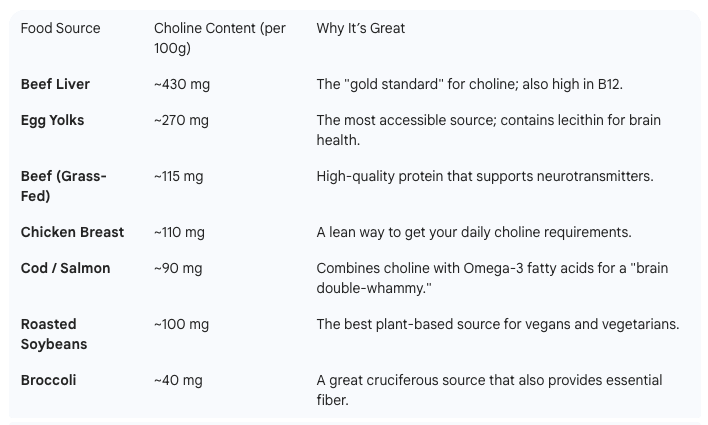
Planning a plant-based diet that hits your choline targets takes some effort, but it’s definitely doable. Tofu contains 28mg per 100g, peanut butter delivers 61-66mg per 100g, and soybeans come in strong at 120mg per 100g. Kidney beans, mushrooms, and cruciferous vegetables like broccoli all contribute to. The EFSA’s recommendation of 400mg per day is achievable for most people if you actually plan your meals carefully, says Jiang. But let’s be honest – most of us aren’t tracking our choline intake at all, which is probably why so many people fall short.
Supplements: Do You Really Need ‘Em?
There’s this misconception that supplements are only for people with diagnosed deficiencies, but with choline, the reality is more nuanced. Researchers concluded that consuming the daily adequate amount of choline was “extremely difficult” without eating eggs or taking a supplement – and that’s coming from a scientific study, not a supplement company. If you’re vegan, pregnant, breastfeeding, or post-menopausal, you might want to seriously consider supplementation. The good news? Choline supplements are widely available in developed countries, and they’re generally affordable.
Most human studies use supplements providing up to 930mg of choline daily – that’s roughly equivalent to the choline in six chicken eggs – with no adverse effects reported. That’s a pretty reassuring safety margin. When you eat choline, whether from food or supplements, it’s readily absorbed into your bloodstream, so your body can use it. Anyone concerned they’re not hitting their targets can safely add a daily supplement, says Øyen.
But before you rush out to buy supplements, it’s worth doing a quick audit of your actual diet. Are you eating eggs regularly? Do you consume meat, fish, or dairy? Then you might already be getting enough. On the flip side, if you’re following a strict plant-based diet and not actively planning for choline-rich foods, supplementation makes a lot more sense. The 2017 recommendation from the American Medical Association that prenatal vitamins should contain “evidence-based” amounts of choline shows that even mainstream medicine is catching on to how important this is, especially during pregnancy when your needs spike and the stakes are highest for your baby’s developing brain.
The Early Days Matter: Choline for Moms and Babies
Your baby’s brain development starts way before their first breath – and what you eat during pregnancy matters more than you might think. Babies are born with three times as much choline as their mothers, which tells you everything you need to know about how desperately developing bodies need this nutrient. It’s not just about those nine months either… the effects of your choline intake can ripple out for years, shaping how your child thinks, learns, and processes information well into their school years.
The evidence keeps stacking up. Pregnant women who had the highest choline intake during their second trimester went on to have children who scored higher on memory tests at age seven. That’s a pretty long-lasting impact from something as simple as diet, right? And it gets even more interesting – some research suggests that insufficient choline during pregnancy might be linked to ADHD behaviours in kids. We’re not talking about causing ADHD directly, but these subtle neurodevelopmental changes happening in the womb could be setting the stage for challenges down the road.
Why Pregnant Women Should Pay Attention
If you’re pregnant or planning to be, your choline needs jump significantly – from 400mg daily to 480mg during pregnancy and 520mg while breastfeeding, according to European recommendations. The US guidelines are even higher, suggesting 450mg during pregnancy and 550mg while nursing. That’s not a small increase, and here’s the kicker: only 11% of American adults are getting the recommended daily amount even when they’re not pregnant. So chances are, you’re already starting from behind.
The American Medical Association took this seriously enough that in 2017, they advised prenatal vitamins should contain “evidence-based” amounts of choline. But many don’t, which means you can’t just pop your prenatal and assume you’re covered. Jiang’s research has found that when mothers have higher choline intake, their babies show better information processing speeds – basically, their little brains work more efficiently right from the start. Animal studies show even clearer results, and we’re starting to see similar patterns in human research, though the picture isn’t quite as straightforward yet.
Choline’s Impact on Little Ones
What’s happening in your baby’s developing brain is pretty remarkable. Choline deficiency can inhibit brain cell proliferation, which is a fancy way of saying it stops brain cells from multiplying the way they should. During fetal development, when billions of neural connections are forming at breakneck speed, this is obviously a problem you want to avoid. The supply of choline in the womb directly correlates to cognitive outcomes, and those benefits don’t just disappear at birth.
Studies have tracked children for years after their mothers took choline supplements during pregnancy, and the results are compelling. Kids whose moms had adequate choline intake during the critical second trimester (weeks 13-28) showed measurable improvements in short- and long-term memory years later. We’re also seeing concerning patterns in the other direction – Derbyshire points out that we’re seeing more ADHD and dyslexia in schools, and while genetics plays a role, inadequate nutrition during fetal development could be a contributing factor that we’ve been overlooking.
“These very subtle neurodevelopment changes are occurring and impacting them later on,” Derbyshire explains. “We’re treating the aftermath now.” Think about that for a second – some of the learning and behavioural challenges kids face in school might trace back to nutritional gaps during pregnancy. It’s not about blaming mothers who didn’t know better, but about making sure future parents have the information they need to give their kids the best possible start.
The Connection Between Choline and Mental Health
Your brain’s ability to regulate mood isn’t just about serotonin and dopamine – choline plays a surprisingly significant role too. Because choline is needed to produce acetylcholine, the messenger chemical we talked about earlier, it directly influences how your brain cells communicate with each other. And when that communication breaks down or becomes inefficient, you’re more likely to experience mood disturbances. Scientists discover how a crucial nutrient enters the brain, and what they’re finding is that the transport mechanism for choline is actually quite sophisticated, suggesting just how important this nutrient really is for brain function.
Research is starting to paint a clearer picture of choline’s impact on mental well-being. Studies have found that people with higher choline intake tend to report lower levels of anxiety, and there’s even evidence linking adequate choline consumption to reduced risk of depression. But here’s what makes this particularly interesting – unlike some nutrients that take weeks or months to show effects, choline gets absorbed into your bloodstream relatively quickly after you eat it. That means your brain has fairly rapid access to this crucial building block, though of course, the long-term benefits come from consistent intake over time.
Can Choline Help With Anxiety and Depression?
The relationship between choline and anxiety isn’t just theoretical anymore. One study found that higher intake of choline was associated with lower levels of anxiety, while separate research linked greater dietary choline to a lower risk of depression. Now, does this mean choline is a miracle cure for mental health conditions? Not exactly – mental health is complicated, and there’s rarely a single nutritional fix. But what it does suggest is that choline deficiency might be contributing to mood problems in ways we’re only beginning to understand.
Think about it this way… if your brain doesn’t have enough choline to produce adequate acetylcholine, your neurons can’t communicate as effectively. That can affect everything from your ability to process emotions to how your brain regulates stress responses. Some researchers believe that ensuring adequate choline intake might be particularly important during high-stress periods or for people who are already prone to anxiety and depression. It’s not about replacing therapy or medication – it’s about making sure your brain has the raw materials it needs to function optimally.
The Science Behind Choline and Your Mood
So what’s actually happening in your brain when choline levels are optimal versus when they’re low? Acetylcholine, the neurotransmitter that choline helps create, is involved in multiple brain pathways that regulate mood and emotional responses. When you don’t have enough choline, your body struggles to produce sufficient acetylcholine, and that can throw off the delicate balance of brain chemistry. It’s sort of like trying to send text messages when your phone’s running on 2% battery – technically possible, but not exactly reliable.
Research in animals has shown that choline supplementation can actually alter brain structure in ways that support better emotional regulation. And while human studies are still catching up, the early findings are pretty compelling. People who consume adequate choline tend to have better overall cognitive function, including not just memory and learning but also emotional processing and stress management. The connection makes sense when you consider that acetylcholine is involved in the parasympathetic nervous system – that’s the part of your nervous system responsible for calming you down after stress.
What’s particularly fascinating is that choline might also work indirectly on mood through its effects on inflammation and cellular health. When choline helps maintain healthy cell membranes throughout your brain, those cells can function more efficiently. That includes the cells that produce and respond to mood-regulating neurotransmitters. Plus, choline’s role in reducing homocysteine levels matters here too – high homocysteine has been linked not just to heart disease, but also to depression and cognitive decline. By keeping homocysteine in check, choline might be protecting your mental health from multiple angles at once.
My Take on Common Myths about Choline
There’s a lot of confusion floating around about choline, and honestly, some of the most persistent myths are keeping people from getting what they need. You’ve probably heard some of these yourself – maybe even believed them. So let’s clear the air on a couple of big misconceptions that keep popping up.
The internet loves a good oversimplification, and choline’s gotten caught in the crossfire. What’s frustrating is that these myths can actually impact your health decisions, especially if you’re pregnant or trying to optimise your diet. And because choline isn’t talked about as much as, say, vitamin D or omega-3s, these misunderstandings tend to stick around longer than they should.
Is It Only for Meat-Eaters?
This one drives nutritionists up the wall. Yes, animal products like eggs and chicken are packed with choline – an egg gives you about 150mg, which is pretty impressive. But does that mean vegans and vegetarians are doomed to deficiency? Not even close. The problem is that one study found people who eat eggs have almost twice the usual choline intake compared with those who don’t, and suddenly everyone’s panicking that you can’t possibly get enough without animal products.
Here’s what that study actually concluded – consuming adequate choline was “extremely difficult” without eggs or supplements. Difficult, sure. Impossible? No way. You can absolutely hit the EFSA’s 400mg recommendation through plant sources if you’re strategic about it. Soybeans pack 120mg per 100g, peanut butter gives you 61-66mg per 100g, and tofu offers 28mg per 100g. Mix in some kidney beans, mushrooms, and cruciferous veggies like broccoli, and you’re building a solid foundation. Will it take more planning than just eating a couple of eggs? Yeah, probably. But plant-based sources combined with widely available choline supplements make this totally manageable in developed countries.
Choline Deficiency: Is It Really a Big Deal?
Some people brush off choline deficiency like it’s no worse than missing your daily multivitamin. That’s… not accurate. When you’re low on choline, your body starts struggling with some pretty fundamental processes. Choline helps transport fat out of your liver, and when you don’t have enough, you can develop fatty liver disease – which isn’t just uncomfortable, it’s legitimately dangerous for your long-term health.
But the liver issues are just the beginning. Being deficient affects how your genes express themselves during cell multiplication, which sounds technical until you realise what that means for a developing fetus. During pregnancy, choline deficiency can inhibit cell proliferation in the baby’s brain – we’re talking about actual structural brain development here. And it’s not just about pregnancy either. Your brain needs choline to produce acetylcholine, the neurotransmitter that carries messages through your nerve cells. Without adequate levels, you’re potentially setting yourself up for memory problems, and research has linked deficiency to neurodegenerative disorders like Alzheimer’s and Parkinson’s disease.
The really concerning part? Only 11% of American adults consume the recommended daily amount, according to one study. That means the vast majority of people are walking around potentially deficient without even knowing it. You might not feel symptoms right away – choline deficiency isn’t like scurv,y where you’ll suddenly notice something’s wrong. Instead, the effects can be subtle and long-term, affecting everything from your mental health (higher anxiety and depression risk) to your bone density. Some populations need even more than the standard recommendations – post-menopausal women with lower estrogen levels, people with fatty liver disease, and individuals with certain genetic variations that increase their choline requirements.
So, What Could Happen If You Don’t Get Enough?
You might think a slight nutrient deficiency isn’t that big of a deal – after all, your body’s pretty resilient, right? But when it comes to choline, falling short can trigger a cascade of problems that affect everything from your liver to your brain function. The most immediate concern is fatty liver disease, which happens because choline plays a key role in transporting fat out of your liver. Without enough of it, fat just… accumulates there. And this isn’t just a theoretical risk – studies have shown that choline deficiency can lead to liver damage and muscle problems in a surprisingly short amount of time.
Your brain takes a hit too. Since choline is crucial for producing acetylcholine – that neurotransmitter responsible for carrying messages between your brain and body – running low can affect your memory, focus, and overall cognitive performance. Some researchers have even linked insufficient choline intake to an increased risk of developing neurodegenerative diseases like Alzheimer’s and Parkinson’s later in life. The deficiency doesn’t always announce itself with obvious symptoms either, which makes it particularly sneaky. You might just feel a bit foggy or notice your concentration isn’t what it used to be.
The Potential Risks of Choline Deficiency
Beyond the liver and brain, choline deficiency messes with your cells at a fundamental level. Because choline helps your body synthesise phospholipids – basically the building blocks of every cell membrane in your body – not getting enough can affect how your genes express themselves and how your cells multiply. This sounds technical, but it has real-world consequences. Your cell membranes become less stable, which can affect everything from how nutrients enter your cells to how waste products exit. And if you’re pregnant? The risks multiply exponentially because choline deficiency during fetal development can inhibit brain cell proliferation, potentially affecting your child’s cognitive development for years to come.
There’s also emerging evidence connecting low choline intake to mental health struggles. Studies have found associations between insufficient choline and higher levels of anxiety and depression, though researchers are still working out exactly how this connection works. What we do know is that people with lower choline intake tend to report worse mental health outcomes. Plus, there’s the bone health angle – low choline levels are linked to higher homocysteine levels, an amino acid that increases your risk of both heart disease and osteoporosis. It’s like a domino effect where one deficiency triggers multiple health concerns across different body systems.
What Research Says About Long-Term Effects
The long-term picture gets even more concerning when you dig into the research. That study with nearly 1,400 people aged 36 to 83? It found that those with higher choline intake during midlife had better memory function and showed signs of brain protection as they aged. Flip that around, and it suggests that consistently low choline intake over decades could accelerate cognitive decline. Animal studies have been particularly revealing here – when researchers restrict choline in lab animals over extended periods, they see not just memory problems but actual structural changes in the brain. The offspring of choline-deficient mothers show lasting cognitive impairments that persist into adulthood.
What’s really striking is how the timing of choline deficiency matters tremendously. If you’re deficient during pregnancy, your child might face increased risks of ADHD-like behaviours and learning difficulties years down the line – problems that Derbyshire points out we’re “treating the aftermath” of now in schools. But it’s not just about pregnancy. Post-menopausal women with lower estrogen levels need more choline, and if they don’t get it, they face higher risks of cognitive decline and bone loss. People with fatty liver disease are in a similar boat – their bodies need extra choline, and chronic deficiency can worsen their condition over time.
The research also highlights something that should worry all of us: only 11% of American adults actually consume the recommended daily amount of choline. That means the vast majority of people are potentially running a deficit, day after day, year after year. And because choline deficiency doesn’t usually cause dramatic
Conclusion
Upon reflecting on everything we’ve covered, it’s pretty clear that choline deserves way more attention than it’s currently getting. Your brain literally depends on this nutrient to function properly – from forming memories to regulating your mood – and yet most of us probably couldn’t name three choline-rich foods off the top of our heads. The science is mounting, especially regarding pregnancy and early childhood development, and the implications are huge. If you’re pregnant, planning to become pregnant, or just want to keep your brain sharp as you age… You really need to think about whether you’re getting enough choline in your diet.
So what does this mean for you practically? Well, if you eat eggs regularly, you’re probably in decent shape. But if you’re following a plant-based diet or just don’t consume many animal products, you’ll need to be more intentional about it – loading up on things like tofu, peanut butter, and cruciferous vegetables, or considering a supplement. The good news is that choline is readily available, and your body absorbs it easily. The not-so-good news is that most people aren’t meeting the recommended intake levels, which means your cognitive health might be suffering without you even realising it. And while researchers are still working out all the details, the evidence we have now suggests that paying attention to your choline intake is one of those simple dietary tweaks that could pay off big time down the road.
FAQ
Q: What exactly is choline, and why haven’t I heard more about it?
A: Ever wonder why some nutrients get all the attention while others fly under the radar? Choline is one of those overlooked compounds that deserves way more recognition than it gets. It’s not technically a vitamin or a mineral – it’s an organic compound that your body needs but can’t produce enough of on its own. Think of it like omega-3 fatty acids in that sense. Scientists actually call it a “brain nutrient” because it’s necessary for producing acetylcholine, a neurotransmitter that carries messages between your brain and body. Without enough choline, you could end up with issues like fatty liver, memory problems, and even developmental challenges. The thing is, most people don’t even know they should be thinking about their choline intake… and that’s a problem because studies suggest only about 11% of American adults are getting the recommended daily amount.
Q: How much choline do I actually need, and what foods can I get it from?
A: So the recommendations vary a bit depending on where you live and your life stage. In the US, men should aim for about 550mg daily while women need 425mg – but if you’re pregnant, that jumps to 450mg, and breastfeeding moms need even more at 550mg. Europe’s guidelines are slightly different, generally suggesting 400mg for adults. Now, where do you find this stuff? Eggs are basically the superstar here – one egg gives you around 150mg of choline right there. Animal foods tend to pack the most punch… a chicken breast has about 72mg, and you’ll find it in beef, fish, and milk too. But there are plant sources as well. Peanuts, kidney beans, mushrooms, and veggies like broccoli all contain choline, though usually in smaller amounts. For vegans, tofu has about 28mg per 100g, peanut butter gives you 61-66mg per 100g, and soybeans are actually pretty solid at 120mg per 100g. The catch? You need to plan your meals carefully to hit those targets, especially if you’re not eating eggs.
Q: Can choline really make me smarter or improve my memory?
A: This is where things get interesting – and a little complicated. There’s definitely evidence pointing in that direction, but we need to be realistic about what the research actually shows. Studies involving almost 1,400 people found that those with higher choline intake tended to have better memories, and consuming more choline during midlife might help protect your brain as you age. It’s even become a popular ingredient in nootropic supplements that people take to boost cognitive performance. Animal studies are pretty convincing – when pregnant animals get more choline, their babies show better cognitive development. Human studies are starting to show similar patterns, though not quite as dramatically. One fascinating study found that babies born to mothers who took choline supplements during pregnancy had higher information-processing speeds, a marker of healthy brain function. And here’s something else… higher choline intake has been linked to lower anxiety levels and reduced risk of depression. On the flip side, choline deficiency has been associated with conditions like Alzheimer’s and Parkinson’s disease. So while we can’t say choline is a magic brain pill, the evidence suggests it plays a significant role in keeping our minds sharp.
Q: Why is choline so important during pregnancy and early childhood?
A: Here’s something that might surprise you – babies are born with three times as much choline as their mothers. That alone tells you how critical this nutrient is during development. The first 1,000 days of life (from conception through age two) are absolutely vital for a child’s brain development, and choline plays a major role during this window. Research shows that pregnant women with the highest choline intake during the second trimester had children who scored higher on memory tests at age 7. That’s years later! The effects seem to last. There’s even some research suggesting that insufficient choline during pregnancy could be linked to ADHD behaviours in children. Because choline is necessary for cell multiplication in the brain, not getting enough during fetal development can seriously impact how brain cells proliferate. The American Medical Association recognised this back in 2017 when it advised that prenatal vitamins should include