Gaming Addiction.
The Adolescent Brain, Reward Pathways, and Video Gaming:
Insights for Healthcare Professionals
In a rapidly digitalising world, video games have become a dominant form of leisure for today’s youth. Whether playing casually on weekends or immersed in online tournaments nightly, adolescents are spending unprecedented amounts of time gaming. Many young gamers report improved hand-eye coordination, creativity, and even problem-solving skills derived from these interactive digital experiences. Yet, for some, what begins as harmless entertainment can spiral into problematic behavior—commonly referred to as “gaming addiction” or, more formally, Internet Gaming Disorder (IGD). This emerging public health concern has been linked to mood disturbances, social withdrawal, academic decline, and even co-occurring mental health issues.
For healthcare professionals, understanding the developmental, environmental, and neurobiological factors that contribute to problematic gaming is more important than ever. Early identification, preventive guidance, and targeted interventions depend on a well-rounded understanding of the adolescent brain and its vulnerabilities. New research from the Adolescent Brain Cognitive Development (ABCD) Study provides critical insight into how the brain processes rewards—and how these neural patterns might predispose some adolescents to developing symptoms of gaming addiction over time.
The ABCD Study: A Landmark in Adolescent Research
Launched in 2015, the ABCD Study is the largest long-term study of brain development and child health in the United States. It follows nearly 12,000 children recruited at ages 9–10 into early adulthood, capturing a wide spectrum of measures: brain imaging, cognitive and behavioural assessments, substance use patterns, mental health status, and family environment factors. This comprehensive, longitudinal design allows researchers to move beyond correlations and begin exploring causal pathways and developmental trajectories.
One of the ABCD Study’s key strengths is that it mirrors the diversity of the U.S. population, providing a more accurate reflection of how socioeconomic factors, family structures, and cultural backgrounds shape adolescent behavior and brain health. For the healthcare community, the ABCD Study’s wealth of data ensures that findings are more applicable to “real-world” clinical settings, as opposed to smaller, more homogeneous samples that have characterised much of the early neuroscience research in this area.
Understanding the Neural Basis of Gaming Addiction
The concept of gaming addiction centers around an individual’s impaired control over gaming behavior, prioritisation of gaming over other interests and daily activities, and persistence of gaming despite negative consequences. Although the World Health Organisation (WHO) has included “Gaming Disorder” in the International Classification of Diseases (ICD-11), and the American Psychiatric Association (APA) recognizes “Internet Gaming Disorder” as a condition for further study, our understanding of its neural underpinnings in adolescents remains incomplete.
Adolescence is a dynamic period of brain development marked by heightened sensitivity to rewards and novelty. Neural circuits that evaluate potential gains and losses—particularly those within the striatum—are undergoing significant changes. This makes reward-seeking behaviours, including gaming, especially compelling to the adolescent mind. The question the ABCD researchers aimed to answer was: How does the way an adolescent’s brain responds to the anticipation and receipt of rewards relate to their likelihood of developing gaming addiction symptoms over time?
The MID Task: Illuminating Reward Processing
Central to the ABCD Study’s approach is the use of the Monetary Incentive Delay (MID) task, an fMRI-based paradigm that measures how the brain responds to the possibility and outcome of earning money. Adolescents are placed in an MRI scanner and instructed to press a button as quickly as possible when a target appears on the screen. Before the target appears, a cue indicates whether a given trial can lead to winning money, losing money, or neither. This allows researchers to separate the neural activity related to anticipation (before knowing the outcome) from that related to feedback (after the outcome is revealed).
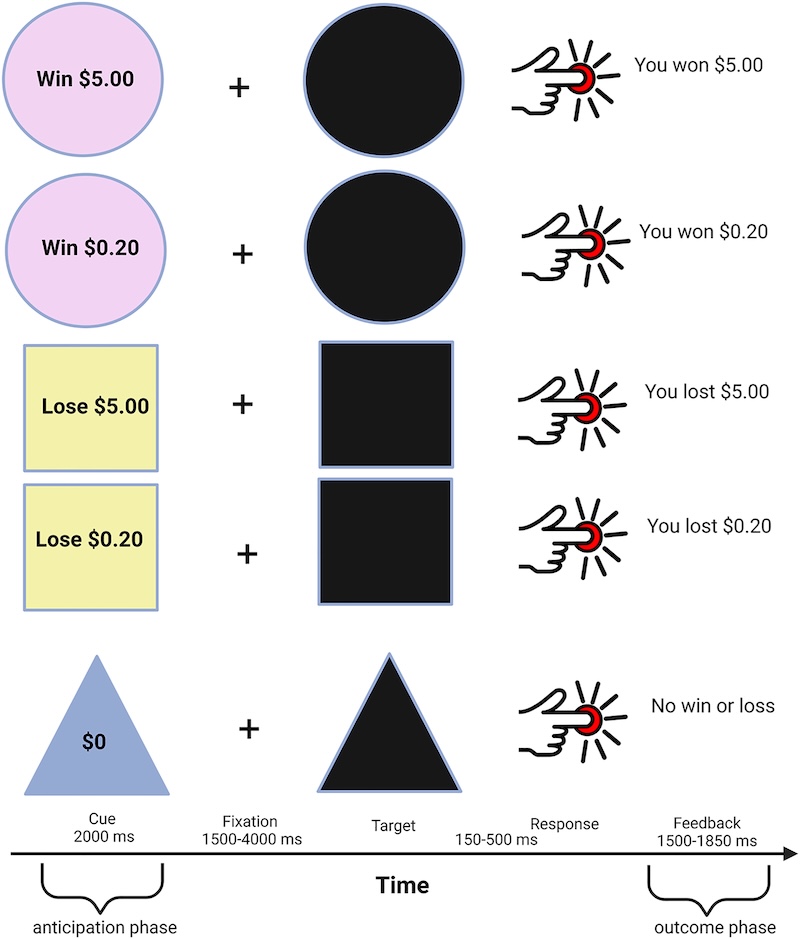
What does this have to do with gaming? The anticipation phase in the MID task simulates that feeling of looking forward to a reward—akin to the excitement before achieving a new level in a game or unlocking a valuable digital item. Similarly, the feedback phase resembles the actual payoff: the moment you see your final score or reap the reward. By examining differences in brain activation during these two phases, researchers can pinpoint where reward processing may go awry in adolescents who show signs of gaming addiction.
Key Findings: The Caudate Nucleus as a Clue
The ABCD analysis uncovered a striking relationship: Adolescents who showed lower activation in the bilateral caudate nucleus during the anticipation of a large monetary reward were more likely to exhibit greater symptoms of gaming addiction over time. The caudate nucleus is part of the striatum and plays a critical role in goal-directed action, reward anticipation, and decision-making. Typically, when anticipating a desirable reward, the caudate “lights up,” reflecting a healthy motivational response.
In adolescents with blunted caudate activation, it may be that standard, everyday rewards—like academic achievements or fulfilling social interactions—feel less stimulating. Without the typical neural “spark” that encourages pursuit of these real-world rewards, some teens might gravitate more strongly towards the immediate, intense feedback loops provided by video games. This difference in how the brain anticipates reward could potentially set the stage for gaming to become compulsive.
Notably Absent: Feedback and Loss Effects
While anticipation of large rewards was linked to gaming addiction risk, the feedback phase—how the brain responds after an outcome is determined—did not show a significant relationship. Similarly, the anticipation of large losses did not correlate with gaming addiction symptoms. This suggests that the vulnerability might lie specifically in how the adolescent brain prepares for and seeks out rewards, rather than how it processes outcomes or avoids negative consequences.
For clinicians, this distinction is helpful. It implies that interventions might need to focus on enhancing healthy reward anticipation—helping teens find joy and value in activities outside the gaming world—rather than solely addressing how they cope with success or failure after the fact.
Implications for Healthcare Professionals
Early Identification and Screening:
Understanding that altered reward anticipation in the caudate may predispose some adolescents to problematic gaming can guide healthcare professionals in screening efforts. If a young patient reports losing interest in non-digital activities, struggling with motivation, or focusing solely on achieving digital “wins,” it may raise a red flag. For patients at risk, primary care physicians, paediatricians, and mental health professionals might consider more in-depth assessments of gaming behaviours and related mental health conditions.
Contextualising Co-Occurring Disorders:
Gaming addiction rarely appears in isolation. Conditions like ADHD, depression, or anxiety frequently coexist. Recognising the neural vulnerability in reward processing can help clinicians make sense of these comorbidities. For instance, a child with ADHD might be especially drawn to the instantaneous feedback of gaming, given their difficulty sustaining attention for less immediately rewarding tasks. Similarly, a teenager with blunted reward anticipation and low mood might rely on gaming as their primary source of pleasure.
Tailored Interventions and Prevention Strategies:
Knowing that the caudate’s response to anticipation is critical, interventions could focus on strengthening an adolescent’s responsiveness to positive, offline rewards. Encouraging activities that gradually build sustained motivation—sports, music, art, community service—can help recalibrate the reward system. Family-based interventions might involve structured limits on screen time, combined with positive reinforcement for engaging in other activities. Cognitive Behavioural Therapy (CBT) and motivational interviewing can also help adolescents understand the value of real-world pursuits, reframing their reward system in a healthier direction.
Public Health and Policy Considerations:
On a larger scale, this research underscores the need for societal-level interventions. Community programs that provide safe, appealing alternatives for adolescents—such as accessible sports facilities, art centres, and mentoring programs—could bolster natural reward systems. Educational policies that integrate more hands-on, rewarding learning experiences might also counterbalance the lure of digital rewards.
Future Research Trajectories:
The ABCD Study will continue to follow participants, offering valuable insights as they grow older. Over time, clinicians and researchers may learn how these neural patterns evolve, whether certain teens “grow out” of their vulnerability, or if specific interventions can alter their trajectories. Understanding how pandemic-related shifts in digital media use affect long-term outcomes will also be crucial. As new ABCD data emerges, healthcare professionals can stay informed, refining their approaches to early intervention and counselling.
A Balanced Perspective on Gaming
It’s essential to maintain a nuanced view. Most adolescents who enjoy video games will never develop an addiction. Many find in gaming a sense of community, relaxation, and even enhanced cognitive skills. The aim is not to demonise gaming, but rather to recognise when it becomes maladaptive. For those at risk, understanding the brain’s reward system—particularly the role of the caudate nucleus—can guide us toward more effective prevention and treatment strategies.
Conclusion: Bridging Neuroscience and Clinical Practice
For healthcare professionals working with adolescents, the new ABCD findings offer a tangible bridge between neuroscience and clinical care. They highlight how slight variations in the developing brain’s response to rewards may translate into meaningful differences in behavior. Armed with this knowledge, providers can move beyond treating problematic gaming as a simple “lack of willpower” and instead view it through a developmental and neurobiological lens. By doing so, we empower ourselves to identify at-risk youth earlier, craft interventions that address underlying vulnerabilities, and ultimately, help young patients navigate their digital worlds more safely and healthily. Additional information on our Medheads YouTube Channel
The full report can be found here