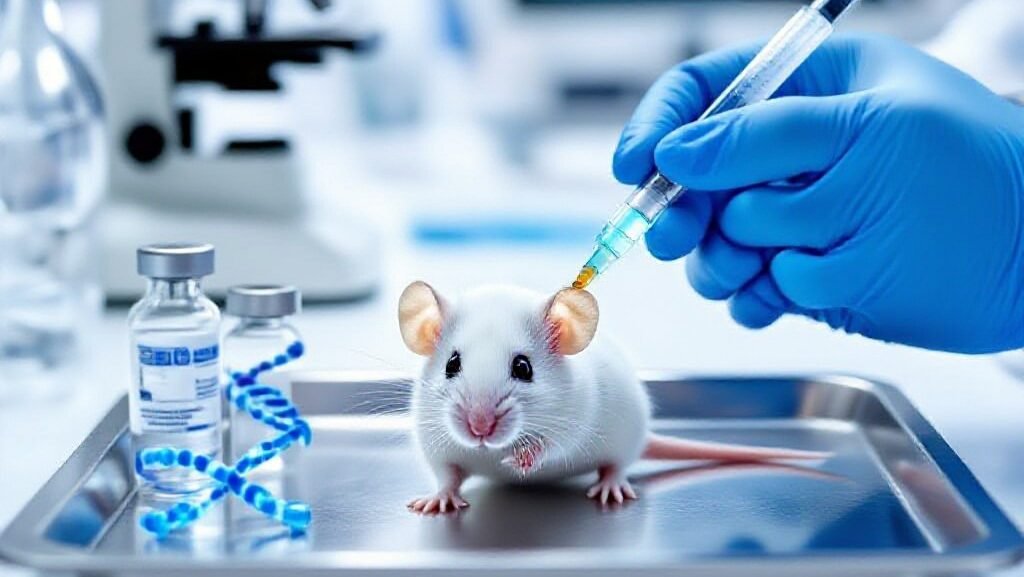
FLAV-27 may mark a new direction in Alzheimer’s research. Scientists at the University of Barcelona have developed an experimental compound that, in animal models, restored memory and improved key disease markers by targeting epigenetic changes linked to Alzheimer’s disease. The findings, published in Molecular Therapy, suggest that FLAV-27 works differently from current amyloid-clearing drugs by aiming to reset abnormal gene activity in brain cells rather than focusing on plaques alone.
That matters because today’s approved anti-amyloid drugs, including lecanemab and donanemab, can slow decline in early Alzheimer’s but their benefits are modest and they carry meaningful risks such as ARIA, infusion reactions, and treatment-related serious adverse events. In the University of Barcelona summary, researchers note these drugs slow cognitive decline by about 27% to 35%. In phase 3 data, lecanemab reduced decline on CDR-SB by 27% at 18 months, while donanemab significantly slowed clinical progression at 76 weeks, with ARIA-E occurring in 24.0% of treated participants and three treatment-related deaths reported in the donanemab trial.
FLAV-27 differs from other inhibitors because it targets G9a, an enzyme involved in epigenetic gene silencing. According to the University of Barcelona, the compound blocks access to S-adenosylmethionine and helps correct abnormal gene-expression patterns linked to synaptic dysfunction, neuroinflammation, amyloid, and tau. In preclinical models, the researchers reported improvements in short- and long-term memory, spatial memory, and sociability, along with changes in synaptic structure and reductions in beta-amyloid and phosphorylated tau.
That said, this is still not a human treatment. FLAV-27 remains in preclinical development, and the next steps include toxicology work, formulation, and regulatory preparation before clinical trials can begin.
Why aren’t today’s drugs doing the trick?
The limits of clearing plaques
You’ve probably heard about the recent FDA approvals – lecanemab and donanemab made headlines as breakthrough treatments. These monoclonal antibodies work by targeting and removing beta-amyloid plaques from your brain, which sounds promising on paper. But here’s the reality: they only slow cognitive decline by 27% to 35%, and that’s not exactly the dramatic turnaround patients and families are desperately hoping for.
The drugs also come with several side effects that you need to consider. What’s even more frustrating is that clearing plaques doesn’t fix the real problem – they don’t address the underlying molecular mechanisms actually driving the disease forward in your brain.
Why we need a new strategy
Scientists are starting to realize that focusing solely on plaque removal is like mopping up water while ignoring the leaky pipe. Your brain’s gene activity gets fundamentally reprogrammed during Alzheimer’s, and that’s what needs fixing. Attacking plaques alone leaves all those broken molecular pathways untouched… which explains why current treatments deliver such modest results.
Researchers need to dig deeper into how genes get switched on and off incorrectly as the disease progresses. This means looking at epigenetic changes, transcription factors, and the complex networks that control which genes your brain cells actually use. It’s messier and more complicated than just targeting one protein, but it might finally give you – or someone you love – a real shot at reversing memory loss instead of just slowing it down a bit.
What’s the secret behind this epigenetic reprogramming?
Targeting the G9a enzyme
FLAV-27 works by going after a specific troublemaker in your brain – the G9a enzyme. This enzyme has been silencing genes that are critical for neuronal development and memory, basically shutting down the very processes your brain needs to form and recall memories. What makes FLAV-27 a first-in-class inhibitor is that it’s the first drug of its kind to successfully block this particular pathway. The drug doesn’t destroy the enzyme… it just stops it from doing damage.
How it fixes gene expression
So how does blocking G9a actually restore your brain’s function? The answer lies in something called S-adenosylmethionine, or SAM for short. G9a needs access to SAM to carry out its gene-silencing work, and FLAV-27 importantly blocks the enzyme’s access to this molecular fuel source. Without SAM, the enzyme can’t continue its destructive epigenetic dysregulation.
Once you stop the dysregulation, something pretty amazing happens. Neurons can regain their normal function because the genes they need for memory and development are no longer being suppressed. It’s like removing a hand that’s been covering your mouth – suddenly you can speak again. The genes were always there, just waiting to be expressed properly, and FLAV-27 gives them that chance by shutting down the mechanism that was keeping them silent.
Does it actually reverse memory loss?
You’re probably wondering if this is just another overhyped study that sounds good on paper but doesn’t deliver. Well, the results here are actually pretty compelling. Scientists said they were able to use pharmacology to achieve something that’s been frustratingly out of reach – genuine memory restoration in Alzheimer’s models. FLAV-27 didn’t just slow down decline… it actually brought back lost cognitive function.
Testing across both early-onset and late-onset forms of the disease showed restoration of spatial memory, sociability, and both short- and long-term memory in mice. But here’s what really caught researchers off guard – the drug also reduced those classic Alzheimer’s hallmarks we’ve been fighting for decades: beta-amyloid plaques and phosphorylated tau proteins.
Results from the mouse models
Mice with Alzheimer’s-like conditions showed dramatic improvements after FLAV-27 Alzheimers treatment. The drug worked on both early-onset and late-onset murine models, which is significant because these represent different disease pathways. Spatial memory came back, meaning the mice could navigate mazes again. Their social behaviour’s normalised, and they regained the ability to form new memories while also accessing old ones.
What makes these results stand out is the comprehensiveness – you’re not just seeing one aspect improve while others stay broken. The whole cognitive picture got better.
Surprising findings in other species
C. elegans worms became an unexpected star of this research. These tiny organisms treated with FLAV-27 showed improved mobility, extended life expectancy, and better mitochondrial respiration. That last part about mitochondria is huge because it suggests the drug isn’t just masking symptoms – it’s actually fixing cellular energy production that goes haywire in Alzheimer’s.
The cross-species effectiveness tells you something important about how fundamental these mechanisms might be. When a drug works in both mice and worms, you’re likely hitting on some pretty basic biological pathways that evolution has conserved across millions of years. The mitochondrial improvements in worms hint that FLAV-27 might be addressing energy metabolism problems that we’ve long suspected play a role in neurodegeneration but haven’t been able to target effectively.
Can we track progress with a simple blood test?
Identifying the key biomarkers
Scientists pinpointed three specific molecules in your blood that spike when Alzheimer’s takes hold. The epigenetic marker H3K9me2, the SMOC1 protein, and p-tau181 are significantly elevated in blood plasma and directly correlate with how badly your cognitive function has declined. What makes this discovery so powerful is what happens next – when you receive FLAV-27 treatment, these indicators return to normal levels.
This gives doctors something they’ve desperately needed: a straightforward way to monitor whether the drug is actually working inside your brain. No more guessing, no more waiting months to see if symptoms improve. Your blood tells the story in real-time.
Why blood tests change everything
Traditional Alzheimer’s monitoring has always required expensive PET scans or invasive spinal taps to peek inside your brain. But with these blood-based biomarkers, you can track the drug’s effect without invasive brain scans. A simple blood draw at your doctor’s office becomes a window into what’s happening with your neurons.
Cost becomes manageable when you’re talking about routine blood work instead of specialized imaging. Accessibility improves dramatically – any clinic can draw blood, but not every facility has a PET scanner. And frequency? You could potentially check your levels monthly if needed, something that’s just not practical with brain imaging.
Patients get answers faster too. Instead of scheduling imaging appointments weeks out and waiting for results, you’re looking at a blood test that could provide feedback within days. This rapid monitoring means doctors can adjust treatment quickly if those three markers aren’t responding as expected, giving you the best shot at preserving your memories before more damage occurs.
When’s this actually coming to humans?
The role of Flavii Therapeutics
You’re probably wondering who’s actually steering this ship toward human trials. Flavii Therapeutics, a spin-off company founded in 2025, has taken the reins on developing this experimental drug. They’re managing the entire development process, which means they’ll be responsible for navigating all the regulatory hurdles ahead. The company exists specifically to push this treatment from the lab bench to your local clinic… but that’s easier said than done.
The long road to clinical trials
Here’s the reality check – the drug is currently in the advanced preclinical phase, which sounds promising but still means it hasn’t touched a single human patient yet. Before any human trials can even start, the team at Flavii needs to complete toxicology studies in two separate animal species and prepare what’s called a regulatory dossier. This entire process? It’ll take several years, and that’s if everything goes smoothly.
Toxicology studies aren’t something you can rush through, because regulators need to see comprehensive safety data across different species to predict how humans might react. The regulatory dossier itself is a massive document that compiles all the preclinical findings, manufacturing details, and proposed clinical trial protocols. Think of it as building an ironclad case for why this drug deserves a chance in humans – and regulatory agencies like the FDA won’t accept anything less than perfection.
Final Words
Taking this into account, you’re looking at a drug that doesn’t just treat symptoms – FLAV-27 targets the actual molecular drivers of Alzheimer’s. The real game-changer here is understanding that epigenetic dysregulation isn’t some random side effect you have to deal with. It’s actually a controllable mechanism that connects all the major players: beta-amyloid, tau, and neuroinflammation. That’s huge because it means you can potentially intervene at the source instead of just mopping up the mess afterward. FLAV-27 represents what researchers call a disease-modifying therapy, and if it makes it through human trials, you could be looking at something that complements or even replaces current treatment strategies.
Q: How is FLAV-27 different from current Alzheimer’s drugs like lecanemab and donanemab?
A: Current Alzheimer’s medications work by removing beta-amyloid plaques from the brain – those protein clumps that build up in people with the disease. They’re monoclonal antibodies that basically act like cleanup crews. But here’s the thing… they only slow cognitive decline by about 27% to 35%, come with side effects, and only tackle one part of what’s going wrong in Alzheimer’s.
FLAV-27 takes a completely different approach. It works on the epigenetic level by inhibiting an enzyme called G9a, which plays a big role in controlling which genes get turned on or off in your brain. The drug blocks G9a from accessing S-adenosylmethionine (SAM), a molecule it needs to modify DNA. By doing this, FLAV-27 helps neurons get back to normal function and addresses multiple aspects of the disease – not just the amyloid plaques but also tau proteins, neuroinflammation, and synaptic problems. It’s like fixing the underlying programming error instead of just cleaning up the mess it creates.
Q: What kind of results did FLAV-27 show in the animal studies?
A: The results were pretty impressive across different types of testing models. The researchers didn’t just see improvements in molecular markers – they saw actual functional recovery.
In C. elegans worms, FLAV-27 improved mobility, life expectancy, and even mitochondrial respiration (basically how cells produce energy). In mouse models of both early-onset and late-onset Alzheimer’s, the compound restored short-term and long-term memory, spatial memory, and social behavior. The mice also showed reduced levels of beta-amyloid and phosphorylated tau – the two main troublemakers in Alzheimer’s disease. But what really matters is that the treatment repaired the structure of neuronal synapses, which are the connections between brain cells that make learning and memory possible. So we’re talking about real cognitive recovery here, not just changes in lab values.
Q: How far away is FLAV-27 from being available for human patients?
A: We’re looking at several years before this could reach clinical trials, let alone pharmacy shelves. FLAV-27 is currently in what’s called the advanced preclinical phase.
Before human trials can start, the drug needs to go through regulatory toxicology studies in at least two different animal species to make sure it’s safe. The researchers also need to develop the pharmaceutical form (how it’ll actually be given to patients) and prepare a massive regulatory dossier to submit to health agencies for approval to begin clinical trials. A spin-off company called Flavii Therapeutics was founded in 2025 specifically to handle this development process, including fundraising and managing intellectual property. One promising aspect is that the team identified blood biomarkers – H3K9me2, SMOC1, and p-tau181 – that can be measured with a simple blood test. This will make it easier to select appropriate patients for trials and monitor whether the treatment is actually working, which could speed up the development process compared to drugs that don’t have such clear biomarkers.