Human Milk Banking: How Tiny Bottles Deliver Big Health Gains for Fragile Infants
Key Takeaways
- Donor milk as bridge nutrition: When mother’s milk isn’t available, donor human milk offers preterm infants a safer, more protective alternative than formula.
- Engineered safety: Accredited milk banks follow strict screening, pasteurization, and testing protocols—far beyond what unregulated online sources offer.
- Clinical impact: Donor milk reduces necrotizing enterocolitis (NEC), improves feeding tolerance, and supports tailored growth with fortification.
- Scaling access: HMBANA banks dispensed 11 million ounces in 2024 and global market growth points to wider infrastructure and equity.
- Community partnership: Clinicians, donors, parents, and policy makers together turn generosity into measurable neonatal outcomes.
Table of Contents
- Introduction
- Core Concepts & Mechanisms
- Clinical Evidence & Real-World Impact
- Treatment & Management Approaches
- Prevention & Practical Applications
- Conclusion & Future Outlook
- FAQ
1. Introduction
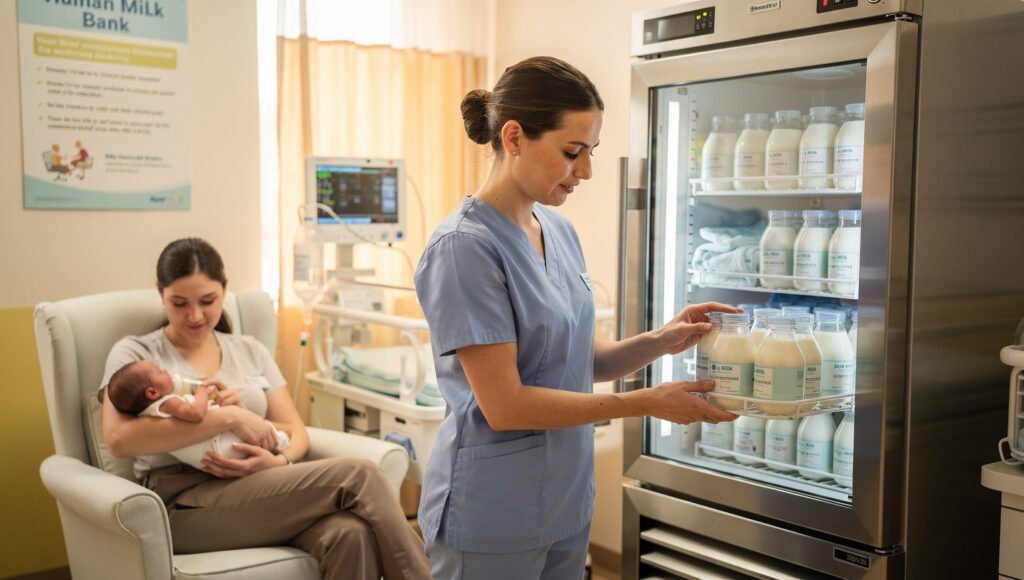
The tiny bottle didn’t look like much. Barely two ounces. A whisper of white. A nurse held it up in the NICU light like a precious gemstone and said softly, “This came from a donor this morning.” On the isolette monitor, a premature baby’s heart rate steadied, as if he somehow knew help had arrived.
If you’ve never heard of human Breast milk banks, here’s the simple heart of it: they connect healthy lactating donors with babies who need breast milk but can’t get it from their own moms. Think of them as community-powered nutrition banks—like blood banks, but for milk—with one life-saving mission: make sure medically fragile infants get the safest, most protective nutrition science can offer when they’re at their most vulnerable.
For more insights into maternal nutrition, you can check Maternal Nutrition Guide for Pregnancy and Postnatal Care.
Why does this matter to you? Because even if you’ll never set foot in a NICU, human milk banks are a story about all of us—about how a society shows up for its tiniest members, how we use science to guide kindness, and how we turn generosity into measurable health gains for families facing their hardest days.
The need is real, and it’s growing. Picture this: in North America alone, the network of nonprofit milk banks operating under HMBANA dispensed a record 11 million ounces of donor milk in 2024. That’s a 10% jump in a single year—a sign that demand is rising, hospitals are onboard, and more parents and clinicians are recognizing that donor human milk can be the difference between complication and recovery for premature babies. Globally, the market for human milk banking is projected to grow from about $397 million in 2024 to nearly $599 million by 2030, with a robust annual growth rate. Translation: more infrastructure, better technology, and wider access are on the way.
Zoom out, and you’ll see this expansion is not just about numbers—it’s about outcomes. Decades of neonatal research have taught us that human milk is more than food. It’s a biologically active medicine. For preterm and very low birthweight infants, donor human milk is associated with improved feeding tolerance, fewer infections, and notably, a lower risk of a devastating intestinal disease called necrotizing enterocolitis (NEC) compared with formula when mother’s own milk isn’t available. For more on the function of foods in early nutrition, you might find Functional Foods: 7 Science-Backed Benefits for Better Health helpful. Put bluntly: donor milk saves lives.
And yet, the details matter. Safety isn’t optional—it’s the foundation. Milk banks follow rigorous standards for screening donors, testing milk, pasteurizing it, and verifying each batch before it ever reaches a hospital fridge. It’s a carefully choreographed process designed to keep the bioactive magic of human milk while neutralizing pathogens. It’s also why milk from a certified bank is worlds apart from the unregulated human milk being sold on the internet, where contamination and mislabeling are very real risks.
If you’re picturing a warm community effort powered by high science and a lot of heart, you’ve got the right image. In Spain, in North America, and across many countries, milk banks are expanding to meet demand. Donor forms are getting submitted by the hundreds. Fridges and freezers hum with carefully labeled vials. NICU nurses champion donor milk like it’s a VIP ticket to better starts in life. And parents—exhausted, anxious, deeply brave—breathe a little easier when they hear, “We have donor milk for your baby.”
In this article, we’ll walk through how human breast milk banks work, why donor milk matters, what the evidence says, and what practical steps families and clinicians can take. We’ll also talk about safety, equity, and the future—because milk banking is as much about smart systems and public health as it is about bottles and babies.
One more promise. I won’t speak over you with jargon. I’ll talk you through it as I would a friend, pulling back the curtain on the science and the stories behind human milk banks. By the end, you’ll understand why that tiny bottle in the NICU means so much—and how we can help make sure it’s there for every baby who needs it.
2. Core Concepts & Mechanisms
What exactly is a human milk bank?
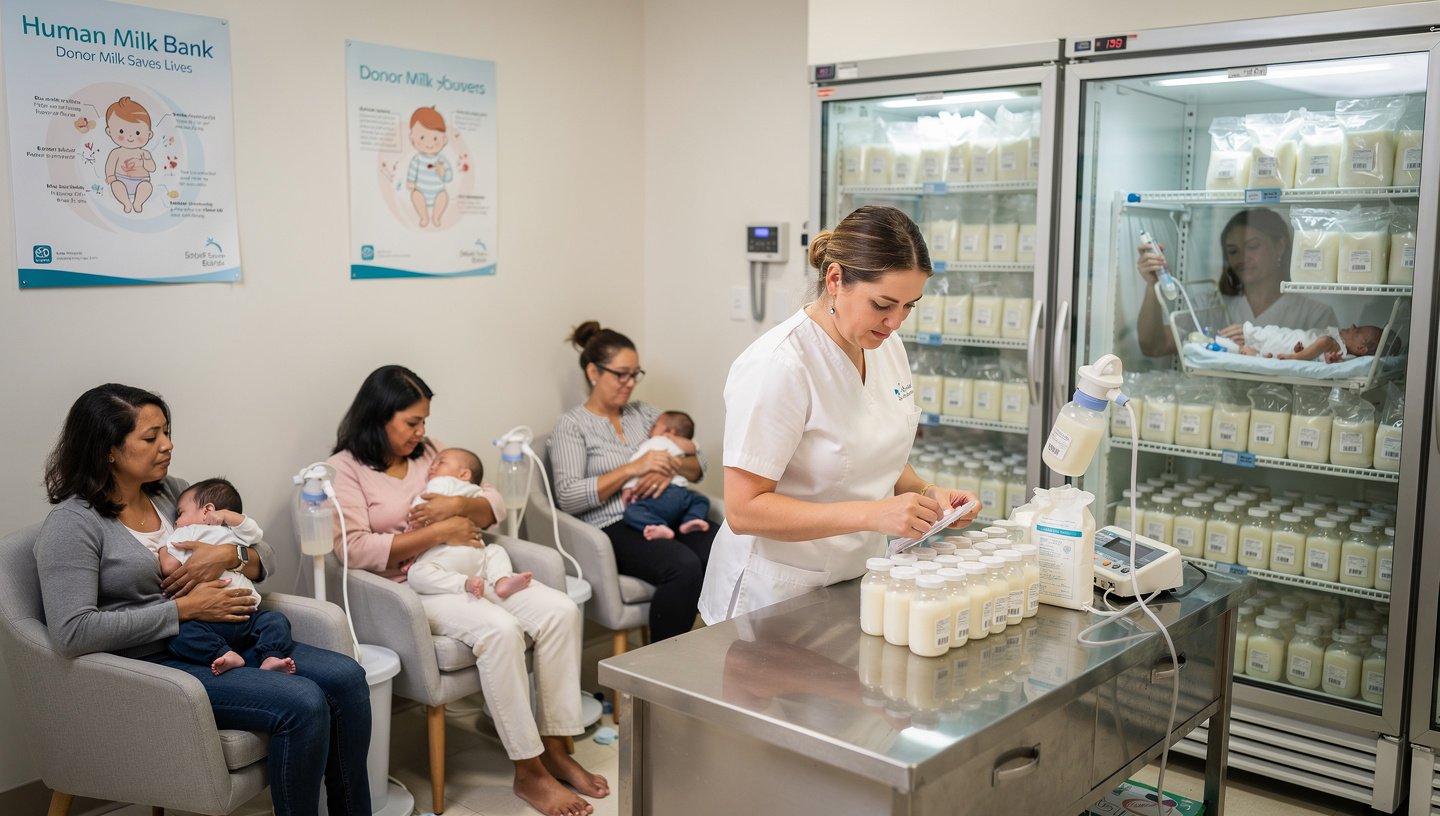
Imagine a cleanroom lab meets a community pantry. A human milk bank recruits healthy lactating donors, screens them carefully, collects excess expressed breast milk, and then processes, tests, and pasteurizes it before distributing it—primarily to hospitals caring for premature and medically fragile infants. The goal is to make donor human milk as safe, consistent, and clinically useful as possible, without losing the nutrients and bioactive components that make human milk such an extraordinary substance.
Why donor human milk at all?
If you’ve ever heard that “breast milk is liquid gold,” it’s not hyperbole. Human milk is a living fluid—part nutrition, part pharmacy, part immune system in a bottle. It contains macronutrients (proteins, fats, carbohydrates), micronutrients (vitamins and minerals), and an orchestra of protective factors: antibodies, antimicrobial peptides, human milk oligosaccharides (HMOs) that feed beneficial gut bacteria, enzymes, hormones, and growth factors. For a preterm gut—immature, vulnerable, like a delicate new garden—this combination acts like the ultimate starter kit: it seeds healthy bacteria, dampens inflammation, helps the intestinal lining mature, and trains the immune system to respond wisely, not wildly.
How does the milk bank make it safe?
- Donor screening: Comprehensive health and lifestyle questionnaire; serologic testing for HIV, hepatitis, syphilis, HTLV; medical review to rule out unsafe medications.
- Milk handling: Sterile pumping, labeled containers, cold-chain packaging from home to bank.
- Intake and testing: Frozen milk is logged, sampled for microbiological screening, pooled into batches, and analyzed for macronutrients.
- Pasteurization: Holder method (62.5°C for 30 minutes), then rapid cooling preserves most bioactive components while inactivating pathogens.
- Post-pasteurization testing: Second microbial screen; only batches that pass are released.
- Cold chain distribution: Frozen storage and transport to hospitals with strict labeling and handling protocols.
These layers—screening, pasteurization, testing—create a safety profile that professional societies endorse and that unregulated sources cannot match.
Does pasteurization strip the good stuff? Yes, some heat-sensitive factors decline. Yet key elements—HMOs, many antibodies, nutrients—remain, and clinical outcomes in NICU practice are strong. Advances in processing and nutrient analysis continue to improve the balance of safety and bioactivity.
Nutrition for growth: Donor milk is protective but sometimes lower in protein and calories than specialized preterm formula or very early preterm mother’s milk. That’s why NICUs add fortifiers—bovine or human milk–derived—to meet growth targets without losing human milk’s protective power.
Scale matters: More banks, higher volumes, broader access translate into more infants starting life with donor milk and fewer complications. High-quality banks adhere to standards, integrate with NICUs, build equitable programs, and pursue continuous improvement.
Breastfeeding synergy: Donor milk is a bridge, not a replacement. It safeguards babies while mothers establish their own supply, and evidence shows post-discharge breastfeeding rates remain stable or improve.
Beware the online market: Unregulated milk carries contamination and infection risks. Without screening, pasteurization, and testing, there’s no safety net. Professional bodies advise families to use accredited banks or hospital programs.
Where do donors come from? Healthy moms with surplus milk. Many have personal NICU experiences. Milk banks support donors with free testing, supplies, and pickup/shipping coordination. This full-circle effect strengthens trust and awareness.
3. Clinical Evidence & Real-World Impact
Case Studies:
- 28-weeker who needed a head start: Trophic feeds of donor milk primed the gut, prevented NEC, and preserved the mother’s plan to breastfeed once her supply rose.
- Rare infection that never came: Hospitals adding donor milk to feeding protocols saw declines in late-onset infections alongside other improvements in care.
- From recipient to donor: Former donor-milk recipients often become donors themselves years later—a testament to trust and community.
Research Highlights:
- Donor milk reduces NEC risk compared with formula in very low birthweight infants.
- Improved feeding tolerance and faster transition off IV nutrition.
- When fortified appropriately, donor milk supports growth goals without sacrificing protection.
- Operational data (e.g., 1,364 donors providing 2,435 L to 1,290 recipients over four years) link donor milk to lower NEC and unchanged breastfeeding after discharge.
- HMBANA’s 11 million-ounce milestone shows rising confidence among neonatologists and hospitals.
- Market projections to 2030 indicate more banks, better labs, and broader global access.
Guidelines from the American Academy of Pediatrics and international bodies make donor milk standard of care for preterm/VLBW infants when mother’s milk is unavailable.
4. Treatment & Management Approaches
In the NICU, donor milk is therapeutic—timed, fortified, and monitored like medication. Key steps to build and run a program:
- Eligibility criteria: Prioritize VLBW and preterm infants when mother’s milk is insufficient.
- Feeding protocols: Define trophic feeding volumes, advancement schedules, residual checks, and fortifier timing.
- Lactation support: Pump within hours, encourage 8–10 sessions/24 hrs, and offer emotional and hands-on help.
- Bank partnerships: Contract with accredited banks; align on screening and labeling processes.
- Logistics: Secure freezer space, train staff on cold chain, labeling, thawing, and dispensing.
- Fortification strategy: Choose standardized versus targeted fortification; use milk analyzers when available.
- Consent and education: Explain screening, pasteurization, usage duration, and address concerns.
- Quality assurance: Track NEC rates, time to full feeds, infection rates, growth, and breastfeeding at discharge.
Practical NICU tips:
- Start small (10–20 mL/kg/day) and watch closely.
- Pair feeds with skin-to-skin when possible.
- Explain fortifiers as temporary nutrition boosters.
- Document batch numbers, dates, volumes meticulously.
Parent guidance:
- Ask early about donor milk plans.
- Prioritize pumping support.
- Read consent materials and ask about safety steps.
- Plan to donate if you have surplus later.
Cautionary note: unregulated online milk is risky—skip it. Use accredited sources only.
5. Prevention & Practical Applications
Donor milk is a cornerstone of NEC prevention and infection reduction. Prevention requires consistency:
- Policy defaults: Mother’s milk first, donor milk next.
- Early trophic feeds: Initiate as clinically appropriate.
- NEC bundles: Combine donor milk with slow feed advancement, line care, and infection control.
- Education: Train staff and inform parents. Transparency builds trust.
- Equity tracking: Ensure donor milk reaches all high-risk infants regardless of background.
Home checklist for families:
- Verify labels and store donor milk in the freezer.
- Thaw safely; swirl gently; discard unused warmed milk per guidelines.
- Keep feeding logs for any reactions.
- Avoid informal milk sources—safety layers matter.
Potential donors: contact your milk bank, follow protocols, freeze surplus, arrange pickup/shipping. Your gift is measured in milliliters and life-changing impact.
6. Conclusion & Future Outlook
Key takeaways:
- Donor milk is a proven bridge that reduces NEC, improves feeding tolerance, and aligns with breastfeeding goals.
- Strict screening, pasteurization, and testing set accredited banks apart from unregulated sources.
- Growing infrastructure—in North America, Europe, and beyond—means more infants gain access.
- Best outcomes arise when donor milk is embedded in protocols, fortified appropriately, and delivered equitably.
What’s next?
- Smarter processing and novel pasteurization techniques to preserve bioactivity.
- Precision nutrition via milk analyzers and targeted fortification.
- Equity-focused expansions and public funding for high-risk infants.
- Global networks sharing best practices and data.
Whether you’re a parent, donor, clinician, or policy maker, your next step matters. Together, we can ensure every fragile infant gets the safest, most protective start in life—one tiny bottle at a time.
FAQ
- How safe is donor human breast milk?
- Accredited milk banks employ multi-step safety protocols: donor screening, microbial testing, Holder pasteurization, and post-pasteurization testing. These layers minimize infection risks and preserve key bioactive components.
- Can pasteurization reduce milk’s benefits?
- Yes, some heat-sensitive factors decline. However, many immune and growth-promoting components remain, and clinical evidence shows robust benefits for preterm infants.
- What if my supply is slow?
- Donor milk bridges the gap. Pump frequently, seek lactation support, and focus on self-care. Donor milk protects your baby while your supply builds.
- Should I buy milk online?
- No. Unregulated online milk lacks screening and pasteurization. Use accredited milk banks or hospital programs to ensure safety.
- How do I become a donor?
- Contact your regional milk bank. After health screening and testing, you’ll receive supplies and shipping instructions. Donated milk goes directly to fragile NICU patients.