When Moderate-to-Severe TBI Could Mean a 67% Higher Risk of Malignant Brain Tumors
Estimated reading time: 12 minutes
Key Takeaways
- Moderate-to-severe TBI is associated with a 67% higher relative risk of malignant brain tumors over 3–5 years, translating to an absolute risk of 0.6% versus 0.4% [1][2][3].
- Mild TBI (concussion) was not linked to increased malignant tumor risk in the latest research [1][2].
- The studies show association, not causation; ionizing radiation remains the only definitively proven environmental risk factor for brain tumors [3].
- Long-term vigilance after moderate-to-severe TBI is wise: know the red-flag symptoms, maintain regular check-ins, and pursue symptom-driven imaging if needed.
- Preventing another head injury and adopting brain-healthy habits (exercise, sleep, nutrition, stress management) are key proactive steps.
Table of Contents
- Introduction & Human Stories
- Core Concepts & Mechanisms
- Clinical Evidence & Real-World Impact
- Treatment & Management Approaches
- Prevention & Practical Applications
- Conclusion & Future Outlook
- FAQ
- References
- Internal Links
Introduction & Human Stories
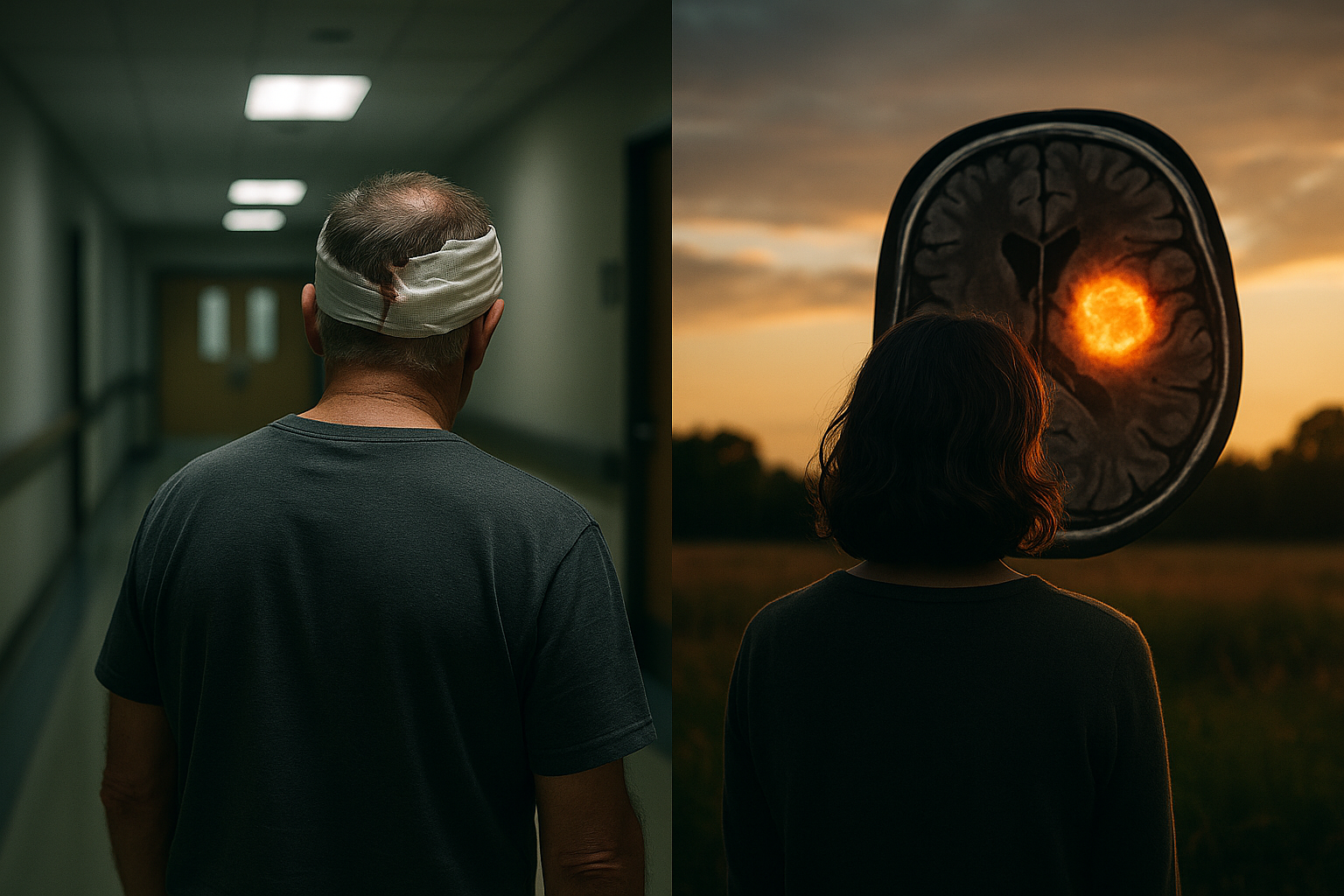
When a big injury happens to the brain, life tends to split into “before” and “after.” There’s the day of the crash, the fall, the blow. Then there’s therapy, slow progress, small wins, setbacks. If you’ve been through a moderate-to-severe traumatic brain injury (TBI), or you love someone who has, you know this story.
So when you hear about a new study that says people with moderate-to-severe TBI face a higher risk of developing malignant brain tumors years later, it can feel like the ground shifts again. *Wait—what?* Another thing to worry about?
“The day you hear ‘malignant brain tumor,’ your stomach drops. But context matters: 0.6% versus 0.4% over three to five years. That’s 6 in 1,000 vs. 4 in 1,000 people—an absolute difference of 2 cases per 1,000.”
If you’re wondering how worried to be, how to watch for warning signs, and whether there’s anything proactive you can do—you’re in the right place. We’ll unpack the science in plain language, explore plausible mechanisms, examine the clinical evidence and its limitations, and end with concrete steps you can take now to support long-term brain health.
Mark’s Story
Imagine Mark, 44, who had a motorcycle accident two years ago. He survived a brain bleed and a week in the ICU. Today he’s back at work, mostly himself, but he uses apps to remember appointments and gets overwhelmed if two people talk at once. Then he sees a headline: “Moderate-to-severe TBI linked to higher risk of malignant brain tumor.” His stomach drops. “Am I a ticking time bomb?”
Jamal’s Perspective
Now imagine Jamal, 28, who had a mild concussion in a soccer match and was out of play for two weeks. He reads the same headline and wonders if he should demand an MRI every six months.
Here’s the first important reassurance: The increased risk signal was driven by moderate-to-severe injuries. In that same research, there was no significant increased risk associated with mild TBI [1][2]. That matters.
1. Core Concepts & Mechanisms: What’s Actually Going On?
What Is Moderate-to-Severe TBI?
Think of TBI severity like the difference between a fender-bender and a crash that requires a tow truck. Mild TBI (concussion) often involves brief confusion or headache without prolonged loss of consciousness. Moderate-to-severe TBI can include:
- Longer loss of consciousness or coma
- Visible structural brain damage on imaging (bleeds, contusions)
- Long-lasting cognitive, motor, or sensory changes
- Hospitalization, ICU care, and sometimes surgery
If mild TBI is a temporary power outage, moderate-to-severe TBI is like a storm that knocks down power lines and floods the basement. The brain reroutes power and repairs damage—but the neighborhood looks different afterward.
What Is a Malignant Brain Tumor?
A malignant brain tumor (e.g., glioblastoma) is an abnormal growth that infiltrates healthy tissue. Unlike benign tumors, malignant ones tend to recur and are harder to cure. They’re rare compared with other cancers, and apart from ionizing radiation, confirmed environmental or lifestyle risks are few [3].
How Might TBI Contribute?
A major brain injury sets off a dramatic cellular drama:
- Inflammation: Cleanup crews (microglia, astrocytes) flare inflammatory signals. Chronic inflammation can, hypothetically, support tumor growth in susceptible cells [3].
- Reactive astrocytes & glial scar: Astrocytes multiply, creating a “scar.” Experimental models suggest this environment might influence cell signaling and DNA stability in ways that could favor tumor formation [3].
- Cellular stress & mutations: Oxidative stress and DNA damage occur. Usually cells repair or die, but rare progenitor cells might accumulate changes, setting the stage for future malignancy [1][3].
- Growth factors & remodeling: Healing releases growth signals. In other organs, chronic injury plus growth factors can lead to cancer—plausible but unproven in the brain.
Bottom line: Biological plausibility exists, but current evidence shows association, not causation [1][3]. Radiation remains the only proven environmental risk factor for brain tumors [3].
2. Clinical Evidence & Real-World Impact
In 2024, a multicenter cohort study in JAMA Network Open analyzed EHR data from >75,000 adults across major U.S. health systems [1][2][3]. Key findings:
- 0.6% of people with moderate-to-severe TBI developed a malignant brain tumor within 3–5 years, vs. 0.4% in mild/no TBI groups.
- Hazard ratio (HR) for moderate-to-severe TBI: 1.67 (95% CI, 1.31–2.12).
- No significant risk increase with mild TBI.
- Meta-analysis across centers: HR 1.57 (95% CI, 1.26–1.95).
Interpretation: A 67% relative increase sounds large, but the absolute difference is 2 extra cases per 1,000 people over a few years. Statistically significant at a population level, yet low for an individual.
Bias & limitations: Detection bias (more scans early post-TBI), confounding (genetics, environment), and generalizability (U.S. civilian data) remain concerns [3].
3. Treatment & Management Approaches
After Moderate-to-Severe TBI: Vigilance & Brain Health
Recovery is a marathon. Early focus on preventing secondary injury; later, on rehabilitation and life rebuilding. A solid long-term plan includes:
- Neurologic follow-up: Regular visits to track cognition, mood, headaches, seizures, motor function, and overall progress.
- Rehabilitation: PT, OT, speech therapy, cognitive rehab, and psychological support.
- Headache & seizure management: Tailored medications and safety planning.
- Return to life: Gradual work re-entry, assistive tech, social connection, exercise.
- Risk communication: Translate numbers into absolute risk; emphasize red flags.
If a Malignant Tumor Is Diagnosed Later
- Multidisciplinary care: Neuro-oncology, neurosurgery, radiation oncology, rehab, palliative care.
- Surgery: Maximal safe resection, advanced mapping.
- Radiation & chemotherapy: Radiation + temozolomide, tumor-treating fields, clinical trials.
- Supportive care: Steroids, antiepileptics, rehab, emotional support.
Your prior TBI history informs baseline function but doesn’t change standard tumor treatment pathways.
4. Prevention & Practical Applications: What You Can Do Today
1) Prevent Another TBI
- Buckle up every ride; wear helmets for bikes, motorcycles, sports.
- Fall-proof your home: grab bars, good lighting, secure rugs.
- Limit substances that impair balance or judgment.
- Follow concussion protocols in sports; when in doubt, sit it out.
2) Build Resilience Through Lifestyle
- Move daily: start with walks, add strength & balance exercises.
- Prioritize sleep: steady schedule, dim lights, treat insomnia or apnea.
- Eat anti-inflammatory: vegetables, fruits, whole grains, fish, olive oil; limit processed foods.
- Manage stress: mindfulness, breathwork, nature, gentle yoga.
- Keep learning: reading, languages, music, puzzles.
- Stay connected: social ties protect brain health.
3) Smart Monitoring Plan
- Baseline neurologic exam once stable.
- Symptom diary: new headaches, seizures, focal deficits, cognitive/personality changes.
- Red-flag list on the fridge; prompt evaluation if triggered.
- Annual or semiannual check-ins with your care team.
- Ask: “How will imaging change management?” favor MRI over CT when possible.
Conclusion & Future Outlook
Here’s the bottom line:
- Moderate-to-severe TBI is associated with a 67% higher relative risk of malignant brain tumors over a 3–5 year window, but the absolute increase is just 2 cases per 1,000 people [1][2][3].
- Mild TBI did not carry a higher risk in this study [1][2].
- Association does not prove causation; ionizing radiation remains the only established environmental risk factor [3].
- Long-term vigilance—regular follow-ups, symptom-driven imaging, and shared decision-making—is prudent after moderate-to-severe TBI.
- Future research will refine screening protocols, identify biomarkers, and clarify mechanisms.
You’ve already overcome immense challenges after TBI. This new information doesn’t take that away; it adds one more tool in your care strategy—like installing a smoke detector. You hope it never goes off, but if something smolders, you’ll know early, when it matters most.
FAQ
- Q: Does moderate-to-severe TBI guarantee I’ll develop a brain tumor?
- A: No. The relative risk increase is real, but the absolute risk remains low (0.6% vs. 0.4%). It’s an association, not destiny.
- Q: Should people with mild TBI get routine brain scans?
- A: Current evidence shows no increased malignant tumor risk after mild TBI, so routine imaging isn’t recommended. Follow concussion guidelines and seek care if symptoms persist.
- Q: What red-flag symptoms should prompt immediate evaluation?
- A: New or worsening morning headaches, new-onset seizures, focal deficits (weakness, numbness, speech/vision changes), or progressive personality/cognitive changes warrant prompt assessment and possibly an MRI.
- Q: Are there proven ways to reduce my long-term risk?
- A: While you can’t undo past injury, you can prevent another TBI, build brain-healthy habits (exercise, sleep, diet, stress management), and maintain regular medical follow-up.
References
- Mass General Brigham Press Release summarizing multicenter findings on TBI severity and malignant brain tumor risk.
- The ASCO Post summary detailing hazard ratios and meta-analysis across centers, emphasizing increased risk after moderate-to-severe TBI and no significant increase after mild TBI.
- JAMA Network Open study (2024) reporting the association between moderate-to-severe TBI and malignant brain tumor risk in adult civilians, discussing mechanisms, limitations, and the need for long-term monitoring and future screening research.
Internal Links
- For supportive insights on building a strong plan for recovery, check out our blog on 7 Trauma Healing Practices – Science-Backed Mind-Body Healing.
- Explore healthy dietary choices that can support brain health with our article on Functional Foods: 7 Science-Backed Benefits for Better Health.
- For tips on emotional and cognitive support that might be beneficial after a TBI, see our post on Understanding the Spectrum of Alcohol Use Disorder: A Practical Guide for Clinicians.
- To learn about the food choices that impact mental health, you can read our article on Healthy Eating for Kids: 8 Fun, Science-Backed Tips That Actually Work.
- To understand how to better manage stress, which is critical post-injury, check our insights on The Real Reasons Behind Your Constant Hunger – Hormonal Insights.
“`