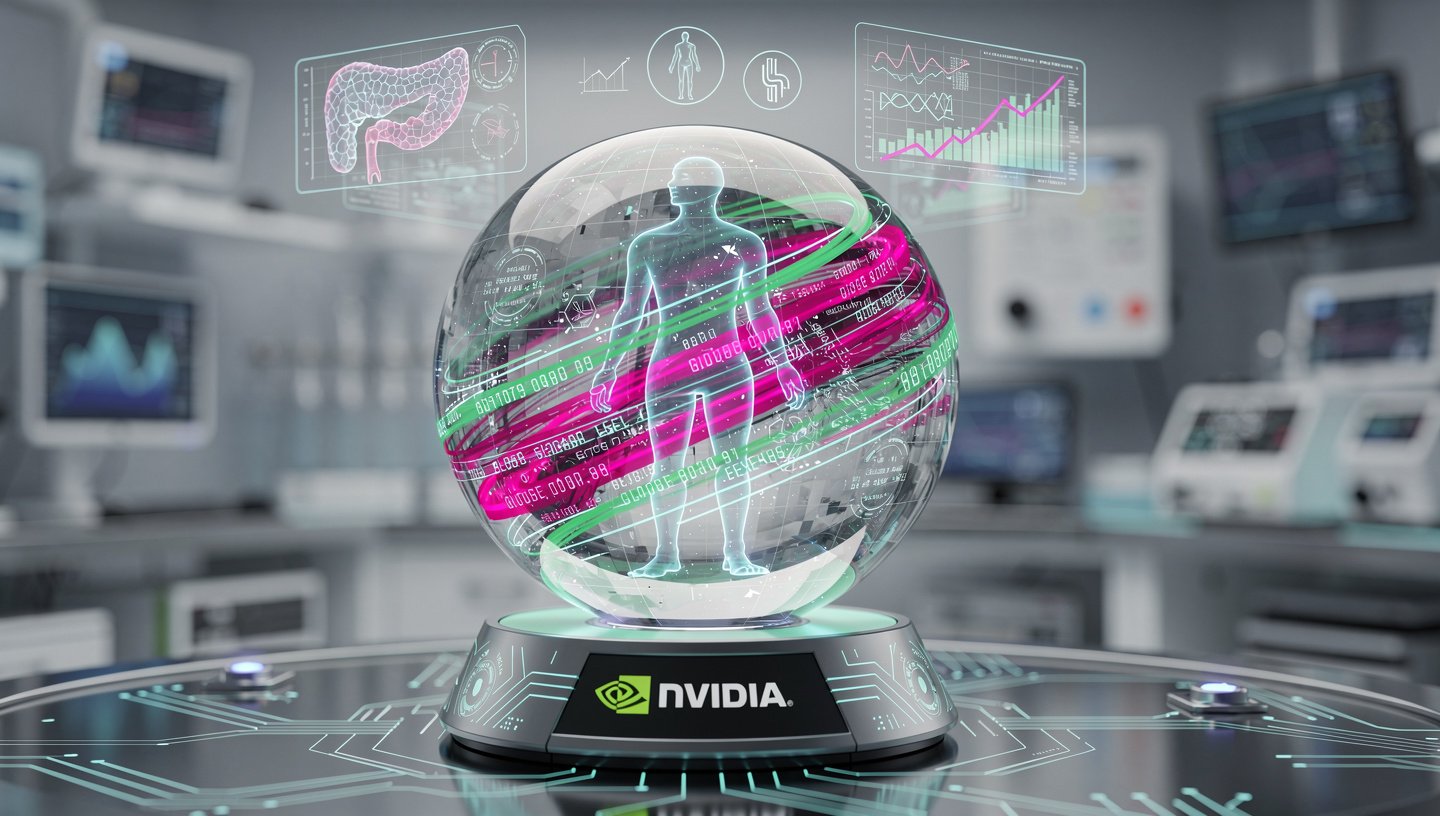
You might think a continuous glucose monitor is just for people who already have diabetes, but Nvidia’s new AI model can now read patterns in your glucose data that predict diabetes and heart disease risk more than a decade before it happens – and it does so better than the standard HbA1c blood test your doctor orders every year. The transformer-based system, called GluFormer, was trained on over 10 million glucose readings and correctly flagged 66% of future diabetes cases and 69% of cardiovascular deaths in the highest-risk group, while conventional tests spread risk much more evenly and missed critical signals. Even more intriguing? When you add what you eat into the model, it can forecast exactly how your body will respond to specific meals, opening the door to truly personalised nutrition for anyone – diabetic or not.
Key Takeaways:
- A week of glucose data might tell you more about your future heart attack risk than years of blood tests. In a prediabetic group followed for over a decade, Nvidia’s AI model sorted people into risk buckets where 69% of cardiovascular deaths landed in the highest-risk quarter… and zero deaths in the lowest. Meanwhile, traditional HbA1c tests – the gold standard doctors have relied on for decades – spread cases pretty evenly across all risk levels. The implication is wild: your glucose sensor is quietly picking up metabolic patterns and vascular stress signals that a single blood draw every few months can’t detect. But here’s the catch – this was 580 people from one population, so we need much bigger and more diverse studies before doctors start handing out CGM prescriptions based on AI risk scores.
- The model works like ChatGPT, except instead of predicting your next word, it’s predicting your next glucose spike. GluFormer is a transformer foundation model trained on 10+ million CGM readings, learning to forecast future blood sugar values the same way language models learn sentence structure. And just like how GPT’s internal “understanding” of language helps it write essays and code, GluFormer’s internal representations of your glucose patterns turn out to predict everything from liver fat to kidney function to how your HbA1c will drift over the next year – often better than the actual lab values themselves. The really interesting bit? It generalised across 19 cohorts, five countries, eight CGM device types, and people ranging from healthy to diabetic, suggesting it learned something fundamental about metabolic physiology rather than just memorising quirks of one dataset.
- You might soon wear a CGM to optimise your diet even if you’re perfectly healthy – but we honestly don’t know yet if that helps. By feeding the model what you ate alongside your glucose trace, it can simulate how your blood sugar would respond to different meals and personalise nutrition advice for non-diabetics trying to avoid glucose rollercoasters. Sounds amazing for the biohacking crowd, right? But there’s a big evidence gap here… we have zero proof that acting on these AI-predicted responses actually prevents diabetes or heart disease better than, say, just eating more vegetables and walking after dinner. These are intermediate endpoints – glucose curves – not hard outcomes like “you lived five years longer.” So while the tech is genuinely impressive and the potential is real, right now it’s a crystal ball showing you predictions we haven’t validated that will change your future if you act on them.
What’s This GluFormer Crystal Ball All About?
Imagine feeding a computer over 10 million glucose readings from nearly 11,000 people and teaching it to spot patterns the way ChatGPT learned to predict the next word in a sentence. That’s imperatively what Nvidia did with GluFormer – except instead of predicting words, it’s predicting your metabolic future based on how your blood sugar behaves over just a few days. The model was trained on data from the Human Phenotype Project, and here’s where it gets wild: most of the people in that training set didn’t even have diabetes. They were just… regular folks wearing continuous glucose monitors, going about their lives, eating breakfast, dealing with stress, sleeping poorly on Tuesday nights. And from all that everyday glucose noise, GluFormer learned to read between the lines.
The real jaw-dropper came when researchers tested it on 580 adults with prediabetes and followed them for about 11 years. When they used GluFormer’s predictions to classify people into four risk groups, 66% of those who eventually developed diabetes were assigned to the highest-risk group. Even more striking? 69% of people who died from cardiovascular causes were flagged as high-risk, while exactly zero cardiovascular deaths happened in the lowest-risk group. Compare that to your standard HbA1c test – you know, the one your doctor orders every year – and the cases were scattered pretty evenly across all risk levels. HbA1c basically shrugged and said, “Beats me.” But a few days of continuous glucose data, run through this AI model, saw something coming a decade down the road. That’s not just incremental improvement… that’s your glucose monitor suddenly speaking a language your doctor’s bloodwork never could.
How’s It Gonna Change the Game for Diabetics?
Finally, a Risk Score That Actually Catches People Before It’s Too Late
66% of people who went on to develop diabetes over the next 11 years were flagged in Nvidia GluFormer’s highest-risk quartile – and here’s the kicker, only 7% slipped into the lowest-risk group. Compare that to HbA1c, which basically spreads future diabetes cases pretty evenly across all risk levels, as if it were guessing. For your doctor, this means the difference between catching your prediabetes when there’s still time to reverse it versus finding out you’ve crossed the line when you’re already dealing with full-blown type 2. And the cardiovascular piece? Even more dramatic. Zero cardiovascular deaths occurred in GluFormer’s lowest-risk quartile, while HbA1c couldn’t separate the safe group from the at-risk group worth a damn. So instead of waiting until your A1c creeps above 6.5% and you’re officially diabetic, your doctor could theoretically slap a CGM on you for a week or two, feed that data into GluFormer, and know whether you’re on a collision course with diabetes and heart disease years down the road.
Your Meals Get a Personalised Glucose Forecast
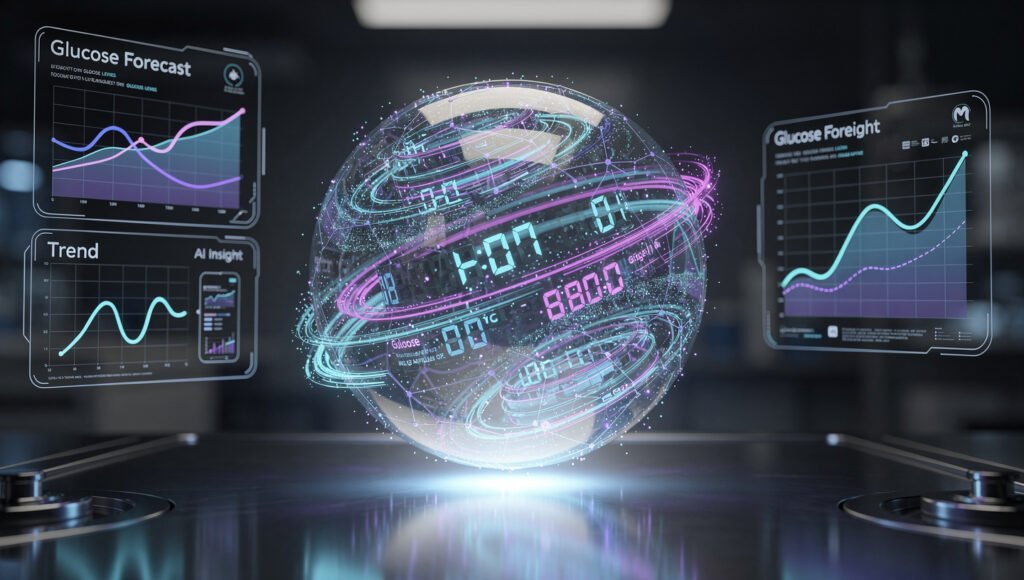
The multimodal version of GluFormer doesn’t just predict your long-term risk – it can actually tell you what’s going to happen to your blood sugar after you eat that bagel versus the omelette. By combining your CGM patterns with dietary data, the model simulates person-specific glucose responses to individual meals, which means your “safe” breakfast might spike your glucose while your friend handles it just fine. This isn’t totally new territory… earlier work from researchers like the Segal group showed that post-meal glucose responses vary wildly person to person. But GluFormer’s foundation-model approach, trained on over 10 million CGM readings, takes it to another level of precision. The potential here is huge for people with prediabetes who want to flatten those post-meal spikes, or even for health-conscious folks without any metabolic issues who want to optimise their diets. That said, and this is important, there’s zero interventional evidence yet that acting on these AI predictions actually prevents diabetes or heart attacks better than standard nutrition advice. It’s still just predicting intermediate endpoints – your glucose curve – not whether you’ll actually stay healthier in the long run.
Why Traditional Methods Just Don’t Cut It Anymore
The HbA1c Problem Nobody Talks About
For decades, your doctor has relied on HbA1c to gauge your diabetes risk – that single blood test that supposedly tells the whole story of your blood sugar over the past three months. But here’s what’s been quietly frustrating endocrinologists: HbA1c is a blunt instrument trying to do precision work. It captures average glycemia over months but completely misses the short-term dynamics that actually matter – the spikes after meals, the overnight dips, the circadian patterns that reveal how your body really handles glucose. And there’s another issue that makes things even messier… once you see a high HbA1c result, you change your behaviour. You start eating better, maybe exercise more. So the test itself influences what it’s supposed to measure, making it what researchers call “behaviourally labile.”
The numbers from the Nature study really drive this home. When researchers used traditional HbA1c to predict who’d develop diabetes or die from cardiovascular causes, the results were scattered across all risk groups – no clear pattern, no real predictive power. But when they used GluFormer’s AI analysis of continuous glucose data? 66% of people who later developed diabetes and 69% of those who died from cardiovascular causes fell into the highest-risk quartile. Even more striking: zero cardiovascular deaths occurred in the lowest-risk group identified by the AI, compared to HbA1c,c which showed deaths spread across all quartiles. That’s not just a marginal improvement – that’s the difference between a foggy windshield and crystal-clear vision. Your conventional CGM metrics, like mean glucose or time in range? They didn’t fare much better than HbA1c, because they’re still just summary statistics that flatten out all the complex patterns hiding in your glucose data.
Can It Really Predict My Blood Sugar After Lunch?
Your Sandwich Isn’t Everyone’s Sandwich
Here’s where things get really personal – and honestly, a bit wild. The researchers didn’t stop at predicting who’d get diabetes in a decade. They built a multimodal version of GluFormer that takes in what you actually eat and forecasts your specific glucose response to that meal. Not the average person’s response… yours. Feed the model your breakfast data – say, oatmeal with berries – and it’ll simulate a plausible glucose curve for the next few hours, tailored to how your body handles carbs based on patterns it learned from your CGM trace. This builds on earlier work (the Segal group did pioneering stuff here predicting post-meal glucose in people without diabetes), but now you’ve got a foundation model trained on more than 10 million CGM readings doing the heavy lifting instead of smaller, narrower algorithms.
So can you plug in “turkey sandwich vs. salad” and let the AI pick your lunch? Technically, yes – the model can predict person-specific glycaemic responses to individual meals and show you which option keeps your glucose flatter. But – and this is a big but – we don’t yet have proof that acting on these AI predictions actually prevents diabetes or heart attacks better than old-fashioned dietitian advice. The co-authors themselves flag this gap: predicting a glucose spike is an intermediate endpoint, not a hard outcome. You might optimise your post-lunch curve beautifully and still end up with the same long-term risk if other factors (sleep, stress, activity, genetics) swamp the signal. The tool is promising for precision nutrition in prediabetes or for health-conscious folks who want data-driven food choices, but right now it’s more “interesting possibility” than “proven intervention.” We’re watching to see if anyone runs a trial where one group eats according to GluFormer’s meal forecasts and another follows standard guidelines, then tracks who stays healthier over the years.
Our Take on the Long-Term Health Implications
What happens when we can see your cardiovascular fate written in your glucose patterns a decade before your heart gives any warning signs? That’s the question keeping us up at night after digging into these results. Zero cardiovascular deaths in the lowest-risk quartile – not one – while 69% of all cardiovascular deaths clustered in the highest-risk group that GluFormer identified from just a few weeks of glucose monitoring. Your doctor’s standard HbA1c test? It scattered those same deaths pretty evenly across all risk groups, basically shrugging its shoulders at who was in danger. We’re talking about a median follow-up of 11 years here, which means this AI was reading signals in your glucose rhythms that wouldn’t show up as a heart attack or stroke for over a decade.
But here’s where things get messy in the real world. The long-term risk data comes from 580 prediabetic adults in one specific population, and that’s… not nothing, but it’s not the massive validation you’d want before rolling this out to millions of people. And let’s be honest about the elephant in the room: we don’t yet have interventional evidence that acting on these AI predictions actually prevents the bad outcomes. Sure, the model can tell you with scary accuracy that you’re headed for trouble, and it can simulate how your glucose will respond to that pasta dinner versus the salmon salad. But does changing your diet based on those predictions actually stop you from developing diabetes or dying of a heart attack, compared to just following standard dietary advice? We don’t know yet. The model’s showing us a crystal ball, but we haven’t proven that looking into it and changing course actually rewrites your future… though I’d bet money the interventional trials are already being designed as we speak.
What’s Next for CGM and AI? Are We Ready?
The Clinical Reality Check
Your doctor isn’t going to prescribe you a CGM sensor and an AI risk score tomorrow morning, and honestly? That’s probably a good thing. Even though GluFormer nailed its predictions in the study cohort – catching 69% of future cardiovascular deaths in the highest-risk quartile and zero in the lowest – we’re still talking about 580 people from one population followed for 11 years. That’s solid science, but it’s not “change clinical practice guidelines” territory yet. The model needs to prove itself in tens of thousands of people across different ethnicities, income levels, and geographic regions before your endocrinologist will trust it more than HbA1c… and before insurers will pay for it.
But here’s where things get messy in a hurry. The most immediate adoption probably won’t happen in doctors’ offices at all – it’ll happen in the direct-to-consumer wellness space, where people are already buying CGMs out-of-pocket to “optimise” their metabolic health. Companies are already lining up to sell you CGM-plus-app subscriptions that promise personalised nutrition insights, and GluFormer-style models will supercharge those offerings. So we’re facing a weird inversion: the worried-well with disposable income will get AI-powered glucose forecasting years before the prediabetic Medicaid patient who might actually benefit from early intervention. The researchers flag this disparity in their limitations section, but flagging it and solving it are very different things. And nobody’s answered the bigger question yet – if your AI tells you that sourdough spikes your glucose less than white bread, and you switch… does that actually prevent a heart attack 15 years later, or are we just chasing surrogate endpoints that look impressive on a graph?
Final Words
Now, think about the difference between a single snapshot and a high-speed camera recording every frame. That’s necessarily what Nvidia’s GluFormer brings to diabetes prediction – instead of relying on HbA1c’s static three-month average, you’re getting a dynamic read on thousands of glucose fluctuations that reveal patterns your body’s been quietly signalling for years. The fact that 69% of cardiovascular deaths in the study fell into the model’s highest-risk quartile, while none fell into the lowest, tells you something pretty remarkable… this isn’t just incrementally better than HbA1c; it’s operating in a different league entirely. And we’re not just talking about diabetes risk here – the model picked up signals tied to visceral fat, liver health, kidney markers, and lipid profiles across 19 external cohorts spanning five countries and eight different CGM devices.
But here’s where you need to keep your expectations grounded. Yes, GluFormer can predict your personal glucose response to that bagel versus a bowl of oatmeal, and yes, it might one day guide precision nutrition recommendations even if you don’t have diabetes. The technology is genuinely impressive. However – and this is important – nobody has yet proven that acting on these AI predictions actually prevents diabetes or saves lives better than standard dietary advice. The 580-person prediabetic cohort that anchors the long-term outcome data is relatively small, drawn from a specific population, and needs to be replicated in larger, more diverse groups before doctors can confidently use it in clinical practice. So while your blood sugar’s “crystal ball” is showing real promise, we’re still in the early validation phase. The next few years will tell us whether widespread CGM monitoring and AI become standard preventive care or remain a niche tool for high-risk populations.
FAQ
Q: So what exactly IS this “crystal ball” thing – is Nvidia literally predicting my blood sugar now?
A: My neighbour Dave got one of those continuous glucose monitors last year, even though he doesn’t have diabetes, and he kept showing me these wild graphs on his phone every time we’d grab coffee. I thought he was being a bit extra… until I read about GluFormer.
It’s not quite a crystal ball in the sci-fi sense, but honestly, it’s pretty close. NVIDIA trained this AI model on over 10 million glucose readings from nearly 11,000 people, teaching it to spot patterns in how blood sugar moves throughout the day. Think of it like training a really smart pattern-recognition system on thousands of people’s glucose “stories.”
The wild part? In a study published in Nature, they followed 580 people with prediabetes for about 11 years. When they looked back at short CGM readings those people had done way back at the start, GluFormer could predict who would develop diabetes or die from heart disease way better than the standard HbA1c blood test doctors use now. We’re talking 66% of future diabetes cases and 69% of cardiovascular deaths landing in the highest-risk group, the AI identified, while basically zero cardiovascular deaths showed up in the lowest-risk group.
And yeah, if you add in what someone eats, the model can forecast how their blood sugar will respond to specific meals. That’s the “crystal ball” part: it reads short-term glucose patterns and sees years into your metabolic future.
Q: Why would this be better than just checking my A1C at the doctor’s office like I always do?
A: Here’s the thing about HbA1c – and my own doctor actually explained this to me after my last physical – it’s basically an average of your blood sugar over the past 2-3 months. Which sounds useful, right? But it’s kind of like judging a book by counting all the words and averaging their length. You miss the whole story.
The researchers in this study point out that HbA1c is quite “coarse” and is also influenced by behaviour changes. So if you get a high reading, freak out, and start eating better… well, your next HbA1c might look fine even though your underlying metabolic health hasn’t really changed much. It’s also “labile” – meaning it bounces around and can be affected by all sorts of things beyond just glucose.
CGM data captures the actual dynamics. The ups and downs after meals, how stable your glucose is overnight, your body’s circadian patterns, and how quickly you recover from a glucose spike. All those little details apparently encode information about your metabolic and vascular health that a single average number just can’t capture.
In the prediabetes group they studied, when they split people into risk groups using HbA1c, future diabetes cases were spread pretty evenly across all the groups. But when GluFormer split based on CGM patterns, it concentrated future cases heavily in the high-risk bucket. The AI was seeing something in those glucose wiggles that the standard test completely missed.
So it’s not that HbA1c is useless – it’s been the standard for decades for good reason – but these dynamic patterns seem to tell a richer story about what’s actually going on inside your body.
Q: Does this mean I should go buy a CGM even though I don’t have diabetes?
A: Okay, so my wife asked me this exact question after I told her about this study, because she’s been seeing all these fitness influencers wearing CGMs and talking about “optimising” their metabolism. And honestly… the answer is complicated.
The study shows that GluFormer can predict personalised glucose responses to different foods when fed dietary data. This builds on earlier work where researchers showed they could predict how different people’s blood sugar would react to the same meal – turns out a banana might spike you but not me, or vice versa. That’s genuinely interesting for precision nutrition.
But – and this is a big but – there’s zero evidence yet that acting on these predictions actually improves hard outcomes. Like, nobody has shown that tailoring your diet based on AI-predicted glucose responses prevents diabetes or heart attacks better than just… eating a normal healthy diet with lots of vegetables and not too much processed