It’s sitting right there on your grocery store shelf, labelled “sourdough” with that artisan font and rustic packaging… but here’s the uncomfortable truth: most of what’s sold as sourdough isn’t actually sourdough at all. You’ve probably been paying premium prices for regular bread with some vinegar added. And the real kicker? You’re missing out on legitimate health benefits backed by solid research – we’re talking improved mineral absorption, better blood sugar control, and up to 90% reduction in gut-irritating FODMAPs that trigger IBS symptoms. Because there’s no legal definition for sourdough in most countries, manufacturers can slap the label on just about anything. But authentic sourdough – the kind that ferments for 8 to 24 hours – actually transforms wheat at a molecular level, breaking down the compounds that cause digestive distress while unlocking nutrients your body desperately needs.
Key Takeaways:
- Ever wondered why that “sourdough” from the grocery store doesn’t seem any different from regular bread? That’s because most commercial sourdough is fake – manufacturers add vinegar or lactic acid to regular yeast bread and slap a sourdough label on it. There’s literally no legal definition protecting the term in the US, UK, Canada, or Australia… which means companies can charge you premium prices for what’s essentially bread with a tangy flavour. Real sourdough requires 8-24 hours of fermentation with wild yeast and lactic acid bacteria, and that’s where all the health benefits actually come from.
- The whole “gluten sensitivity” thing might not be what you think it is. Turns out many people who believe they’re reacting to gluten are actually reacting to FODMAPs – specifically fructans found in wheat and rye. And here’s where it gets interesting: authentic sourdough fermentation breaks down up to 90% of these FODMAPs, which is why some people with IBS or supposed gluten issues can actually tolerate real sourdough just fine. It’s not the gluten that was the problem all along.
- Real sourdough isn’t just easier on your gut – it actually helps your body absorb nutrients better. The long fermentation process destroys 60-90% of phytic acid, a compound that typically binds to minerals like iron, zinc, and magnesium, preventing your body from using them. So you’re not just avoiding digestive issues… you’re actually getting more nutrition from the same bread.
- Blood sugar management gets a boost with authentic sourdough, too. Fermentation creates organic acids and resistant starch that slow the rate at which glucose enters your bloodstream – plus it delays gastric emptying, which means your stomach takes longer to process the food. The result? A lower glycemic index compared to regular white bread, which can be a game-changer if you’re watching your blood sugar levels.
- So how do you spot the real deal? A simple ingredient list is your first clue – just flour, water, salt, and sourdough starter. No commercial yeast, no vinegar, no weird preservatives or “dough conditioners.” And if you can, ask the baker about fermentation time… anything less than 8 hours isn’t giving you those health benefits. Better yet, learn to make it yourself – because once you understand the process, you’ll never waste money on fake sourdough again.
What’s Really Hiding in Your Sourdough?
That loaf you picked up last week – the one with the artisan label and the $7 price tag – might be harbouring a secret that has nothing to do with wild yeast or traditional fermentation. In the US, UK, Canada, and Australia, there’s literally no legal definition of what qualifies as sourdough, which means manufacturers can slap that label on pretty much anything and get away with it. And they do. Walk down the bread aisle, and you’ll see dozens of “sourdough” options, but here’s the kicker… most of them never went through the 8 to 24 hours of fermentation that creates the health benefits you’re actually paying for.
The difference between real sourdough and fake sourdough isn’t just about taste or texture – it’s about your gut health, your blood sugar, and whether you’re absorbing nutrients or just eating expensive air. Because when you skip that long fermentation process, you’re also skipping the breakdown of phytic acid (which blocks mineral absorption), the reduction of FODMAPs (which trigger digestive issues), and the creation of organic acids that slow down your blood sugar spike. So yeah, what’s hiding in your sourdough might be… regular bread with an attitude problem.
Is It Real or Just a Marketing Trick?
Manufacturers have gotten really creative with their shortcuts, and honestly? Some of them are downright sneaky. The most common trick is adding vinegar or lactic acid to regular yeast bread to mimic that tangy sourdough flavour, then rushing it through a standard 2-3 hour rise and calling it a day. You get the sour taste, sure, but none of the bacterial action that breaks down fructans or phytic acid. It’s like putting a Ferrari sticker on a Honda and charging Ferrari prices… except worse, because at least the Honda still gets you where you need to go.
The premium pricing is what makes this particularly frustrating. These fake sourdough loaves often cost 50-100% more than regular bread, banking on your assumption that “sourdough” automatically equals “healthier.” But without that extended fermentation period – ideally 12 to 24 hours – you’re not getting improved mineral absorption, you’re not getting FODMAP reduction, and you’re definitely not getting the lower glycemic response that makes real sourdough special. You’re just getting expensive bread with tangy flavouring, and your gut knows the difference even if your taste buds don’t.
The Sneaky Additives You Should Watch Out For
Flip that ingredient label over and start looking for red flags. Commercial yeast is the first giveaway – real sourdough relies exclusively on wild yeast and lactic acid bacteria from the starter, so if you see “yeast” listed separately, that’s your sign they rushed the process. Then there’s the vinegar we already mentioned, but also watch for “cultured wheat flour” or “cultured wheat starch” – these are just fancy ways of saying they added acidity without doing the actual fermentation work. And if you spot preservatives like calcium propionate or dough conditioners like DATEM or sodium stearoyl lactylate? Those are there because industrial bread-making processes need help achieving what traditional fermentation does naturally.
The ingredient list for authentic sourdough should be almost boring in its simplicity: flour, water, salt, and sourdough starter (sometimes listed as “sourdough culture”). That’s it. Maybe some seeds or grains if it’s a speciality loaf, but the base should never include more than four ingredients. Anything beyond that basic formula suggests shortcuts were taken, and those shortcuts mean you’re missing out on the enzymatic breakdown that makes sourdough actually beneficial for your digestive system. The lactobacilli bacteria need time to produce the enzymes that break down fructans into simple sugars – and then consume those sugars themselves – but they can’t do that work in a 3-hour industrial timeline.
Even more deceptive are the loaves that include both sourdough starter AND commercial yeast – technically, they can claim sourdough is in there, but the commercial yeast speeds up.
The Science of Sourdough: Why It’s Good for You
The transformation that happens during proper sourdough fermentation isn’t just about flavour – it’s a complete biochemical overhaul of the bread itself. Does longer fermentation really make the bread healthier? The answer is a resounding yes, but only when you’re talking about genuine 8-24 hour fermentation periods. During this time, wild yeast and lactobacilli work together in ways that commercial yeast can’t replicate, breaking down compounds that your digestive system would otherwise struggle with.
What’s happening at the molecular level is pretty fascinating. Lactic acid bacteria produce specific enzymes that target the problematic fructans we discussed earlier, while simultaneously creating an acidic environment (pH 3.8-4.3) that activates the natural enzymes already present in the grain. This double-action process doesn’t just reduce FODMAPs by a modest amount – we’re talking about a 60-90% reduction in phytic acid and up to 90% reduction in fructans. That’s not a minor improvement… that’s a fundamental change in what you’re actually eating.
How Fermentation Changes the Game
Think about what happens when you rush bread-making with commercial yeast. You get a loaf in 2-3 hours, sure, but all those minerals in the grain? They’re still locked up tight by phytic acid, which acts like a molecular cage around iron, zinc, and magnesium. Your body can’t properly access them. But when lactobacilli get 12-24 hours to do their work, they systematically dismantle that cage. The bacteria don’t care about making bread quickly – they’re just doing what they’ve evolved to do over thousands of years, and the side effect is bread that your body can actually use.
The glycemic benefits work through multiple pathways as well. It’s not just one thing making sourdough better for blood sugar – it’s the organic acids produced during fermentation, the formation of resistant starch, and even the way those acids slow down gastric emptying. So the glucose from the bread enters your bloodstream more gradually instead of spiking hard and fast as it does with regular white bread. Some studies show that sourdough can have a glycemic index 25-30% lower than conventionally made bread made with the same flour.
The Surprising Gut Benefits of Real Sourdough
Here’s where things get really interesting for anyone dealing with digestive issues. The distinction between gluten sensitivity and FODMAP intolerance has been muddy for years, and a lot of people have been avoiding gluten when fructans were actually the culprit all along. Real sourdough cuts through this confusion because the fermentation process specifically targets those fructans – the fermentable carbohydrates that trigger bloating, gas, and abdominal pain in IBS sufferers. The lactobacilli literally eat the fructans, converting them into simple sugars, which they then consume.
This isn’t just theoretical – clinical observations show that many people who can’t tolerate regular bread can eat properly fermented sourdough without any problems. The bacteria are doing outside your body what your gut can’t do efficiently on its own. And because the process happens before you even take a bite, your digestive system doesn’t have to work nearly as hard to break down the bread. It’s imperatively pre-digested in the ways that matter most for gut comfort.
What makes this particularly valuable is that you’re not losing out on nutrition to gain digestibility. In fact, it’s the opposite – you’re getting better mineral absorption, more accessible nutrients, and easier digestion all at once. The fermentation process doesn’t strip away the good stuff; it unlocks it. That’s why traditional cultures that relied heavily on grains almost always fermented them. They didn’t know the biochemistry, but they knew from experience that fermented grain products just worked better in the human body.
Is Gluten the Villain We Thought It Was?
Picture this: you’re at brunch with a friend who apologetically waves away the bread basket, explaining they can’t have gluten. Not celiac disease, mind you – just that eating bread makes them feel awful. Bloating, cramps, brain fog… the whole nine yards. So they’ve cut out gluten entirely, and yeah, they feel better. Case closed, right?
Not so fast. What if I told you that gluten might not be the problem at all? This is where things get really interesting, because the research is showing us something that’s been hiding in plain sight for years. Your friend – and maybe you too – might be blaming the wrong culprit entirely.
The Real Culprit Behind Digestive Issues
Turns out, there’s a group of carbohydrates called FODMAPs that are wreaking havoc in people’s guts, and they’ve been getting away with it while gluten takes all the blame. FODMAPs – which stands for Fermentable Oligosaccharides, Disaccharides, Monosaccharides, and Polyols (yeah, it’s a mouthful) – are present in tons of foods, including wheat and rye. What is the specific FODMAP in these grains? Fructans.
Dr Armstrong points out something that should make everyone sit up and pay attention: many patients diagnosed with non-celiac gluten sensitivity are actually reacting to fructans, not gluten. These fructans are fermentable carbohydrates that your gut bacteria absolutely love to feast on… which sounds great until you realise that this feast produces gas, bloating, and abdominal pain. For people with IBS, this isn’t just uncomfortable – it can be debilitating. And here’s the kicker: when you avoid gluten-containing grains, you’re also avoiding fructans, so you feel better and assume gluten was the problem. But correlation isn’t causation, as they say.
Why Sourdough Might Be Your New Best Friend
So what does this mean for your relationship with bread? Well, if fructans are the real troublemakers, then the fermentation process in authentic sourdough becomes your secret weapon. During those long hours of fermentation (we’re talking 8 to 24 hours), something almost magical happens. The lactobacilli bacteria in your sourdough starter produce enzymes that systematically break down those pesky fructans into simple sugars – and then the bacteria consume those sugars themselves.
The numbers here are honestly pretty remarkable. Real sourdough can reduce FODMAPs by up to 90%, making bread that was previously off-limits suddenly tolerable – even therapeutic – for many people with IBS. But there’s a catch (isn’t there always?). This only works if the fermentation happens long enough and in the right acidic environment. That pH of around 3.8 to 4.3 isn’t just making your bread tangy… It’s activating enzymes in both the bacteria and the grain, enhancing the breakdown of FODMAPs in a way that quick-rise bread can’t.
This means that slice of real sourdough sitting on your counter isn’t just bread – it’s been biochemically transformed into something fundamentally different from what went into the bowl. The wheat is still wheat, sure, but beneficial bacteria have primarily consumed the compounds that trigger digestive distress during fermentation. It’s like having a team of tiny workers pre-digesting the problematic parts of your bread before it ever reaches your stomach. And for people who’ve been avoiding bread for years because they thought they were gluten-sensitive? This could be a total game-changer.
What Makes Sourdough So Unique?
The Magic of Wild Yeast and Lactic Acid Bacteria
Ever wonder why your sourdough starter smells like… well, not like regular bread dough? That’s because you’re not dealing with the neat, predictable world of commercial yeast anymore. Real sourdough is a living ecosystem – a complex community where wild yeast and lactic acid bacteria work together in ways that transform the chemistry of your flour entirely. These aren’t the sanitised, lab-grown organisms you find in those little packets at the grocery store. They’re wild strains that have been captured from the air, the flour itself, and even your hands.
The lactobacilli bacteria are the real workhorses here, and they’re doing something absolutely fascinating to your dough. While they’re busy fermenting, these bacteria produce enzymes that literally break down the compounds in wheat that cause digestive problems. At the same time, the wild yeast is slowly raising your dough – much slower than commercial yeast would – which gives those bacterial enzymes hours and hours to do their thing. This symbiotic relationship creates an acidic environment with a pH between 3.8 and 4.3, and that acidity? It’s not just giving your bread that signature tang… it’s activating additional enzymes in the grain itself that further break down problematic compounds like fructans.
The Power of Slow Fermentation
Time is the secret ingredient that fake sourdough manufacturers desperately want you to forget about. Because here’s what they know: an actual sourdough fermentation takes 8 to 24 hours, and that’s time they can’t afford if they want to mass-produce bread cheaply. But this extended fermentation period isn’t just some romantic nod to tradition – it’s biochemically necessary for all those health benefits actually to happen. During those long hours, the lactic acid bacteria are methodically breaking down phytic acid (which blocks your body from absorbing minerals like iron, zinc, and magnesium). We’re talking about destroying 60-90% of the phytic acid in your flour. That’s huge.
And it’s not just about minerals. The same slow process is what reduces FODMAPs by up to 90% – those fermentable carbohydrates that wreak havoc on people with IBS. The bacteria literally consume the fructans that would otherwise sit in your gut, fermenting and causing bloating, gas, and pain. But they need time to do it… Lots of time. A two-hour rise with commercial yeast and a splash of vinegar? That’s not going to cut it, no matter what the label says.
This is why you can’t rush real sourdough, and why the 8-24-hour fermentation window isn’t negotiable if you want the therapeutic benefits. The longer your dough ferments (within reason), the more complete the breakdown of problematic compounds becomes. Some bakers even use 48-hour cold fermentations in the fridge, which slow yeast activity while still allowing bacteria to work their magic. So, when you see “sourdough” bread that was made in three hours start to finish? Yeah… that’s just regular bread with a marketing problem.
Walking through the bakery aisle, you’ll notice that nearly every loaf claims to be “sourdough” these days. But here’s what they don’t tell you – in the US, UK, Canada, and Australia, there’s absolutely no legal definition protecting that term. Manufacturers can slap “sourdough” on the label, add a splash of vinegar to mimic that tangy flavour, and charge you double… all while using the same industrial yeast process that makes regular sandwich bread. And they’re banking on you not knowing the difference.
The worst part? You’re paying premium prices for bread that delivers zero health benefits beyond what you’d get from basic store-bought white bread. That gut-healing FODMAP reduction? Gone. The improved mineral absorption? Nonexistent. The lower glycemic response? Not happening. The Sourdough Lie Everyone Believes: Unveiling the Truth about these impostors is that they’re explicitly designed to fool you with clever labelling while skipping the 8-24 hour fermentation that actually transforms the bread.
Ingredients to Look For
Flip that package over and scan the ingredient list – this is where fake sourdough reveals itself immediately. Real sourdough contains exactly four ingredients: flour, water, salt, and sourdough starter (sometimes listed as “sourdough culture” or “wild yeast culture”). That’s it. If you see commercial yeast, baker’s yeast, or anything ending in “-yeast” alongside the starter, you’re holding a hybrid at best – bread that was rushed through fermentation using commercial yeast, then had starter added for flavour. The fermentation time wasn’t long enough to break down those FODMAPs or phytic acid, so you’re missing all the benefits.
But the red flags don’t stop there. Vinegar, acetic acid, or lactic acid in the ingredient list? That’s the manufacturer’s shortcut to create a tangy flavour without actual fermentation. Dough conditioners, preservatives, or anything you can’t pronounce? You’re definitely not getting authentic sourdough. Real sourdough doesn’t need these additives because the natural fermentation process creates its own preservatives through acidification – genuine sourdough stays fresh longer naturally, which is why artisan bakers don’t need to add chemicals to extend shelf life.
The Tell-Tale Signs You’ve Been Duped
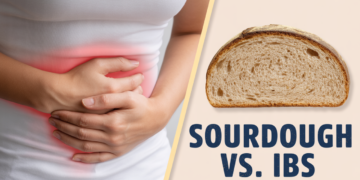
Price alone won’t protect you from fake sourdough – some grocery stores charge $7-8 for vinegar-spiked impostors. Instead, check if the bakery or packaging mentions fermentation time anywhere. Authentic sourdough requires a minimum of 8 hours of fermentation, ideally 12-24 hours, and legitimate bakers are proud to advertise this. If there’s no mention of fermentation time at all, that’s your first warning sign. Real bakers understand this is their competitive advantage and they’ll shout it from the rooftops.
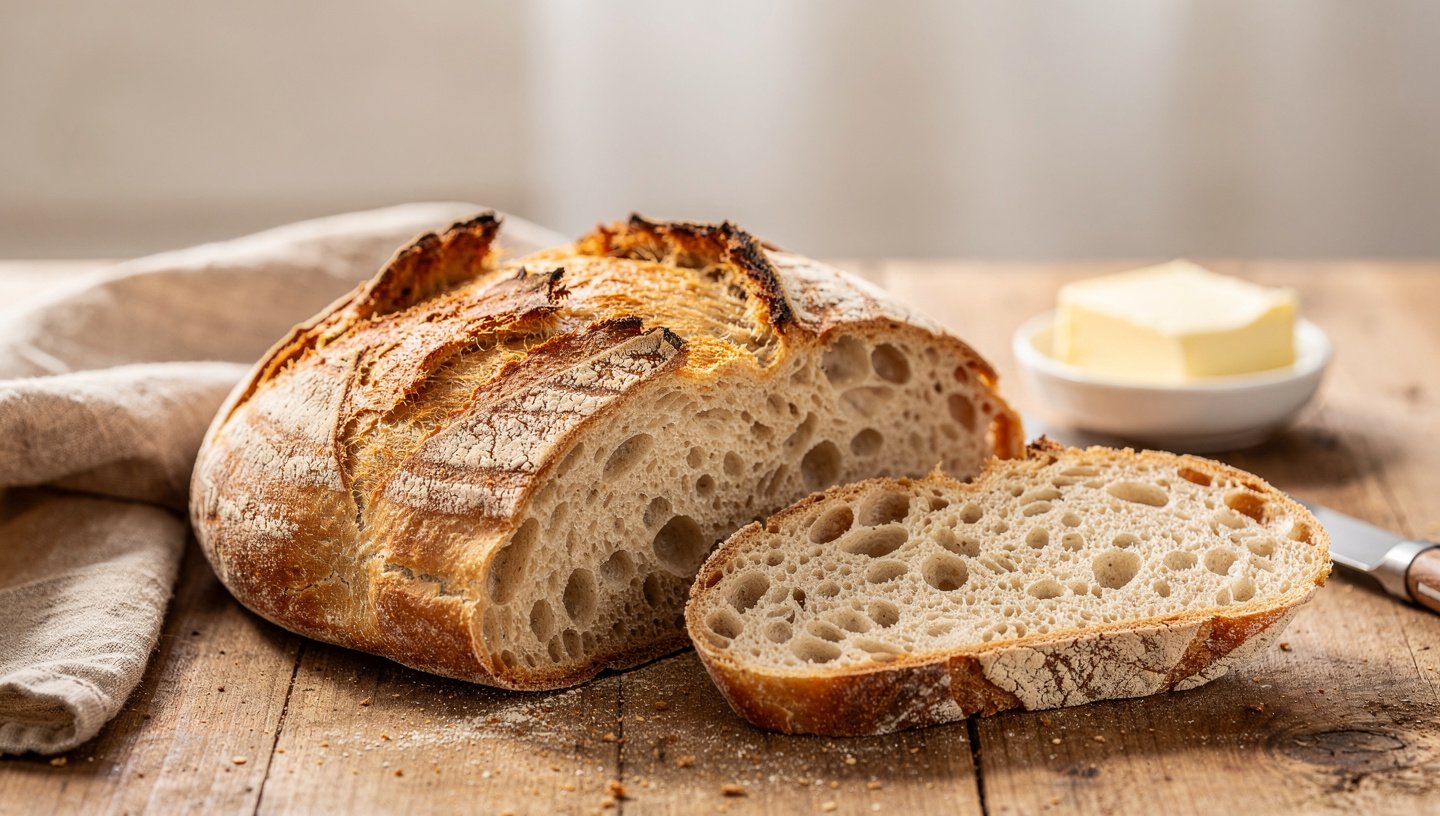
The texture and structure tell their own story, too. Genuine sourdough has an irregular, open crumb structure with holes of varying sizes throughout the loaf – this is due to slow fermentation and wild yeast activity. Fake sourdough? It usually has that uniform, consistent crumb you see in regular bread, with evenly distributed tiny holes. The crust is another giveaway… real sourdough develops a thick, crackling crust with deep caramelisation, while impostors often have softer, thinner crusts that lack that characteristic crackle when you squeeze the loaf.
Smell matters more than you’d think. When you bring authentic sourdough close to your nose, you’ll detect complex aromas – slightly sweet, nutty, with that characteristic tang that’s mellow rather than sharp. Fake sourdough often smells aggressively sour.
My Take on Baking Your Own Real Sourdough
Most people think baking sourdough at home is some artisanal wizardry reserved for bearded hipsters with too much time on their hands. But here’s what I’ve learned after exploring this whole thing – once you understand that real sourdough is just flour, water, salt, and time, it becomes way less intimidating. Sure, you’ll mess up your first few loaves (I definitely did), but the control you gain over what goes into your bread? That’s worth every flat, dense failure along the way.
The thing that pushed me over the edge was realising I couldn’t trust store-bought labels. When you’re dealing with IBS or trying to manage blood sugar, you can’t afford to gamble on whether that $8 loaf actually underwent proper fermentation for 12-24 hours or if some manufacturer just squirted vinegar into regular dough and called it a day. Baking it yourself means you know exactly what you’re getting – and honestly, there’s something ridiculously satisfying about pulling a crusty loaf out of your own oven that actually helps your gut instead of wrecking it.
Is It Worth the Effort?
I’m not gonna sugarcoat it – your first month of sourdough baking will feel like a part-time job. You’ve got to feed your starter regularly, learn to read dough (which is weirdly intuitive once you get it), and accept that your schedule now revolves around fermentation times. But here’s the reality check: the actual hands-on work is maybe 30 minutes total. The rest is just… waiting. You mix stuff, you wait. You shape it, you wait. Your oven does the real work while you’re doing literally anything else.
And when you break down the cost? A bag of decent flour runs you maybe $5-8 and makes several loaves. Compare that to buying authentic sourdough at $7-10 per loaf from the few bakeries that actually do it right. Within a month, you’ve paid for your supplies, and you’re basically getting gut-friendly, low-FODMAP bread for pennies on the dollar. Plus – and I can’t stress this enough – you actually know it was fermented long enough to break down those fructans that trigger IBS symptoms. No guessing, no trusting marketing claims, just bread that works for your body.
Simple Tips for Getting Started
The sourdough community online will try to convince you that you need special equipment, specific flour brands, and a PhD in microbiology. You don’t. What you actually need is way simpler than the Instagram feeds make it look, and I wish someone had told me this before I went down the rabbit hole of buying stuff I never use.
Start with these basics and ignore everything else until you’ve baked at least ten loaves:
- Get a kitchen scale – eyeballing measurements will sabotage you every single time because flour weight varies dramatically
- Use any flour you can find to start your starter (yes, even all-purpose works fine despite what purists say)
- Ferment for a minimum of 12 hours after shaping – this is non-negotiable if you want the FODMAP reduction
- Bake in the hottest oven you’ve got (450-500°F) – high heat creates that crust and oven spring
- Accept that your first loaves will be ugly – they’ll still taste good and deliver the gut benefits
Knowing that fermentation time matters more than technique will save you months of frustration and give you bread that actually delivers those health benefits from day one.
The other thing nobody tells beginners? Your starter doesn’t need to be babied. I’ve forgotten to feed mine for a week, pulled it out of the fridge looking half-dead, fed it once, and it bounced.
To Wrap Up
Taking this into account, the research shows that sourdough isn’t just another health food fad – but only if you’re eating the real deal. Studies confirm that authentic sourdough, fermented for at least 8 to 24 hours, genuinely lowers FODMAPs by up to 90%, improves mineral bioavailability, and reduces blood sugar spikes compared to standard bread. But here’s where it gets frustrating… most of what’s sold as “sourdough” in supermarkets completely bypasses the fermentation process that creates these benefits. You’re imperatively paying premium prices for regular bread with a splash of vinegar. And that’s not just misleading – it’s robbing you of actual health improvements that traditional sourdough can offer.
So what should you do with this information? Start reading labels like your gut health depends on it – because it does. Ask your local bakery about their fermentation times, or, better yet, make your own starter at home. Yeah, it takes patience and a bit of trial and error, but you’ll know exactly what you’re getting. For those of you dealing with IBS or gluten sensitivity, real sourdough might actually be a game-changer rather than another food you need to avoid. The science backs it up, the mechanisms make sense, and the benefits are measurable. You need to make sure you’re eating bread that’s actually been fermented… not bread that’s been faked to taste like it.
FAQ
Q: Is the sourdough I buy at my local supermarket actually real sourdough?
A: About 70% of store-bought “sourdough” in the US, UK, Canada, and Australia isn’t technically real sourdough at all. Since there’s no legal definition protecting the term, manufacturers can add vinegar or lactic acid to regular yeast bread and slap a sourdough label on it. Real sourdough requires 8-24 hours of fermentation with wild yeast and lactic acid bacteria – but that takes time and money, so most commercial bakeries skip it entirely. If your bread doesn’t list fermentation time on the label or includes ingredients like “vinegar,” “citric acid,” or “commercial yeast,” you’re probably getting fake sourdough at a premium price. The easiest way to know? Ask the baker directly about their fermentation process, or check if the ingredient list is just flour, water, salt, and starter.
Q: Can sourdough really help with my IBS symptoms, or is that just hype?
A: Research shows that authentic sourdough can reduce FODMAPs – specifically fructans – by up to 90% during the long fermentation process. And here’s the thing… many people diagnosed with non-celiac gluten sensitivity might actually be reacting to fructans in wheat and rye, not gluten itself. So when you eat real sourdough that’s been fermented for 12-24 hours, those troublesome fructans have already been broken down by the lactobacilli bacteria. That means less bloating, less gas, and way less abdominal pain for IBS sufferers. But – and this is huge – this only works with genuine sourdough that’s had enough time to ferment. That quick-rise supermarket stuff with added vinegar? It still contains all the FODMAPs that’ll trigger your symptoms because the fermentation never actually happened.
Q: Why does sourdough have a lower glycemic index than regular bread?
A: The 8-24 hour fermentation process creates organic acids that literally change how your body processes the bread. These acids slow down gastric emptying (meaning food stays in your stomach longer), create resistant starch that your body can’t quickly digest, and alter the bread’s structure in ways that prevent rapid blood sugar spikes. Studies comparing real sourdough to regular white bread show a noticeably slower rise in blood glucose… but only when the bread’s been properly fermented. The fake stuff with added vinegar doesn’t create these same biochemical changes because the acids are just dumped in at the end – they haven’t had time to interact with the starches and proteins during a long, slow fermentation. So if you’re watching your blood sugar, you need to make sure you’re getting the real deal, not just bread that tastes tangy.
Q: What’s the deal with phytic acid, and why does sourdough fermentation matter for nutrient absorption?
A: Phytic acid is basically an anti-nutrient found in grains that binds to minerals like iron, zinc, and magnesium – making them unavailable for your body to absorb. Regular bread still contains most of this phytic acid because commercial yeast doesn’t break it down effectively. But during proper sourdough fermentation, the acidic environment (pH around 3.8-4.3) activates enzymes that destroy 60-90% of the phytic acid. That’s a massive difference when it comes to actually getting nutrition from your bread instead of just empty calories. And this is another reason why fermentation time matters so much – a 2-hour rise with some vinegar thrown in won’t activate these enzymes or break down the phytic acid. You need that extended 12-24-hour window for the biochemical magic to happen.
Q: How can I tell if a bakery is selling real sourdough or just faking it?
A: The ingredient list should be dead simple: flour, water, salt, and sourdough starter. That’s it. If you see commercial yeast, vinegar, citric acid, preservatives, or anything called “dough conditioners,” walk away – it’s not real sourdough. But honestly, the best